
The closest games like Wordle are Quordle and Octordle, which keep the exact five-letter rules but make you solve four or eight words at once, and Waffle, which puts the same green and yellow clues on a grid of crossing words. If the daily habit matters more than the letters, The New York Times’ own Connections, Strands and Spelling Bee sit in the same app as Wordle, and Worldle applies the formula to geography. The 15 picks below are grouped by what each one shares with Wordle.
Every game below was checked as live as of October 2026, with where to play it and what is free.
Wordle-style guessing games with a twist
These three keep Wordle’s core: a hidden answer that resets on a schedule and feedback after every move.
Waffle
Made by: software developer James Robinson, who launched it in February 2022 and now runs it as Waffle Studio. Play: wafflegame.net. Cost: free with ads; a one-off donation removes the ads and adds a bonus daily puzzle, Waffle Royale.
Every letter of the day’s answers is already on a waffle-shaped grid, scrambled, and you swap tiles until the words across and down are correct. You get 15 swaps, every puzzle can be solved in as few as 10, and each spare swap earns a star. The tiles use Wordle’s color code: green for a letter in the right place, yellow for one that belongs in that word but elsewhere. It is Wordle turned around: you know the letters and need their positions.
Phrazle
Runs on: Solitaired, a card and puzzle games site whose trademark is held by Unwind Media. Play: solitaired.com/phrazle. Cost: free, with an optional hint that costs a short video ad.
The answer is a phrase rather than a single word, a new one arrives twice a day, at midnight and noon local time, and you get six attempts to fill every space with real words. The feedback follows Wordle’s logic with one addition: green for a correct letter in its correct position, orange for a letter that belongs in that word but elsewhere, purple for a letter from another word in the phrase, and gray for a miss.
Contexto
Made by: Nildo Junior, a Brazilian software engineer who first released it in Portuguese in February 2022; it is now published by Daydash, a games company in Belo Horizonte, Brazil. Play: Contexto’s English edition. Cost: free with ads; a paid Daydash Pass removes them.
There is one secret word a day and no limit on guesses. Each guess comes back with a rank showing how closely it is linked to the answer, judged by an AI model from the contexts in which words appear online, and the secret word itself is number 1. Its creator has said it began as a Portuguese take on Semantle, a similarity-based guessing game created by David Turner. Contexto keeps Wordle’s one-answer structure but swaps spelling clues for word association.
Multi-board versions of Wordle
These are Wordle’s rules, multiplied: every guess goes into all the boards at once.
Dordle
Made by: Guilherme S. Töws, whose 2022 game credits Josh Wardle’s Wordle as its basis. Play: zaratustra.itch.io/dordle. Cost: free, with an optional donation button.
Two five-letter words, seven guesses. The daily Dordle is the same for everyone, and a free-play mode serves up random pairs on demand. It is the gentlest step up from Wordle, and it inspired Quordle.
Quordle
Made by: Freddie Meyer, who built it in 2022 from a prototype by engineer David Mah; Merriam-Webster bought it in January 2023. Play: Merriam-Webster’s Quordle page. Cost: free.
Four words, nine guesses, a new set each day. Practice games and a daily Sequence variant, with 10 guesses and letter clues revealed as each word falls, run alongside it. For Wordle’s rules with more to weigh on every guess, Quordle is the most direct upgrade.
Octordle
Made by: Kenneth Crawford, whose 2022 credits describe it as based on Quordle and Dordle; as of October 2026, octordle.com redirects to Merriam-Webster. Play: Merriam-Webster’s Octordle page. Cost: free.
Eight words and 13 guesses, refreshed daily. With eight answers in play, at least one awkward word is likely. This is the one to try if Wordle has started to feel easy.
Other daily word games like Wordle, including games like Connections
These are different kinds of word puzzle that keep Wordle’s habit of one shared puzzle a day.
Connections
Made by: The New York Times, which launched it in beta on June 12, 2023, edited by Wyna Liu. Play: nytimes.com/games/connections and the NYT Games and News apps. Cost: free; the archive and Connections Bot, which analyzes each solve, are for subscribers.
Sixteen words must be sorted into four groups of four, each with a hidden link. Each group is color-coded by difficulty, from yellow for the most direct to purple for the trickiest, with red herrings built in. A puzzle counts as a win only if you finish with fewer than four mistakes. Like Wordle, it ends with results to share, and a new puzzle arrives at midnight local time.
Strands
Made by: The New York Times, which released it in beta in March 2024, with puzzles edited by Tracy Bennett. Play: nytimes.com/games/strands and the NYT apps. Cost: free; the archive is for subscribers.
A six-by-eight grid of letters hides a set of theme words, traced through neighboring letters in any direction. One of them, the spangram, touches opposite sides of the board and sums up the theme, and by the end every letter has been used once. Finding three words outside the theme earns a hint. As with Wordle, the payoff is the moment the day’s answer clicks.
Spelling Bee
Made by: The New York Times. Frank Longo created it; it began in the print magazine in 2015, went digital on May 9, 2018, and is edited by Sam Ezersky. Play: nytimes.com/puzzles/spelling-bee and the NYT apps. Cost: limited free play; the full game, past puzzles and answers need a Games, All Access or Home Delivery subscription.
Seven letters sit in a honeycomb, and you build words of four or more letters that must include the center letter, reusing letters freely. Every puzzle has at least one pangram that uses all seven, and points lift you through a ladder of ranks, with Queen Bee for finding every word. A new hive appears at 3 a.m. Eastern time. Like Wordle, it is one shared set of letters a day, and Wardle has said NYT Games played a big part in Wordle’s origins.
Pinpoint
Made by: LinkedIn, which launched it in May 2024 as one of its first three daily puzzles. Play: linkedin.com/games/pinpoint or the LinkedIn app. Cost: free, even without an account, though guest scores are deleted after 30 minutes unless you sign in.
Five clue words appear one at a time, and the goal is to name the category linking them in as few clues as possible. New puzzles arrive at midnight Pacific time, and as in Wordle, fewer steps means a better result. It plays like a single Connections group, which makes it the quickest pick among games like Connections.
Daily games like Wordle that are not word games
These five Wordle alternatives apply the same daily format to maps, math, film and music.
Worldle
Made by: French web developer Antoine Teuf, who launched it in early 2022; Teuteuf Games now runs it. Play: worldle.teuteuf.fr. Cost: the daily game is free; the archive needs a paid Premium membership.
You see the outline of a country or territory and get six guesses. Each wrong answer returns its distance from the target, an arrow pointing toward it and a proximity percentage. Six tries and a shareable row of green and yellow squares keep it close to Wordle.
Globle
Made by: Abe Train of Toronto, who built it in 2022 after Wordle took off; the site credits Trainwreck Labs. Play: globle-game.com. Cost: free with ads; an optional Trainwreck Labs club membership removes them.
There is one mystery country a day and no outline to work from. Each wrong guess is painted onto an interactive globe in a color that runs hotter the closer it is to the answer, and the aim is to find it in the fewest tries. It suits players who enjoy Wordle’s narrowing-down more than its letters.
Nerdle
Made by: Richard Mann and his daughter Imogen, with developer Marcus Tettmar building it; it launched in January 2022. Play: nerdlegame.com. Cost: the classic daily is free, one of 20-plus free number games on the site.
The answer is a hidden eight-character equation made of digits and math symbols, and each of your six guesses must itself be a correct equation. Tiles turn green for the right character in the right place, purple for one that belongs elsewhere in the equation and gray for one that is not in it. It is Wordle’s grid with arithmetic in place of spelling.
Framed
Made by: a site that does not name its maker; NME covered it as a brand-new game in March 2022. Play: framed.wtf. Cost: free, including an archive of past days.
The classic mode shows one still from the day’s film, and every wrong guess adds another frame, up to six. At launch, the site named Wordle and Heardle among its inspirations, and the six-step reveal echoes Wordle’s six rows.
Bandle
Made by: France-based creator Johann Levy, who made it in 2022 and later added an app. Play: bandle.app and the mobile apps. Cost: the daily song is free.
Each day’s song is built up layer by layer, starting with the drums and ending with the vocals, with a chance to guess at every layer and a text clue if the vocals do not give it away. Needing fewer layers is better, as with Wordle’s guess count. Spotify, which bought the music spin-off Heardle in 2022, announced in April 2023 that the game would close that May, and Bandle fills much the same slot.
What Wordle itself offers as of October 2026
Josh Wardle, then a software engineer in Brooklyn, built Wordle for his partner and made it public in October 2021. The New York Times announced on January 31, 2022, that it had bought the game for “an undisclosed price in the low-seven figures,” and in November 2022 it appointed Tracy Bennett as Wordle’s first dedicated editor.
The daily puzzle is still free without a subscription in the NYT Games app and at nytimes.com/games/wordle: six tries to find a five-letter word. The extras need a Games, All Access or Home Delivery subscription. That covers the Wordle archive, which launched in May 2024 and reaches back to June 19, 2021; Wordle Bot, which analyzes each game; and a tool for making a custom Wordle that anyone can then solve.
Frequently asked questions
What is the best game like Wordle?
For the same rules, Quordle is the closest match: Wordle with four boards and nine guesses, free on Merriam-Webster’s site. For the same daily habit, Connections is the natural pick, since it sits beside Wordle in the NYT Games app.
Are there free games like Wordle?
Yes. Every game on this list has a free daily puzzle as of October 2026. The paid parts are mostly extras: Spelling Bee limits free play, and the archives for Wordle, Connections, Strands and Worldle need a subscription.
What is like Wordle but harder?
Octordle is the clearest step up, with eight words to solve in 13 guesses. Contexto is hard in a different way, because it gives no spelling clues at all, only a ranking of how closely each guess is linked to the answer.
What games are like Connections?
LinkedIn’s Pinpoint is the closest: name the category behind five clue words. Strands, also from The New York Times, turns on a hidden theme too, but you dig the words out of a letter grid.
Is Wordle still free?
Yes. As of October 2026, the daily Wordle needs no subscription; only extras such as the archive, Wordle Bot and making custom puzzles do.
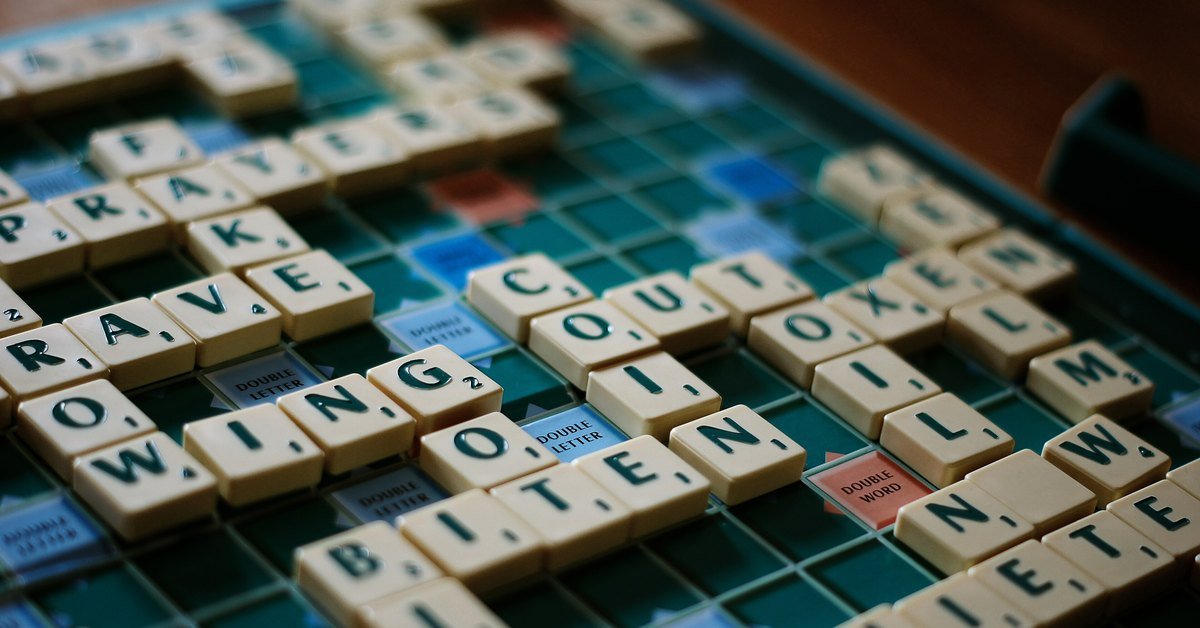
Lead photo: A Scrabble game in progress. Photo: thebarrowboy, CC BY 2.0, via Wikimedia Commons (cropped).