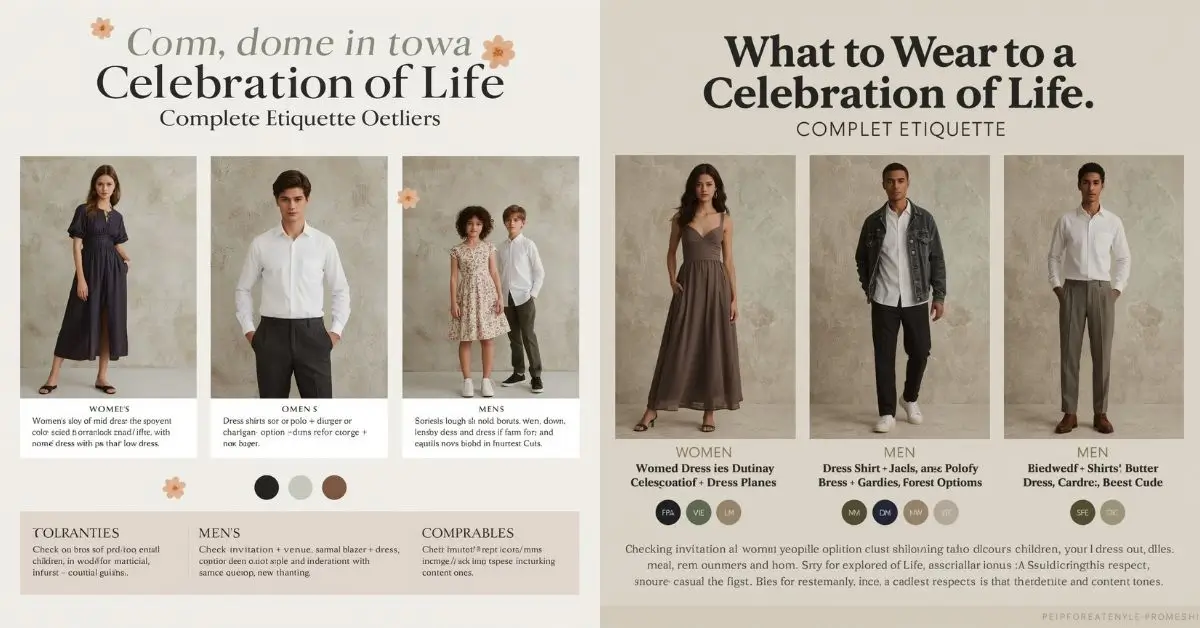

What to wear to a funeral comes down to dark or muted colors, a modest cut and a neat finish: black is traditional, but navy, charcoal and gray are widely accepted. Women can wear a knee-length or longer dress or skirt, or a pantsuit, and men a dark suit or a blazer with trousers. If the family has made a dress request, it overrides all of this.
What do you wear to a funeral? Six rules that cover most services
- Check for a request. Requests range from the person’s favorite color to sports jerseys to a relaxed dress code. Families often say so in the obituary or the service details; if both are silent, a relative or the funeral home will know whether the family has a preference.
- Stick to dark or muted shades. Neither the National Funeral Directors Association (NFDA) nor the Emily Post Institute treats black as mandatory. Navy, charcoal and gray are the standard alternatives, and Co-op Funeralcare in the UK also suggests burgundy for women.
- Stay modest and neat. Clothes should be pressed and should not reveal much, which rules out plunging necklines, very short hems and sheer fabric. Dignity Memorial’s test: nothing you wear should pull attention toward you.
- Follow local custom. In some communities men wear a suit and tie and women a dress; in others, pantsuits and open collars are accepted, says New Jersey funeral director Edith Churchman, writing on the NFDA’s consumer site.
- Dress up if you have a role. Speakers and pallbearers should look the part. Unless the family has other wishes, pallbearers normally wear dark suits, the Emily Post Institute says.
- When unsure, go one step dressier. Dignity Memorial’s Canadian guide says being slightly overdressed is better than being underdressed.
What to wear to a funeral: women
For a woman, a dark dress, a skirt and top, or a pantsuit all work at a traditional service.
Dresses and skirts
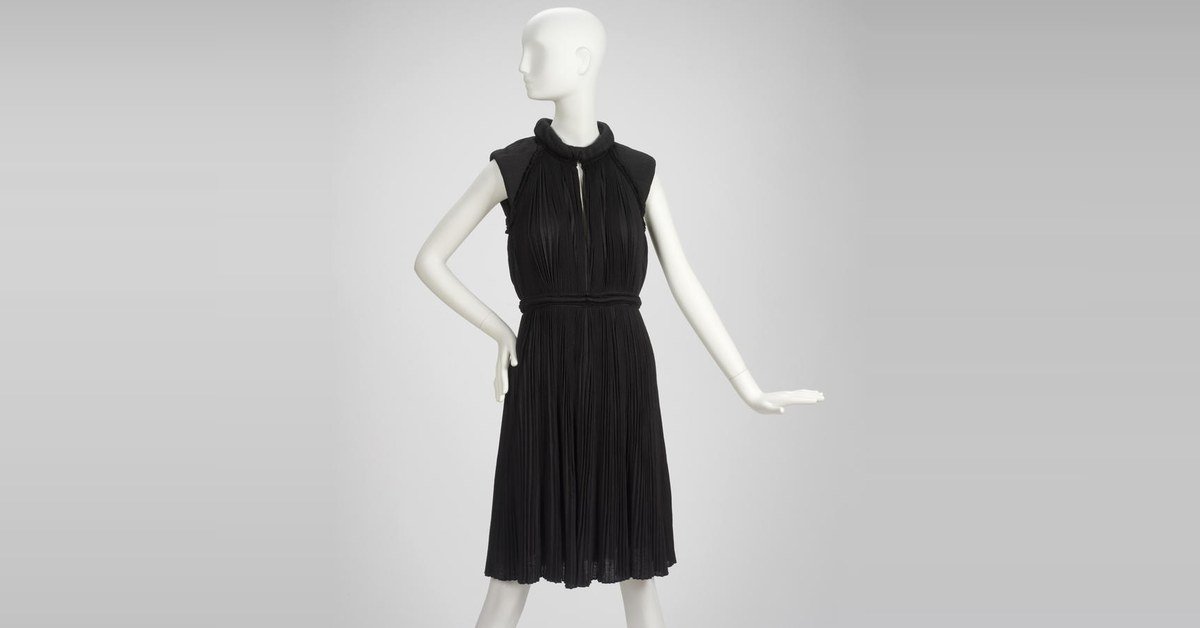
Hemlines at or below the knee are the traditional choice, according to Dignity Memorial, a North American group of funeral homes. In places of worship where covered shoulders are preferred, put a cardigan or blazer over a sleeveless dress; the same layer helps in an air-conditioned chapel.
Pants and pantsuits
Leggings and jeans may not pass, Dignity Memorial cautions, while dress pants are acceptable across most cultures. The NFDA lists suits, like dresses, as always appropriate for women, and My Jewish Learning’s guide to Jewish funerals, which names a dress as the standard, adds in an editor’s note that a dark pantsuit is now seen as well.
Shoes
Comfort can decide between heels and flats, Dignity Memorial says, and the day may bring a receiving line, a walk to the grave and long spells on your feet. Dark, closed-toe shoes are the safe default. A cemetery lawn can swallow a narrow or high heel, so pick a low, wide heel, flats or boots if there is a burial. Walk in new shoes before the day, and leave flip-flops in the closet.
Jewelry, bags and makeup
Jewelry should be quiet: stacked bangles can rattle through a eulogy, and big costume pieces pull the eye. A watch, small earrings or one simple necklace is enough. Jewelry that the person who died gave you is the exception one UK funeral home makes: wear it, however bold. If tears are likely, waterproof mascara and a pocket of tissues help; otherwise keep makeup light and natural. Keep perfume light or skip it, since in a small room a strong scent can overwhelm, and carry a plain bag rather than a heavily branded one.
What to wear to a funeral: men
A dark suit in black, navy or charcoal is the standard choice for a traditional funeral; Hindu funerals, where white is customary and black is avoided, are the main exception. Wear it with a white or pale shirt and a solid, dark tie. Dignity Memorial allows one exception to the plain tie, a pattern chosen as a tribute, such as florals for someone who loved gardening.
What guys can wear without a suit
You do not need to own a suit. Dark dress trousers under a sport coat or blazer pass at nearly any service, according to Dignity Memorial. With no jacket at all, a long-sleeved collared shirt, a dark tie and dark trousers still work; add a dark overcoat when it is cold. Co-op Funeralcare, in the UK, even counts smart jeans as an option, and it stresses that showing up matters more than the clothes.
Shoes, belt and extras
The belt should match the shoes, which should be clean, polished dress shoes or loafers, in black with a black or navy suit. Sneakers, sandals and baseball caps stay home. Personal touches are welcome in small doses. Dignity Memorial mentions a flag pin for a veteran’s funeral, and co-workers who wore a uniform alongside the person may attend in it.
Dressing for heat, cold and rain
Heat. If you overheat in a suit, Co-op says it is fine to take the jacket off. Short-sleeved tops and dresses are acceptable in hot weather, Dignity Memorial says, and linen or cotton breathes well; shorts and T-shirts are still too casual. Pack sunglasses if any part of the service is outdoors.
Cold. Wool and tweed are the warmest suit fabrics, and a thin sweater fits under the jacket. A dark overcoat goes over everything, and a graveside wait is the time for a hat, a scarf and gloves.
Rain. Bring a dark umbrella, and choose soles with some grip for wet grass.
What not to wear to a funeral
Unless the family asks for them, leave these at home:
- Neon, vivid or shiny colors and busy patterns
- Anything revealing or see-through
- Workout and beach clothes, from sports jerseys and shorts to flip-flops and sneakers
- T-shirts, especially with slogans or big logos
- Ripped jeans
- Baseball caps
- Jewelry that jingles or clinks
- Heavy perfume or cologne
Some of these rules are loosening. More services now take a celebratory rather than a strictly formal tone, Dignity Memorial says, and Co-op Funeralcare sees UK funerals becoming more colorful. Jeans split the guidance: Co-op says no rule forbids them, while Dignity Memorial advises skipping them unless the family indicates otherwise or the event is a very relaxed celebration of life. For a traditional service, dress pants are the safer bet.
Appropriate funeral attire for each type of service
The kind of gathering shapes the dress code more than anything else, so check the notice to see which one you are attending.
| Service | What happens | What to wear |
|---|---|---|
| Funeral service | The main rite, often with the casket present, in a church, a funeral home or another place the family picks | Formal: a dark suit, dress or pantsuit |
| Memorial service | Like a funeral but usually without the casket; an urn or photo may take its place | Same as a funeral unless the family says otherwise |
| Wake, viewing or visitation | Guests drop in to see the family, usually before the funeral | A notch less formal; the funeral outfit also works |
| Graveside or committal service | A brief service at the grave, mostly standing outside | Funeral clothes, a coat or umbrella, and sensible shoes |
| Celebration of life | A personal, often relaxed gathering | Whatever the invitation suggests, which may be bright or casual |
Wake, viewing or visitation
The NFDA describes the visitation as typically less formal than the funeral itself. A plain jacket or sweater is all it takes to dress up casual work clothes for an evening visitation, funeral.com suggests, and business attire needs no change at all. If you will attend both, one conservative outfit covers the two.
Graveside or committal service
Footwear matters most at a graveside: Arlington National Cemetery recommends shoes that stay steady on grass and soft earth as well as paved paths, with clothing that fits both the season and the dignity of the day. Expect to stand outdoors for most of it, though graveside services are usually brief; a coat or umbrella and stable shoes make that easier.
Celebration of life
Expect a looser dress code. Casual clothes can be fine at a celebration of life, Dignity Memorial notes, and families may name a color or theme. For outfit ideas, see the guide to what to wear to a celebration of life.
Religious and cultural customs
These are common customs, not fixed rules, and practice varies between families, congregations and regions. Asking a relative or the funeral director ahead of time is the surest way to get it right.
Jewish funerals
Dark, plain colors are the norm. Men usually wear a jacket and tie, though a button-down shirt and dress trousers will pass, and women a dress or a skirt long enough to cover the knee. A dark pantsuit is widely accepted, but at an Orthodox funeral a modest skirt or dress is the safer choice, and men and women may be seated separately. Funeral homes and chapels usually have spare kippot (yarmulkes) at the door, because men, Jewish or not, are often asked to cover their heads. Head coverings for women depend on the congregation: they are occasionally requested, and Dignity Memorial says scarves are usually provided when they are. Liberal congregations vary the most, My Jewish Learning notes, from kippot for everyone to almost none.
Muslim funerals
Slip-on shoes and clean socks make sense, because shoes come off before the prayer hall when funeral prayers are held at a mosque. For women, Co-op Funeralcare and Dignity Memorial advise a long skirt, long sleeves and a high neckline in loose clothes, plus a scarf over the hair. For men, a shirt with full-length trousers is appropriate. Men and women usually sit apart, often on the floor, so choose clothes that are easy to sit in. Traditionally only men go on to the burial, though some communities welcome women there.
Hindu funerals
White is the customary mourning color at many Hindu funerals, and Co-op Funeralcare tells guests to avoid black; the Emily Post Institute gives the same advice for visits to the family’s home before the cremation. Plain white is the safest choice, and if white is not possible, keep to light, plain colors rather than bright ones, in a simple outfit that covers the shoulders, arms and knees.
Chinese funerals
Red signals joy and good luck in Chinese culture, so guests avoid it, along with bright prints. Black, navy and gray are safe choices for guests, and Western influence has made black acceptable. White, the traditional mourning color, depends on the family: funeral homes in the US and Canada describe it as reserved for close relatives, while Chinese funeral directors in Singapore say guests often wear it. The one exception to the rule on red comes after a long life, usually 80 years or more, when some families welcome a touch of pink or red; wear it only if the family asks.
What should children wear to a funeral?
Children can wear a simpler, age-suited version of what the adults in the family wear, such as dark trousers with a sweater or a plain dress. Black is optional for a child: the Emily Post Institute notes that most are not dressed in it, and navy or gray suits them just as well.
Frequently asked questions
Can you wear jeans to a funeral?
Not at a traditional US service, if you can avoid it: Dignity Memorial reserves jeans for very casual celebrations of life or families that invite them. Co-op Funeralcare in the UK is more relaxed, saying no rule forbids them. If jeans are your only option, make them dark and free of rips, and wear a jacket or smart sweater with them.
Can you wear white to a funeral?
Yes, as a shirt or blouse under a dark suit or jacket. An all-white outfit depends on the family’s tradition: it is customary for guests at many Hindu funerals, while at Chinese funerals some families keep white for close relatives and others are used to seeing guests in it. When in doubt at a Chinese funeral, dark colors are the safer choice.
Do you have to wear black to a funeral?
No. The NFDA calls black traditional but not required, and navy, charcoal, gray and other dark, muted colors are widely worn. Some funerals call for something other than dark colors: a family may ask guests to wear a particular color, and at many Hindu funerals white is worn instead of black.
Can you wear navy or gray to a funeral?
Yes. Dignity Memorial lists black, gray and navy as the colors most guests choose, and the Emily Post Institute says funeral clothes are not limited to black or dark gray. Charcoal and other deep, muted shades also work.
What should a man wear to a funeral without a suit?
The base is a long-sleeved collared shirt tucked into dark dress trousers. A sport coat or blazer on top makes the outfit acceptable almost anywhere, and a plain dark tie and polished dark shoes or loafers finish it.
Lead photo: A knee-length black pleated wool dress by Isabel Toledo for Anne Klein, 2007, RISD Museum. Photo: RISD Museum staff photographer, CC0, via Wikimedia Commons (background extended).