A Hollywood glamour outfit for men is black tie as it was worn from the 1930s to the 1950s: a black or midnight-blue tuxedo with peaked lapels or a shawl collar, a white shirt, a black bow tie you tie yourself and glossy black shoes. Two things make it read as old Hollywood rather than prom night: a double-breasted jacket (or, in summer, an ivory dinner jacket like Humphrey Bogart’s in Casablanca) and the small period extras, a white pocket square and a flower in the lapel.
What the Hollywood glamour dress code means for men
The phrase points to the studio era, roughly the 1930s through the 1950s. The Black Tie Guide, a detailed history of formal wear now published by Gentleman’s Gazette, treats the Depression decade as the tuxedo’s finest hour and credits Hollywood with turning the dinner jacket into an icon. It also notes that men’s clothes had not been this fashion-conscious since the Regency.
The theme is still used. The 2026 Actor Awards asked guests to dress for “Reimagining Hollywood Glamour from the ’20s and ’30s,” and The Hollywood Reporter noted that the few who played along used tuxedos and double-breasted suits, not gangster costume. In practice the code means black tie with period styling, close to what etiquette writers call creative black tie: a tuxedo plus “trendy or whimsical items,” in Emily Post’s phrase, with the fun kept to accessories.
How to put the outfit together now
Start with the invitation. “Black tie” means a tuxedo. If it only says Hollywood glamour or old Hollywood, any level below works; a hotel ballroom calls for more than a converted barn.
Level 1: rent a tuxedo
Ask for black or midnight blue, a peak or shawl rather than a notch, and ask whether the shop has a double-breasted jacket. Have the shoulders and waist fitted; menswear retailers quoted by The Hollywood Reporter flagged trousers hemmed too long and jackets a size or two too big. The Black Tie Guide is blunt about rental stock, from tired jackets to vinyl shoes, so put your money into the pieces people notice: your own self-tie bow tie, a pocket square in white linen and a carnation.
Level 2: build it from what you own
Use your darkest solid suit, deep navy, charcoal or black, with a crisp white shirt. Double-breasted is best: it sits a notch above single-breasted in formality and echoes Gable’s and Bogart’s jackets. Finish with a white pocket square and a small boutonniere, socks that match the trousers, shined black oxfords, and a solid tie or bow tie in burgundy, navy or another deep color. The Black Tie Guide warns against a black bow tie on a suit, which reads as a fake tuxedo, and a tuxedo shirt under a suit jacket. A side part set with pomade finishes the period look; Gentleman’s Gazette names it as likely the most common 1930s cut.
Level 3: go all out
Have a dinner suit made or find one cut to a 1930s pattern: midnight blue, double-breasted with peaked lapels, or single-breasted with a waistcoat; high-rise, full trousers on suspenders; a soft pleated turndown-collar shirt, or a wing collar for a dressier look; a hand-tied black butterfly bow tie; patent oxfords or opera pumps with black silk socks. For the dressiest 1930s take, the Guide pairs peaked lapels and a wing collar with a white pique waistcoat borrowed from white tie. At a summer party, swap in an ivory jacket cut like Bogart’s in Casablanca, double-breasted with a shawl collar, and wear it with black trousers. If you want a hat, the period choice is a homburg in black or midnight blue, worn with a dark double-breasted overcoat and a white silk scarf.
What to avoid
- A fedora, if you want the 1930s look. The period hat for a dinner jacket was a homburg in black or midnight blue. The Black Tie Guide has soft hats such as the fedora gaining ground with evening clothes only after the Second World War.
- Gangster costume. Stars who took up the 2026 Actor Awards theme stayed out of what The Hollywood Reporter called “mobster territory.”
- A trench coat over evening clothes. The Black Tie Guide rules out raincoats over a tuxedo.
- Notched lapels, a belt, vinyl shoes or a ready-made bow tie. The notch comes from the business suit, a belt shows at the waist, vinyl cracks, and a stiff factory-tied bow gives itself away.
- A matching colored bow tie and cummerbund with a black tuxedo. The Black Tie Guide would rather see a single piece of color, plum or dark red for instance, than a set. Its one exception is a 1940s favorite: a maroon set worn with an ivory summer jacket.
Golden-age pieces and how to wear them today
| Piece | Golden-age version | How to get the look today | Level of formality |
|---|---|---|---|
| Jacket color | Black; midnight blue led by the late 1930s | Midnight blue made to measure or from a retailer that stocks it; black anywhere | Black tie, either color |
| Lapels | Broad peaks or a shawl collar, silk-faced | Peak or shawl; skip the notch for the period look | Peak a little more formal |
| Double-breasted jacket | Popular from the early 1930s, often midnight blue; boxier after 1948 | A double-breasted tuxedo, or a dark double-breasted suit | Once informal, now equally correct |
| White dinner jacket | Ivory or cream, usually shawl-collared, with dark trousers | Off-white jacket, black tuxedo trousers, black bow tie | Summer or tropical evenings; less formal than black |
| Shirt | Starched front and wing collar, or soft pleats and a turndown collar by the mid-1930s | White pleated turndown-collar shirt; wing collar for the full 1930s look | Wing collar is dressier |
| Bow tie | Black silk matching the lapels; semi-butterfly, later narrow batwing | Self-tie black butterfly sized to your neck | Required for black tie |
| Waist covering | Waistcoat in the suit cloth; cummerbund at resorts | Black cummerbund or low-cut waistcoat; none with double-breasted | Needed with single-breasted |
| Trousers | High rise, full cut, silk stripe, suspenders | Higher rise and suspender buttons; no belt, no cuffs | Black tie |
| Shoes and socks | Black patent oxfords or opera pumps; black silk socks | Patent or polished calf plain-toe oxfords; over-the-calf black socks | Pumps a little more formal |
| Boutonniere | White gardenia or carnation, red carnation, later blue cornflower | One carnation through a real buttonhole; none if there is no buttonhole | Optional at any level |
| Pocket square | White handkerchief; color in warm weather | White linen, folded square | Optional at any level |
| Hat | A homburg (black or midnight blue) | A homburg with your overcoat, or none; no fedora | Outerwear, optional since the 1970s |
The period details, piece by piece
Midnight blue or black
Both colors are correct. Midnight blue is a navy so deep it reads as black after dark, and in the 1930s it was the fashionable pick. The Black Tie Guide says film stars brought the Prince of Wales’s taste for it to America; by the late 1930s style writers ranked it first for evening wear, and tailors sold as much of it as black. The Guide’s explanation for the old “blacker than black” tag is the lighting: indoors at night, black cloth can pick up a green or gray tinge, and midnight blue does not.
Peaked lapels or a shawl collar
Either is right. The shawl, a rounded collar borrowed from the smoking jacket, gives a softer line; the pointed peak, inherited from the tailcoat, is the slightly dressier of the two. Skip the notch: it is borrowed from the business suit, and the Guide dates its acceptance on formal wear only to the late 1970s. Keep the peaks broad rather than huge: The Rake ties the decade’s oversized peaks and roped shoulders to a showy look it says people now associate with gangsters.
Double-breasted jackets
Many of the era’s best-known evening looks are double-breasted, Astaire’s in Swing Time and Bogart’s in Casablanca among them. The Prince of Wales made the cut fashionable in the early 1930s, when it typically had peaked lapels and often came in midnight blue, and The Rake names Bogart’s Rick among the screen icons who later popularized the double-breasted dinner suit. Worn closed, it needs no waistcoat or cummerbund.
The white dinner jacket
The pale jacket was a resort invention. It caught on around 1931 at Palm Beach, Cannes and similar resorts, where black wool was too hot, and within five years the Guide says it had drawn level with the dark jacket there. Buy ivory or cream rather than bright white: the Guide says pure white fights the restraint evening clothes should have and is hard on fair skin. Most had shawl collars and were paired with trousers in black or midnight blue. It remains warm-weather wear: in the United States, traditionally Memorial Day to Labor Day, or the tropics all year. A black jacket suits any season and is more formal.
Shirt, bow tie and waist
By 1937 Esquire, as quoted by the Guide, called the soft turndown collar “now virtually standard for informal wear,” worn on a pleated soft-front shirt; the starched front with a detachable wing collar stayed the formal choice. Bow ties were black and made of the same silk as the lapel facings, in a semi-butterfly shape in the 1930s and a narrow batwing in the 1950s. Under a single-breasted jacket went a waistcoat in the suit cloth or, first at resorts, a black silk cummerbund.
Trousers, shoes and finishing touches
Classic evening trousers keep the period details: a rise high enough to hide the waistband, suspenders or side adjusters rather than a belt, a silk stripe down each leg and plain hems with no cuffs. Shoes were black patent oxfords or bowed opera pumps, with polished calf accepted from the 1950s, and socks were long black silk. A red carnation was catching on with younger men in the 1930s, the Guide says, while traditionalists stuck to a white carnation or gardenia.
The stars and films behind old Hollywood menswear
Humphrey Bogart, Casablanca (1942)
The Rake says Bogart’s dinner jacket, worn as the bar owner Rick, is “as iconic as the movie itself,” and gives its color as “cream (never white).” Its lapels carry no silk and its back has no vents; it closes low, double-breasted, under a shawl collar, with mother-of-pearl buttons in a matching tone. The Black Tie Guide credits this jacket with making the white dinner jacket famous. The fedora is not part of this look: Bogart wears it with the trench coat over a pale day suit in other scenes.
Cary Grant, To Catch a Thief (1955)
Christopher Modoo of The Rake picks this film and calls the shirt “the star of Grant’s ensemble.” It is the soft, pleated kind with an attached collar, which Modoo rates well above the starched white-tie shirt for comfort. The suit is midnight blue, cut as a three-piece with a fairly slim, black-faced shawl collar. The Black Tie Guide holds up Grant and Frank Sinatra as the image of men who wore classic black tie in the 1940s and 1950s.
Fred Astaire, Top Hat (1935) and Swing Time (1936)
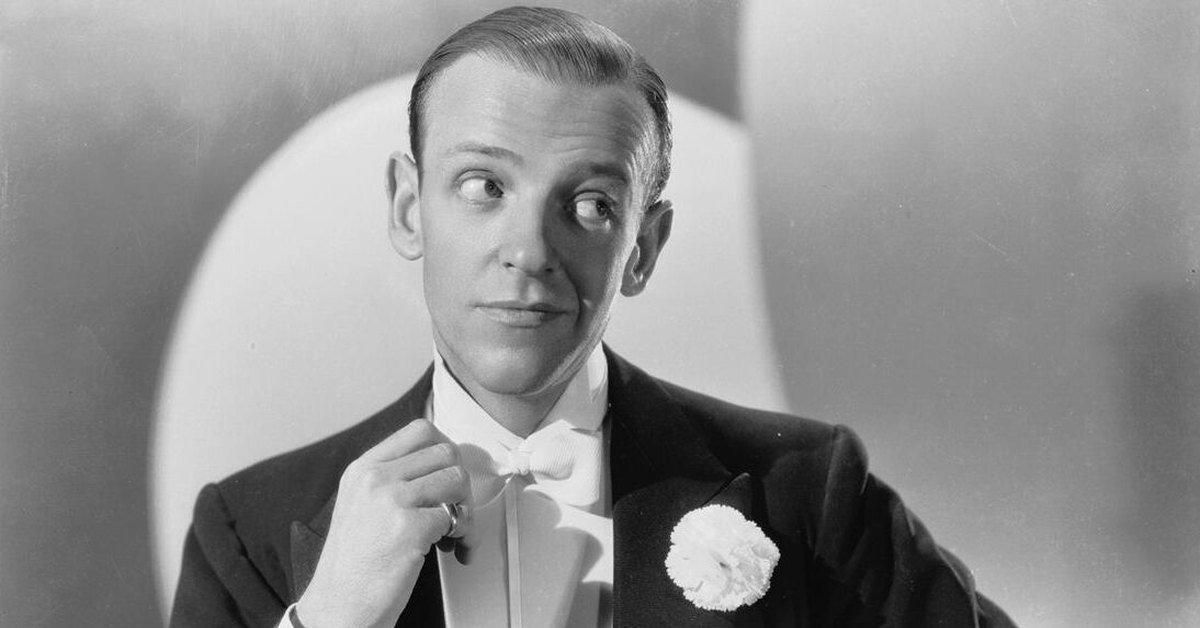
Astaire is the white-tie reference, the tailcoat dress code one step above black tie. Top Hat includes Irving Berlin’s “Top Hat, White Tie and Tails,” and the V&A records that Kilgour, French & Stanbury of Savile Row made his tail suit for the film. The Black Tie Guide credits his tailoring for tails that never shifted, even mid-routine. For black tie, The Rake picks Swing Time: a pocket square and lapel flower, a deep, heavily starched wing collar, and a ventless four-button double-breasted jacket over full trousers.
Clark Gable
Gentleman’s Gazette’s profile shows the 1930s Gable broad in the shoulder and narrow at the waist, in double-breasted suits with wide lapels, with pomaded hair and a pencil mustache. It adds that he wore a flower in the lapel with evening clothes, usually a carnation or a rose.
Frequently asked questions
Can you wear a suit instead of a tuxedo to a Hollywood glamour party?
Yes, unless the invitation says black tie, which means a tuxedo. Wear your darkest solid suit, ideally double-breasted, with a white shirt, a dark tie or a burgundy or navy bow tie, shined black oxfords and a white pocket square.
What colors are right for an old Hollywood outfit for men?
Black or midnight blue for the tuxedo, white for the shirt and pocket square, and black for the bow tie and shoes. In a dark suit instead of a tuxedo, swap the black bow tie for a burgundy or navy one. Keep color to one deep accent, such as a red carnation, and save an ivory jacket for warm weather.
Should a man wear a fedora with a tuxedo?
Not for a strict 1930s look. The hat that went with a dinner jacket then was the homburg, in black or midnight blue, and the fedora only began to be accepted with evening clothes after the Second World War. Today no hat at all is the norm, and has been since the 1970s.
Is a white tuxedo jacket right for an old Hollywood party?
Yes, in summer or warm weather: wear an ivory or cream dinner jacket like Bogart’s in Casablanca with black trousers and a black bow tie. In colder months or at a formal city venue, a black or midnight-blue jacket is safer and more formal.
Does white tie like Fred Astaire’s work for a Hollywood theme?
Only if the invitation asks for white tie. Tails rank above black tie, and the Black Tie Guide’s rule is never to dress more formally than the host.
Sources
- Depression Era Black Tie: 1930s Golden Age of Tuxedos, The Black Tie Guide, Gentleman’s Gazette, updated August 22, 2022
- Postwar Tuxedos and Black Tie: Late 1940s to Early 1950s, The Black Tie Guide, Gentleman’s Gazette, updated August 22, 2022
- Vintage Warm-Weather Evening Wear, The Black Tie Guide, Gentleman’s Gazette, updated October 13, 2022
- Vintage Evening Outerwear, The Black Tie Guide, Gentleman’s Gazette, updated February 6, 2024
- Vintage Evening Neckwear, The Black Tie Guide, Gentleman’s Gazette, updated October 13, 2022
- Classic Tuxedo: Dinner Suits, The Black Tie Guide, Gentleman’s Gazette, updated November 27, 2025
- Warm-Weather Black Tie: The (Off) White Dinner Jacket, The Black Tie Guide, Gentleman’s Gazette, updated February 6, 2024
- Classic Black Tie Outerwear, The Black Tie Guide, Gentleman’s Gazette, updated February 13, 2024
- Classic Tuxedo Shoes: Patent Leather Oxfords and Pumps, The Black Tie Guide, Gentleman’s Gazette, updated December 9, 2025
- Classic Neckwear: The Black Bow Tie, The Black Tie Guide, Gentleman’s Gazette, updated December 9, 2025
- Classic Tuxedo Alternatives, The Black Tie Guide, Gentleman’s Gazette, updated March 27, 2024
- Black Tie Dress Code Explained, The Black Tie Guide, Gentleman’s Gazette, updated December 9, 2025
- Black Tie Optional Dress Code, Explained, The Black Tie Guide, Gentleman’s Gazette, updated December 2, 2025
- Style Over Fashion: Lessons From the Past, The Black Tie Guide, Gentleman’s Gazette, updated June 3, 2025
- Tuxedo Buying Basics, The Black Tie Guide, Gentleman’s Gazette, updated August 13, 2024
- How to Fold a Pocket Square, The Black Tie Guide, Gentleman’s Gazette, updated February 6, 2024
- The Best Dinner Jackets in Cinema History, Christopher Modoo, The Rake, December 2021
- The Rake Film Fest: Casablanca, Freddie Anderson, The Rake, May 2022
- The Most Decadent Decades of Dinner Dress, Aleksandar Cvetkovic, The Rake, April 2016
- Evening suit, Kilgour, French & Stanbury, 1952, Victoria and Albert Museum collections, accessed October 31, 2026
- Clark Gable: Gentleman of Style, J.A. Shapira, Gentleman’s Gazette, March 20, 2015
- What Men Really Wore in the 1930s, Sven Raphael Schneider, Gentleman’s Gazette, October 14, 2021
- 2026 Actor Awards: Demi Moore, Chase Infiniti and Jacob Elordi Among the Night’s Best-Dressed Stars, Laurie Brookins, The Hollywood Reporter, March 1, 2026
- Oscar Tux-Ology 101, Carol McColgin, The Hollywood Reporter, February 21, 2012
Lead photo: Fred Astaire in a white bow tie, white waistcoat and carnation buttonhole, in a studio publicity portrait for You'll Never Get Rich (1941). Public domain, via Wikimedia Commons (cropped).