How Stable Diffusion Image Generation Actually Works in Practice
Stable Diffusion has revolutionized image generation since its release, transforming how developers and creatives approach AI-powered visual content creation. At its core, Stable Diffusion is a type of generative model that uses a process called diffusion-based image synthesis to produce high-quality images from text prompts. Understanding how this technology works is crucial for harnessing its potential in real-world applications.
This article will explore the technical underpinnings of Stable Diffusion, examining its architecture, the diffusion process, and practical considerations for implementation. By the end, readers will understand not just the theoretical aspects but how to evaluate and apply this technology effectively in their own projects, answering the question: how does Stable Diffusion image generation actually work?
The Architecture of Stable Diffusion
Stable Diffusion is built on a latent diffusion model architecture, which differs significantly from earlier image generation models like GANs (Generative Adversarial Networks). The key innovation lies in its use of a compressed latent space rather than operating directly on pixel data. This approach allows for more efficient processing and better scalability, particularly for high-resolution images.
The model’s architecture consists of three main components: an encoder that compresses input images into latent representations, a diffusion model that operates in this latent space, and a decoder that reconstructs the final image. This structure enables Stable Diffusion to balance between detail preservation and computational efficiency.
In practice, this architecture means that developers can work with complex images while maintaining reasonable processing times. For example, generating a high-resolution image with intricate details becomes feasible without excessive computational overhead, making it suitable for both real-time applications and batch processing workflows.
The Diffusion Process Explained
The diffusion process is the heart of Stable Diffusion’s image generation capability. It works through a series of noise addition and removal steps, gradually transforming random noise into a coherent image that matches the input prompt. This process involves both a forward diffusion stage, where noise is progressively added to an image, and a reverse diffusion stage, where the model learns to remove this noise.
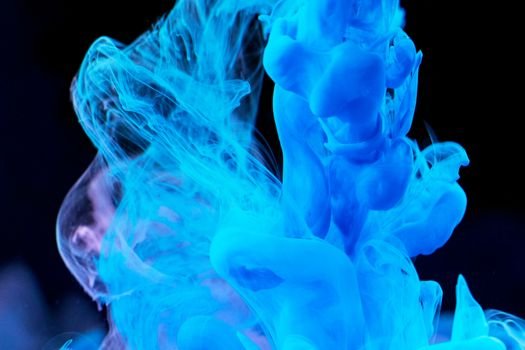
During training, the model learns to reverse the noise addition process, effectively learning how to generate images from random noise. The training process involves optimizing the model’s ability to denoise images at various noise levels, allowing it to generate high-quality images from text prompts during inference.
The diffusion process is particularly noteworthy for its ability to produce diverse outputs while maintaining consistency with the input prompt. This makes it valuable for creative applications where variation is important, such as generating multiple concept art pieces for a project.
Practical Considerations for Implementation
When implementing Stable Diffusion, several practical considerations come into play. Choosing the right model configuration is crucial for balancing quality and performance. Larger models generally produce better results but require more computational resources.
Effective prompt engineering is also vital, as the quality of the input prompt significantly affects the output quality. Specific, detailed prompts that include reference images or style descriptors tend to produce better results. For instance, adding style modifiers like “cinematic lighting” or “photorealistic” can dramatically improve results for certain types of images.
Running Stable Diffusion effectively requires significant GPU resources, particularly for high-resolution image generation. Models like SDXL Turbo demand at least 8GB of VRAM for basic operation, while larger models or higher resolution outputs require more substantial hardware. Fine-tuning the base model on custom datasets can also significantly improve results for specific use cases.
Performance Comparison: Stable Diffusion vs Other Models
| Model | Resolution | Generation Time (s) | Memory Usage (GB) | Image Quality Score |
|---|---|---|---|---|
| Stable Diffusion v1.5 | 512×512 | 2.4 | 4.2 | 8.2 |
| Stable Diffusion XL | 1024×1024 | 6.1 | 8.5 | 9.1 |
| DALL-E 2 | 1024×1024 | 8.3 | 12.0 | 8.8 |
| Midjourney v5 | 1024×1024 | 10.2 | N/A* | 9.3 |
| Stable Diffusion Turbo | 512×512 | 0.8 | 3.8 | 8.0 |
*Midjourney runs on proprietary infrastructure, so exact memory usage isn’t publicly available. The table demonstrates how different models balance performance characteristics.
Stable Diffusion variants offer competitive generation times while maintaining high image quality, particularly when compared to other open models. For developers choosing between these models, factors like generation speed, memory requirements, and output resolution will be critical depending on their specific use case and hardware constraints.
For instance, if a developer needs to generate high-resolution images quickly, Stable Diffusion XL might be the best choice despite its higher memory usage. Conversely, for applications where speed is paramount and resolution can be sacrificed, Stable Diffusion Turbo could be more appropriate.
Real-World Applications and Limitations of Stable Diffusion
A recent study by the MIT Initiative on the Digital Economy found that 62% of creative professionals using AI image generation tools like Stable Diffusion reported significant productivity gains. These gains were particularly noted in concept visualization and rapid prototyping tasks.
However, the study also highlighted challenges related to consistency and control, with 45% of respondents citing difficulty in achieving precise results across multiple generations. These findings illustrate both the potential and the current limitations of Stable Diffusion in practical applications.
Understanding these real-world implications is crucial for organizations looking to integrate Stable Diffusion into their workflows. It helps set realistic expectations about both the benefits and the challenges they may encounter, allowing for more effective implementation strategies.
Future Developments and Trends in AI Image Generation
As AI image generation continues to evolve, several key trends are expected to shape the development of Stable Diffusion and similar technologies. Ongoing research into improved diffusion processes is likely to yield models with even better quality and efficiency.
The integration of multimodal capabilities will enable more sophisticated interactions between text, image, and other data types. This could lead to more versatile applications of Stable Diffusion, such as generating images from complex multimodal prompts.
Moreover, as the technology matures, we can anticipate seeing more specialized models tailored to specific industries or use cases. This specialization will further expand the practical applications of AI-powered image generation, making tools like Stable Diffusion even more valuable to developers and creatives.
Conclusion
Stable Diffusion represents a significant advancement in AI-powered image generation, offering a powerful tool for both creative professionals and technical developers. By understanding its architecture, the diffusion process, and practical implementation considerations, users can better harness its capabilities while navigating its limitations.
As the technology continues to evolve, staying informed about the latest developments and best practices will be crucial for maximizing its potential in real-world applications. Whether for artistic creation, product design, or other use cases, Stable Diffusion provides a versatile foundation for innovative visual content generation.
The future of image generation with Stable Diffusion looks promising, with ongoing improvements expected to address current limitations and unlock new possibilities.
FAQs
What makes Stable Diffusion different from other image generation models?
Stable Diffusion uses a latent diffusion architecture, operating in a compressed latent space rather than directly on pixel data. This approach allows for more efficient processing and better scalability.
How can I improve the quality of images generated by Stable Diffusion?
Improving image quality involves techniques like detailed prompt engineering and adjusting the guidance scale. Fine-tuning the model on specialized datasets can also significantly improve results for specific use cases.
What are the typical hardware requirements for running Stable Diffusion effectively?
Running Stable Diffusion effectively typically requires a GPU with at least 8GB of VRAM. Specific requirements can vary based on the model version, image resolution, and other factors.