
Stable Diffusion is a generative AI model that produces high-quality images from text prompts, revolutionizing digital art and content creation. Understanding how Stable Diffusion works is crucial for artists, developers, and enthusiasts, as it continues to shape the landscape of various industries.
The ability to generate contextually relevant images has sparked creativity and controversy, driving the demand for clarity on how these models function. This article aims to demystify Stable Diffusion’s inner workings, providing insights into its architecture and diffusion process.
How Does Stable Diffusion Image Generation Actually Work?
Stable Diffusion is built upon a latent diffusion model architecture, operating in the latent space of an image. It compresses images into a compact representation using an autoencoder and generates new images by reversing a diffusion process that adds noise to the latent representation.
The use of latent space reduces computational resources required for training and inference, making Stable Diffusion more efficient than models operating directly on pixel data.
The Diffusion Process Explained
The core of Stable Diffusion’s functionality lies in its diffusion process, involving two main stages: forward diffusion and reverse diffusion. During forward diffusion, the model adds noise to an image’s latent representation, transforming it into pure noise.
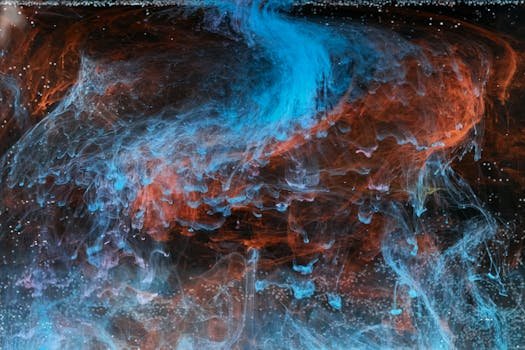
In the reverse diffusion stage, the model learns to denoise this representation, generating a new image through a neural network trained on a large dataset of images.
Key Components and Their Roles
Stable Diffusion’s architecture consists of several key components: an autoencoder that compresses images, a U-Net that predicts noise, and a text encoder that converts text prompts into a usable format. These components work together to enable efficient and contextually relevant image generation.
The diffusion process is the core mechanism that progressively denoises the latent representation to generate an image, requiring precise noise prediction at each step.
Comparing Stable Diffusion Models
| Model Version | Image Quality | Training Data | Computational Resources |
|---|---|---|---|
| Stable Diffusion 1.4 | Good | LAION-2B | Moderate |
| Stable Diffusion 2.0 | High | LAION-5B | High |
| Stable Diffusion 3.0 | Very High | LAION-5B+ | Very High |
| Custom Models | Varies | Custom Datasets | Varies |
The comparison highlights advancements in image quality and increasing demands on computational resources as models evolve. The choice of model depends on specific application requirements.
Practical Applications and Future Directions
Stable Diffusion has various applications, from art generation to creating synthetic data for training other AI models. Its ability to produce high-quality images from text prompts makes it a valuable tool in industries like entertainment and advertising.
As the technology evolves, we can expect improvements in image quality, faster generation times, and more sophisticated control over the generation process, with potential applications in virtual reality and gaming.
Conclusion
Stable Diffusion represents a significant advancement in generative AI, offering a powerful tool for image creation and manipulation. Understanding its architecture and diffusion process enables users to better use its capabilities and contribute to its development.
The continued refinement of this technology will be crucial in unlocking new creative possibilities and addressing associated challenges.
FAQs
What is the main advantage of using latent space in Stable Diffusion?
The main advantage is reduced computational resources, making it more efficient than models operating directly on pixel data.
How does the diffusion process in Stable Diffusion work?
The diffusion process involves two stages: forward diffusion, where noise is added, and reverse diffusion, where the model denoises the representation to generate a new image.
Can Stable Diffusion be used for purposes other than image generation?
Yes, it can be used for image editing and creating synthetic data, among other applications.
What are the ethical considerations associated with Stable Diffusion?
Ethical considerations include the potential for misuse in creating deepfakes and the need for mechanisms to distinguish between real and generated content.