

Your wrists are among the hardest-working joints in your body. Whether you spend hours typing, lifting weights, playing sports, or carrying groceries, healthy wrists are essential for smooth and pain-free movement. Unfortunately, many people only pay attention to their wrists after discomfort or stiffness begins to interfere with daily life.
Regular wrist exercises can improve mobility, increase strength, enhance flexibility, and reduce the risk of common injuries. These exercises are useful for office workers, athletes, musicians, gamers, and anyone who performs repetitive hand movements. With the right approach, you can maintain healthy wrists, improve grip strength, and support better overall arm function.
This guide explores the benefits of wrist exercises, the best ways to perform them, and practical tips to keep your wrists strong for years to come.
Table of Contents
Why Wrist Exercises Are Important
The wrist is a complex joint made up of several small bones, ligaments, tendons, and muscles that work together to provide movement and stability. Because the wrist is involved in almost every hand movement, it experiences constant stress throughout the day. Without proper care, repetitive activities may lead to stiffness, weakness, or discomfort over time.
Performing wrist exercises regularly helps maintain joint mobility while strengthening the surrounding muscles. Strong wrists support better performance during lifting, writing, typing, climbing, racquet sports, and many other activities. Improved strength also reduces strain on the forearm muscles, creating better balance throughout the upper limb.
Healthy wrist mobility is equally important. Flexible joints allow smoother movement, reducing unnecessary pressure on tendons and ligaments. This combination of strength and flexibility contributes to better function and may lower the risk of overuse injuries.
People recovering from mild wrist fatigue often notice improved comfort after following a consistent exercise routine. Although exercises cannot replace professional treatment for serious injuries, they are valuable for maintaining long-term wrist health.
Common Causes of Weak or Painful Wrists
Modern lifestyles place significant demands on the wrists. Long hours spent using computers, smartphones, and gaming controllers often require repetitive movements that strain muscles and tendons. Poor posture while typing can further increase stress on the wrist joint.
Weightlifting without proper technique is another common cause of wrist discomfort. Excessive loads or incorrect wrist positioning may create unnecessary pressure on the joint. Similarly, sports such as tennis, badminton, golf, gymnastics, and rock climbing place repeated force on the wrists.
Age-related changes also contribute to reduced flexibility and joint stiffness. As connective tissues naturally lose elasticity, regular movement becomes increasingly important for maintaining healthy function.
Previous injuries such as sprains or fractures may leave lingering weakness if rehabilitation is incomplete. Incorporating appropriate wrist strengthening exercises can help restore confidence and improve stability after recovery, provided they are performed under suitable guidance when necessary.
Benefits of Regular Wrist Exercises
One of the biggest advantages of wrist exercises is improved strength. Strong wrist muscles help stabilise the joint during lifting, pushing, pulling, and gripping tasks. Better stability often translates into improved performance during sports and everyday activities.
Another important benefit is enhanced flexibility. Gentle stretching keeps muscles and tendons mobile, allowing the wrist to move comfortably through its full range of motion. Improved flexibility may reduce stiffness after prolonged computer work or repetitive manual tasks.
Grip strength also improves when wrist muscles become stronger. A powerful grip supports activities ranging from carrying shopping bags to using tools, opening jars, and participating in athletic training. Strong wrists often improve confidence when performing physically demanding tasks.
Regular movement also encourages healthy circulation around the joint. Increased blood flow delivers nutrients to surrounding tissues, supporting recovery after exercise and reducing feelings of tightness. Many people report greater comfort and improved mobility after making wrist exercises part of their weekly fitness routine.
How Wrist Exercises Improve Daily Life and Athletic Performance
Healthy wrists contribute to nearly every upper-body movement. Everyday tasks such as cooking, cleaning, driving, writing, lifting children, and working at a computer all rely on stable, flexible wrists. Even simple actions like turning a doorknob or pouring a drink become easier when the wrist joint functions efficiently.
For athletes, wrist strength plays a major role in performance. Weightlifters depend on stable wrists during pressing exercises, while tennis players generate better control through strong forearm muscles. Golfers, baseball players, martial artists, and climbers all benefit from improved wrist endurance and coordination.
Musicians also gain advantages from regular mobility exercises. Pianists, guitarists, violinists, and drummers perform repetitive hand movements for extended periods, making flexibility essential for comfort and precision. Office workers experience similar benefits by reducing fatigue associated with prolonged keyboard use.
Developing stronger wrists supports better posture throughout the arms and shoulders. Improved joint stability allows smoother movement patterns, helping the entire upper body work more efficiently during both exercise and everyday activities.
Best Wrist Stretching Exercises for Better Flexibility
Flexibility is the foundation of healthy wrist movement. Before performing any strengthening routine, it is important to prepare the muscles, tendons, and ligaments with gentle stretches. Stretching improves circulation, reduces stiffness, and helps the wrists move through their full range of motion without unnecessary strain. It also prepares the joints for activities such as typing, lifting, playing sports, or practising musical instruments.
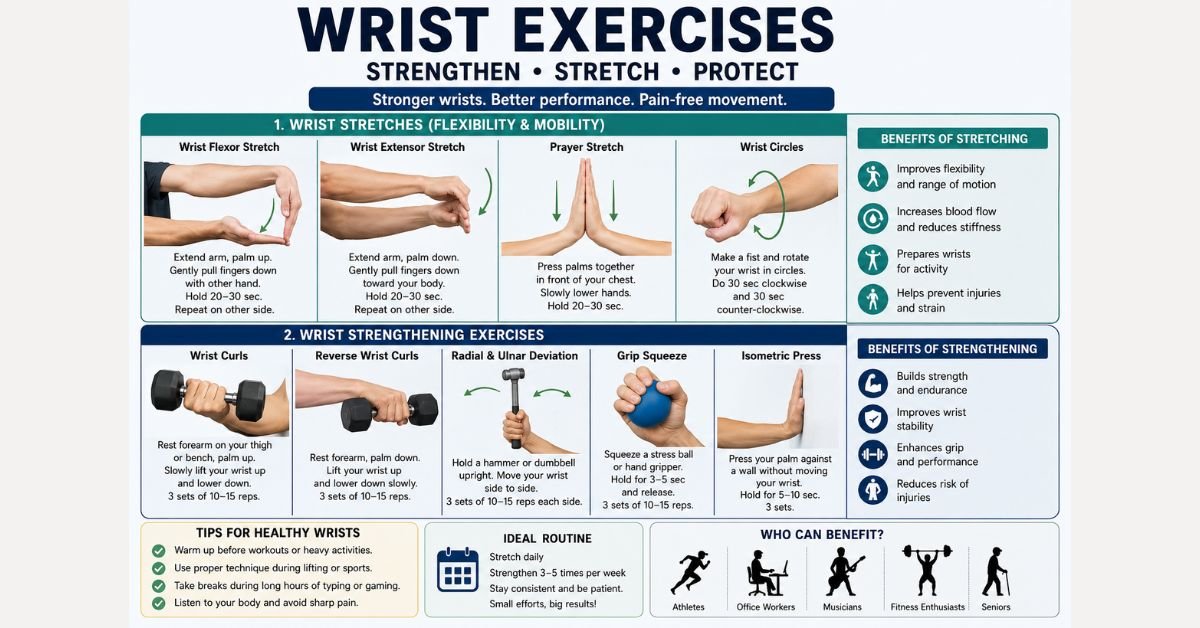
One of the most effective stretches is the wrist flexor stretch. Extend one arm in front of you with your palm facing upward. Use the opposite hand to gently pull your fingers downward until you feel a comfortable stretch along the inside of your forearm. Hold the position for about 20 to 30 seconds before switching sides. This simple movement helps relieve tension caused by repetitive gripping or computer use.
The wrist extensor stretch is equally beneficial. Extend your arm with the palm facing down, then gently pull the fingers toward your body using your opposite hand. You should feel the stretch along the top of the forearm. Performing both stretches regularly improves flexibility, supports healthy joint movement, and reduces feelings of tightness after long periods of activity.
Another useful movement is the wrist prayer stretch. Place your palms together in front of your chest and slowly lower your hands while keeping your palms pressed together. This stretch targets both wrists at the same time and is commonly used by athletes and office workers to improve mobility.
Gentle wrist circles are also excellent for warming up. Rotate your wrists slowly in both clockwise and counter-clockwise directions for about 30 seconds each. This movement increases blood flow, lubricates the joints, and prepares the wrists for more demanding exercises.
Effective Wrist Strengthening Exercises
Building strength is essential for improving wrist stability and preventing injuries. Strong wrists provide better support during lifting, pushing, pulling, and gripping activities. They also reduce stress on the surrounding muscles and joints, making everyday tasks easier and more comfortable.
A simple strengthening exercise involves making a loose fist and slowly bending the wrist upward and downward while holding a light dumbbell or water bottle. Begin with a light weight and perform slow, controlled repetitions. This exercise targets the wrist flexors and extensors, helping to improve endurance and stability.
Reverse wrist curls are another excellent exercise. Rest your forearm on a bench or table with your palm facing downward while holding a light weight. Slowly lift your hand upward, pause briefly, and lower it under control. This movement strengthens the muscles on the back of the forearm, which are often overlooked but play an important role in wrist stability.
Grip training is equally valuable. Squeezing a soft stress ball or hand gripper strengthens the muscles responsible for gripping and improves overall hand function. Strong grip strength supports daily activities such as carrying bags, opening containers, and handling tools with greater confidence.
Isometric exercises can also help. Press your palm against a solid surface without allowing the wrist to move. Hold the pressure for several seconds before relaxing. These exercises activate the muscles without excessive joint movement, making them useful for building strength safely.
Consistency is more important than heavy resistance. Performing these strengthening exercises several times each week can gradually improve wrist function while reducing the likelihood of overuse injuries.
Conclusion
Healthy wrists play a vital role in almost every daily activity, from typing and cooking to lifting weights and playing sports. Ignoring wrist health can lead to stiffness, weakness, and discomfort that affects both productivity and quality of life. Fortunately, a consistent routine of wrist exercises can significantly improve flexibility, strength, grip power, and joint stability.
The key to success is consistency rather than intensity. Gentle stretching before activity, strengthening exercises several times a week, and proper recovery habits help protect the wrist joint from unnecessary strain. Whether you are an office worker, athlete, musician, or fitness enthusiast, investing a few minutes each day in wrist care can make a lasting difference.
Remember to perform every exercise with controlled movements and avoid pushing through sharp pain. If you have a serious injury or persistent discomfort, consult a qualified healthcare professional before beginning any exercise programme. By making wrist exercises part of your regular fitness routine, you can enjoy stronger hands, healthier joints, improved performance, and greater confidence in your everyday movements.
FAQs
What are the best wrist exercises for beginners?
Beginners should start with wrist circles, wrist flexor and extensor stretches, wrist curls using light weights, and gentle grip-strength exercises to safely build mobility and strength.
How often should I do wrist exercises?
For most people, performing wrist exercises three to five times per week is enough to improve strength and flexibility while allowing proper recovery.
Can wrist exercises help reduce wrist pain?
Yes, gentle wrist exercises may reduce mild stiffness and discomfort by improving flexibility, circulation, and muscle strength. However, persistent or severe pain should be evaluated by a healthcare professional.
Do wrist exercises improve grip strength?
Absolutely. Strengthening the wrist and forearm muscles improves grip power, making everyday activities, sports, and weight training easier and more effective.
Are wrist exercises useful for people who work on computers?
Yes. Regular stretching and strengthening exercises help reduce stiffness caused by prolonged typing and mouse use, improve mobility, and support better wrist health over time.