A PWI, short for predominantly white institution, is a college or university in the United States where 50% or more of the students are white. The label describes who is enrolled, not a legal status: federal education law defines historically Black colleges and Hispanic-Serving Institutions, but it has no PWI category, so there is no PWI status to apply for. In practice, the figure most people check is the white share of a college’s undergraduates, which the Department of Education publishes on College Scorecard.
Where the 50% definition comes from
The common definition traces to the Encyclopedia of African American Education, which the SAGE Social Science Thesaurus cites in its entry for the term: a college counts as a PWI when white students are at least half of its enrollment. Pointing to the exclusion the United States supported before 1964, the same entry says most PWIs can also be described as historically white.
Some scholars think headcount misses the point. Duke sociologists Eduardo Bonilla-Silva and Crystal Peoples, writing in American Behavioral Scientist in 2022, called most American campuses “historically white colleges and universities,” arguing that history and power define a school more than its current numbers. Their examples include Duke, Stanford and MIT. In College Scorecard’s fall 2024 figures, white students make up 35% of undergraduates at Duke, 23% at Stanford and 21% at MIT, so none of the three meets the 50% test. The authors still count all three as historically white, because in their framing the label rests on history rather than on any enrollment threshold.
How to check whether a college is a PWI
The fastest route is the Education Department’s College Scorecard. Find the school by name and click the Campus Diversity heading on its page. A Race/Ethnicity panel opens with two columns, the student body and the full-time staff, in whole percentages. A White figure above 50% means the school fits the standard definition; since the page rounds, a school showing exactly 50% could sit just under the line.
Only undergraduates working toward a credential are included, the count is taken each fall, and race is whatever students themselves report. Rows for “Non-resident alien,” “Unknown” and two or more races stand apart, so none of those students count toward the white share. Near the line, that can flip the answer. At the University of Michigan, 47% of undergraduates are white, but set aside the 8% listed as non-resident aliens and the 4% unknown, and white students make up about 53% of the rest. By the standard measure, which counts every student, Michigan is under the line.
Examples of PWIs and their white enrollment share
The 14 universities below are well-known examples in alphabetical order, not a ranking, and two fall under 50% to show where the line sits. Each figure is the school’s share of undergraduate degree- and certificate-seeking students in fall 2024, from the College Scorecard data release of October 15, 2026, pulled on October 31, 2026 and rounded to whole percentages.
| School | State | White undergraduates | Black undergraduates | At or above 50% white? |
|---|---|---|---|---|
| Clemson University | SC | 76% | 5% | Yes |
| Louisiana State University (LSU) | LA | 57% | 21% | Yes |
| Ohio State University, Columbus | OH | 60% | 8% | Yes |
| Penn State, University Park | PA | 63% | 5% | Yes |
| Texas A&M University, College Station | TX | 52% | 2% | Yes |
| University of Alabama | AL | 71% | 11% | Yes |
| University of California, Los Angeles (UCLA) | CA | 24% | 3% | No |
| University of Georgia | GA | 66% | 6% | Yes |
| University of Massachusetts Amherst | MA | 57% | 5% | Yes |
| University of Michigan, Ann Arbor | MI | 47% | 5% | No |
| University of Mississippi | MS | 78% | 10% | Yes |
| University of North Carolina at Chapel Hill | NC | 53% | 7% | Yes |
| University of Notre Dame | IN | 59% | 5% | Yes |
| University of Wisconsin-Madison | WI | 59% | 2% | Yes |
A school can sit near the line and be diverse in other ways: Texas A&M is 52% white and 26% Hispanic.
Is LSU a PWI?
Yes. In fall 2024, 57% of LSU’s undergraduates were white and 21% were Black, which keeps the Baton Rouge campus above the line. The margin has narrowed fast. The white share was 74% in fall 2014 and 66% in fall 2021, while the Black share rose from 11% to 16% over those years. White enrollment itself barely changed, at about 18,100 in fall 2014 and about 17,600 in fall 2024. What changed is size: LSU added roughly 6,100 undergraduates over the decade, and Black and Hispanic students made up nearly 90% of that net growth, by a calculation from the same Scorecard data.
PWI vs HBCU vs HSI vs PBI
Of these four labels, only PWI is missing from Title 20 of the U.S. Code, where each of the other three has its own test:
- HBCU, or historically Black college or university. To qualify under 20 U.S.C. 1061, a school must be accredited or on track for accreditation, must date from before 1964, and must have had educating Black Americans as its main purpose then and now. The test is history, not headcount: there were 100 HBCUs in 2025, and 71% of their students identified as Black in fall 2024, according to PNPI.
- HSI, or Hispanic-Serving Institution. Hispanic students must make up at least 25% of undergraduate full-time-equivalent enrollment, and the school must pass other federal tests, among them enrolling students with financial need and spending relatively little per student next to similar schools (20 U.S.C. 1101a).
- PBI, or Predominantly Black Institution. The school needs at least 1,000 undergraduates, at least 40% of them Black and at least half low-income or first-generation, among other conditions, and it cannot already be funded as an HBCU or HSI under the same law (20 U.S.C. 1059e).
- PWI. Half or more of the students are white, and Title 20 does not define it.
The labels can overlap. A college whose undergraduates are 55% white and 30% Hispanic would clear the PWI line and the HSI enrollment threshold at once, though it would still have to meet the HSI need and spending tests.
Enrollment-based tests like these are now contested: in June 2025, Tennessee and Students for Fair Admissions sued the Education Department over the HSI program’s 25% Hispanic threshold. A December 2025 opinion from the Justice Department’s Office of Legal Counsel found it unconstitutional to tie federal education grants to a campus’s racial or ethnic makeup, and the Education Department’s statement named HSI and PBI grants among the programs affected. Grants for HBCUs, whose status depends on when and why they were founded, did not appear there.
PWI vs HBCU by the numbers
HBCUs enrolled 9% of the nation’s Black college students in 2024, a little below the 9.4% of 2014, according to the Postsecondary National Policy Institute (PNPI), which drew on federal enrollment data. The other 91% are not all at PWIs, since that group also takes in HSIs and campuses with no racial majority, and the studies below compare HBCUs with all other colleges, not with PWIs alone.
| Measure | HBCUs | All other colleges |
|---|---|---|
| Share of all Black college students enrolled, 2024 (PNPI) | About 9% | About 91% |
| Black students’ graduation rate, raw average (Gordon and colleagues, 2021) | About 32% | About 44% |
| Chance of graduating in a like-for-like comparison (same study) | Up to 33% higher | Baseline |
| Black alumni who strongly agreed their professors cared about them personally (Gallup, 2015) | 58% | 25% |
The two graduation rows point in opposite directions, and both hold up. HBCU students start from a different place. A 2023 National Bureau of Economic Research paper by Gregory Price and Angelino Viceisza, citing earlier research, puts the low-income share at HBCUs near a quarter, three times the share at predominantly white institutions, and notes that HBCU students more often arrive with lower high school grades and test scores. Comparisons that account for that starting point reverse the result. The 2021 study did so by setting each HBCU against similar colleges. A 2023 working paper published by Brown University’s Annenberg Institute tracked nearly 1.2 million Black SAT takers and compared students who had applied to similar colleges. Students who began at an HBCU earned a bachelor’s degree at a rate 14.6 percentage points higher, but many of the students they were measured against had begun at a two-year school or never enrolled anywhere, so the figure is not a head-to-head comparison with four-year PWIs. Not every study finds a college effect. Several cited in the NBER paper conclude that who enrolls where, rather than what the college does, explains most of the graduation difference between HBCUs and other schools. The adjusted studies above favor HBCUs, but the question is not settled.
Campus climate and mental health
For its October 2023 report Creating Positive College Campus Racial Climates for Students of Color, EdTrust, a research and advocacy group, talked with Asian American, Black and Latino students at PWIs in 15 states. Students complained that administrators failed to recognize or handle microaggressions and racist incidents, that classmates and faculty of color were scarce, and that support was thin; the report’s author added that many students of color still feel isolated. Jessie Hernandez-Reyes, the report’s author, said: “University leadership must act to address poor campus racial culture, as research consistently shows that students of color’s experiences on college campuses significantly affect their sense of belonging, perseverance, and graduation rates.” Interviews show what students went through, not how often it happens nationally.
A University of Georgia study in the Journal of American College Health adds survey evidence, with limits of its own. In 2021, during the COVID-19 pandemic, it surveyed 3,102 students at one predominantly white university and one historically Black university, and 87% of the respondents were women. On both campuses, the most serious levels of depression were more common among students outside the school’s racial majority. Accounts of the PWI results differ, though: the paper’s abstract links minority status there to anxiety but not to depression, while the university’s news release reports the reverse. A single campus of each type, surveyed in a pandemic year, makes the study a warning sign rather than a national rate.
Checklist for visiting a PWI
- Open the school’s Campus Diversity panel on College Scorecard and compare the student body column with the full-time staff column beside it.
- Look up six-year graduation rates by race on the Education Department’s College Navigator, under Retention and Graduation Rates; the Scorecard profile page does not break them out.
- Find out whether there is a cultural center with full-time staff, and how active the identity-based student groups are.
- Search local and student news for how leaders handled recent racial incidents, since administrators’ handling of incidents drew complaints in the EdTrust interviews.
- Talk with current students of color away from the official tour.
Frequently asked questions
What does PWI stand for?
PWI stands for predominantly white institution. It refers to a college or university in the United States where at least half of the students are white.
What percentage of Black students go to PWIs?
Because PWI is not a federal category, the usual statistic runs the other way: HBCUs enrolled about 9% of the country’s Black college students in 2024, according to the Postsecondary National Policy Institute. The remaining 91% were spread across every other kind of college, PWIs included, along with HSIs and schools where no racial group is a majority.
Do PWI graduates get paid more?
Not clearly. PNPI’s figures show Black HBCU graduates earning about $8,000 less in 2019 than Black bachelor’s graduates overall, measured four years after the degree among those who finished before age 29. A 2023 National Bureau of Economic Research paper found that Black HBCU graduates who finished in 2008 had roughly caught up ten years later, and it notes that studies using newer data, such as one that adjusted for college major and city wages, tend to find an HBCU wage premium. Neither source measures PWIs on their own; both compare HBCUs with all other colleges.
Can a school stop being a PWI?
Yes, because the label follows enrollment. The University of Michigan’s undergraduates were 62% white in fall 2014 and 51% in fall 2022, then 49% in fall 2023, below the line, according to College Scorecard data. In the historically white framing, though, the label rests on a school’s history, not its current enrollment.
Which schools are considered PWIs?
Any college where white students are at least half of enrollment fits the definition. In fall 2024 Scorecard data, examples include the University of Mississippi at 78% white, Clemson at 76%, the University of Alabama at 71%, Penn State at 63%, Ohio State at 60% and LSU at 57%, and the table above lists more.
Sources
- College Scorecard data, U.S. Department of Education, release of October 15, 2026, pulled October 31, 2026.
- SAGE Social Science Thesaurus, “predominantly white institutions.”
- U.S. Code, Title 20: section 1061, section 1101a and section 1059e, via Cornell’s Legal Information Institute.
- NBER Working Paper 31131, Price and Viceisza, April 2023.
- PNPI, HBCU fact sheet, January 2026.
- EdTrust report and press release, October 19, 2023.
- Tennessee Attorney General, June 11, 2025.
- Rajbhandari-Thapa and colleagues, Journal of American College Health, published online July 24, 2023.
- UGA Today, October 17, 2023.
- EdWorkingPaper 23-883, Edwards, Ortagus, Smith and Smythe, Annenberg Institute at Brown University, 2023.
- Gordon, Hawley, Carrasco Kobler and Rork, Research in Higher Education, 2021, figures as summarized in NBER Working Paper 31131.
- Inside Higher Ed, November 29, 2023.
- Bonilla-Silva and Peoples, American Behavioral Scientist, 2022.
- U.S. Department of Education statement, December 19, 2025.
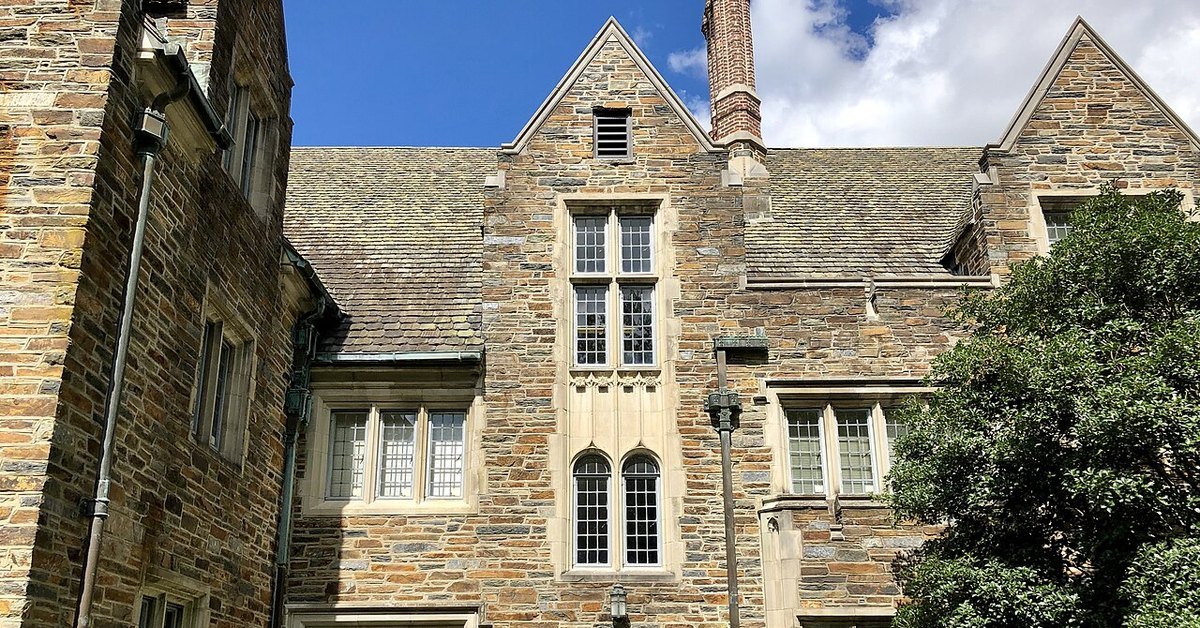
Lead photo: Kilgo Quad on Duke University's West Campus in Durham, North Carolina. Photo: Warren LeMay, CC0, via Wikimedia Commons (cropped).