What degree is a pitching wedge? In current iron sets it is usually between 41° and 45° of loft, with Ping’s G740 as strong as 40° and some players’ irons and blades as weak as 46° to 47°. Older sets had weaker lofts, so the only reliable number for your club is the spec table for your exact set.
The chart below lists current lofts by brand and model.
Quick Answer
A pitching wedge is usually between 41° and 45° of loft, depending on the brand and model. Game-improvement sets sit at the strong end (Ping G740 40°, Callaway Elyte X 41°), players’ irons at the weaker end (Titleist T100 and Ping i240 45°, TaylorMade P7MB 47°). Older sets had weaker lofts.
What Degree Loft Is a Pitching Wedge in Golf?
Most pitching wedges fall between 41° and 45° loft today. Shot Scope’s 2026 data puts the average amateur’s pitching wedge carry at 118 yards.
- Modern Pitching Wedge Loft: usually 41° to 45° (Callaway’s current sets run 41° to 45°, TaylorMade’s 42.5° to 47°).
- Game-Improvement Irons: Some sets push as low as 40° (Ping G740).
Quick takeaway: If your wedge is newer, it’s probably stronger (lower loft). In other words, a pitching wedge’s loft depends on whether it’s modern or traditional.
The Evolution of Pitching Wedge Loft: From Tradition to Modern Power
Pitching wedge lofts have not stayed the same: over the decades they have grown stronger along with the rest of the iron set.
Golf.com puts a typical 1980s 7-iron at 35 to 36 degrees, against 28 to 30 for many game-improvement 7-irons now.
Why Do Modern Pitching Wedges Have Stronger Lofts?
Modern irons carry more weight low and toward the back of the head, which sends the ball higher, so makers reduce loft to hold launch and spin at usable levels; the stronger lofts also add distance. The trade-off? You often need to add a gap wedge to fill the distance between your pitching wedge and sand wedge.
According to Golf.com, lofts have trended stronger over the past 20 years, which is why many golfers now carry an extra wedge.
Pitching Wedge Loft Chart by Brand (Current Models)
| Brand | Model | PW loft |
| Titleist | T100 | 45° |
| Titleist | T150 | 44° |
| Titleist | T250 | 43° |
| Titleist | T350 | 43° |
| Titleist | T250 Launch Spec | 47° |
| Callaway | Apex Ai200 | 43° |
| Callaway | Quantum Max | 42° |
| Callaway | Elyte X | 41° |
| Callaway | Apex Pro | 45° |
| TaylorMade | P790 | 44° |
| TaylorMade | Qi Max | 42.5° |
| TaylorMade | P7MB | 47° |
| Ping | i240 | 45° |
| Ping | G440 | 42° |
| Ping | G740 | 40° |
| Mizuno | Pro M-13 | 44° |
| Mizuno | JPX925 Hot Metal | 42° |
| Mizuno | JPX925 Hot Metal HL | 45° |
| Mizuno | Pro S-1 | 46° |
Source: each manufacturer’s published spec table, checked November 2026.
This chart shows why there’s no one-size-fits-all pitching wedge loft.
Pitching Wedge Yardage Guide
Loft directly affects yardage, but distance also depends on your swing speed.
| Golfer | Average pitching wedge carry |
| Scratch (0 handicap) | 141 yards |
| 5 handicap | 126 yards |
| 10 handicap | 127 yards |
| 15 handicap | 121 yards |
| 20 handicap | 108 yards |
| 25 handicap | 90 yards |
| Average amateur | 118 yards |
| PGA Tour player | 142 yards |
Sources: Shot Scope amateur data reported by Golf Monthly (July 2026); TrackMan PGA Tour averages for the 2023 season, reported by Golf Monthly.
Remember: It’s not about copying a pro’s distance, but knowing your own average. Knowing the loft of the pitching wedge in your bag will also help predict your yardage gaps.
Pitching Wedge vs Other Clubs
Pitching Wedge vs Gap Wedge Loft Difference
- Pitching wedge: 41° to 45°
- Gap wedge: 50° to 52°
- Difference: about 5° to 11° with current pitching wedge lofts, which is why many golfers add a wedge in between.
Pitching Wedge vs Sand Wedge Degrees Explained
- Pitching wedge: 41° to 45°
- Sand wedge: 54° to 56°
- The sand wedge is designed for bunkers and high, soft shots.
Pitching Wedge vs 9 Iron Loft Comparison
- 9 iron: about 36° to 41° in most current sets (up to 43° in a few)
- Pitching wedge: 41° to 45°
- Difference: usually about 4° to 5° in current sets; check your own carry gap on a launch monitor or at the range.
Approach, utility and gap wedges in today’s iron sets
Because pitching wedges have grown stronger, many iron sets now include a matching wedge that sits between the pitching wedge and the sand wedge. Brands name it differently:
- Callaway (AW): 46° to 50° (Elyte X 46°, Quantum Max 47°, Apex Ai200 48°, Apex Pro 50°)
- TaylorMade (AW): 48° to 51° (Qi Max 48°, P790 49°, P770 50°, P7CB 51°)
- Ping (UW): 45° to 50° (G740 45°, G440 47°, i240 50°)
- Mizuno (GW): 48° to 50° (JPX925 Hot Metal 48°, Hot Metal HL 50°)
- Titleist (W): 48° to 52° (T150 48°, T100 49°, T250 Launch Spec 52°)
If your set includes one of these, it often fills the gap that a separate 50° to 52° gap wedge would cover.
Source: each manufacturer’s published spec table, checked November 2026.
These comparisons highlight why knowing your pitching wedge loft matters when building your set.
Wedge Gapping in Golf: Why It Matters
Good golfers don’t leave distance “dead zones.”
- If your pitching wedge is 44°, you’ll likely need a gap wedge at 50°.
- If your pitching wedge is 48°, a 54° sand wedge keeps a 6° gap; at 46°, add a 50° or 52° wedge first.
Pro Tip: Always test your yardages on the range instead of trusting the stamped number. Knowing your loft is step one; testing real distance is step two.
Sources:
- Golf.com: industry reporting on wedge loft trends and the “loft jacking” phenomenon in modern irons (What ‘loft jacking’ gets wrong about modern irons; Why you should stop fixating on iron ‘loft jacking’).
- Manufacturer spec pages: published loft tables for Titleist (T100, T150, T250, T350), Callaway (Apex Ai200, Apex Pro, Quantum Max, Elyte X), TaylorMade (P790, P7MB, Qi Max), Ping (i240, G440, G740) and Mizuno (Pro M-13, Pro S-1, JPX925 Hot Metal), checked November 2026.
Final Thoughts
So, what degree is a pitching wedge? The short answer is 41° to 45° in modern sets, with weaker lofts in older ones. That number affects your yardages and the gaps to your other wedges.
If you’re building your bag or upgrading clubs, start by checking the pitching wedge specs. It’ll guide whether you need a gap wedge, sand wedge, or even a lob wedge to complete your set.
Frequently asked questions
How many yards does a pitching wedge hit?
Shot Scope’s 2026 amateur data puts the average pitching wedge carry at 118 yards, from about 90 yards at a 25 handicap to 141 yards for scratch golfers. PGA Tour players average about 142 yards of carry, per TrackMan.
Is a 44 degree wedge the same as a pitching wedge?
Often, but not always. Current pitching wedges run about 41° to 45° (Titleist T150 and TaylorMade P790 are 44°). Always check the manufacturer’s specs for your set.
What degree should a beginner’s pitching wedge be?
Most beginners use the pitching wedge that comes with a game-improvement set, often 40° to 43° today; focus on even gaps to your next wedge.
Do all pitching wedges have the same loft?
No. Lofts vary by brand, model, and year. Always confirm your club’s specs; there isn’t one permanent pitching wedge loft.
Which wedge to use for 100 yard shots?
It depends on your own carry numbers. The average amateur carries a pitching wedge about 118 yards (Shot Scope, 2026), so a full pitching wedge usually flies past 100 yards and a gap or sand wedge, or a shorter pitching wedge swing, fits better. Players who carry a pitching wedge about 100 yards or less, such as the 25-handicap average of 90 yards, can use a full one.
Is a pitching wedge good for chipping?
Yes. Many golfers use pitching wedges for bump-and-run chips because the loft provides just enough lift without too much spin.
Why do modern pitching wedges have stronger lofts?
Modern iron heads put weight lower and deeper, which raises launch, so clubmakers strengthen lofts to keep the ball flight playable. The side effect is extra distance and a bigger gap to the sand wedge, which is why many golfers add another wedge.
Is a pitching wedge an iron or a wedge?
Both, in practice. It is named a wedge, but it is usually sold as part of the iron set with the same head design, and Titleist, Callaway, TaylorMade, Ping and Mizuno all list it in their iron spec tables.
Is a pitching wedge 48 degrees?
Not in any current set in the chart above, where the weakest is 47°. Today 48° is a common loft for the wedge after the pitching wedge, such as the TaylorMade Qi Max AW, Mizuno JPX925 Hot Metal GW and Titleist T150 W.
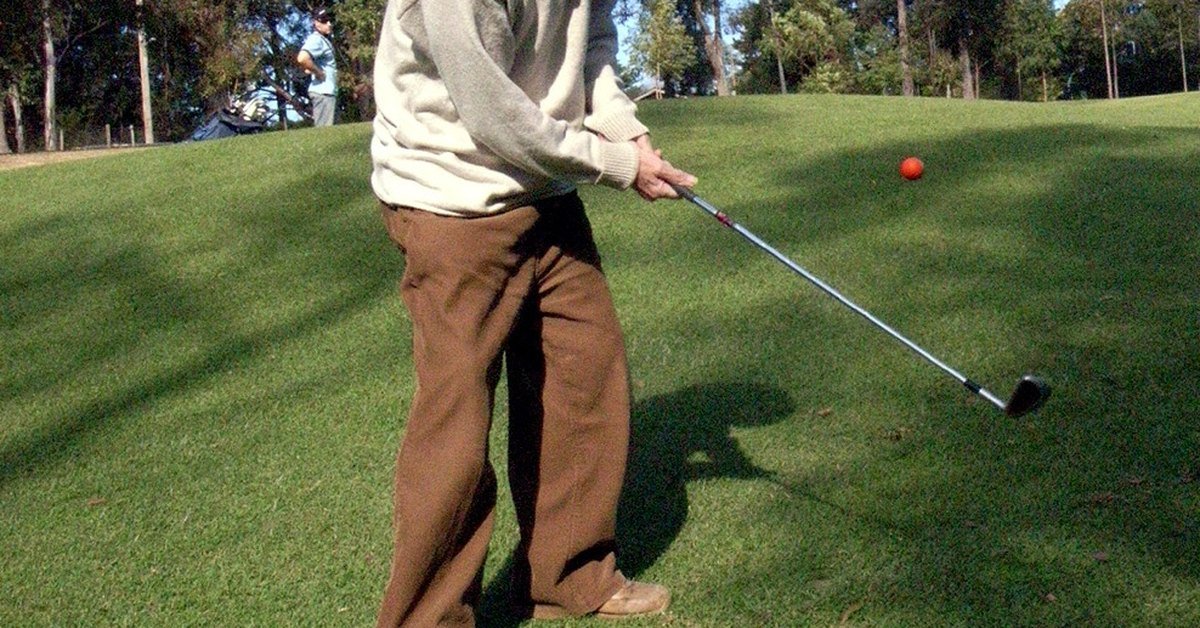
Lead photo: A golfer swinging a pitching wedge. Photo: Sheriff of Nothing, CC BY 2.0, via Wikimedia Commons (cropped).