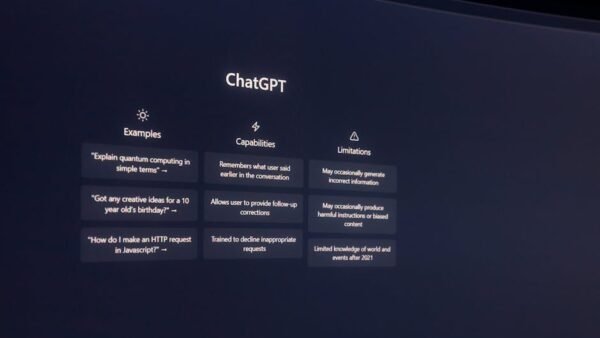

An LLM (Large Language Model) suite is a comprehensive collection of tools, frameworks, and models designed to support the development, deployment, and management of AI applications centered around large language models. The right LLM suite is crucial for developers who need to build sophisticated AI-driven solutions efficiently in 2026.
The growing demand for AI applications has made LLM suites indispensable for developers. Choosing the right LLM suite can significantly impact the performance, scalability, and cost-effectiveness of AI projects. This article will explore the key components of an LLM suite, compare popular options available in 2026, and provide insights into selecting the best suite for specific development needs.
Key Components of an Effective LLM Suite
An effective LLM suite should include several critical components that enable developers to build, deploy, and manage AI applications efficiently. First and foremost, a robust LLM suite should offer access to a range of pre-trained models that can be fine-tuned for specific tasks. These models should be optimized for various use cases, such as natural language processing, code generation, and multimodal interactions.
Beyond pre-trained models, an LLM suite should provide tools for fine-tuning and customizing models to meet specific application requirements. This includes support for domain adaptation, where models are trained on specialized datasets to improve their performance in niche areas. Additionally, the suite should offer inference optimization tools that enable developers to deploy models efficiently in production environments, managing factors such as latency, throughput, and resource utilization.
The ability to integrate with other development tools and frameworks is another crucial aspect of an LLM suite. Developers need to be able to seamlessly incorporate AI capabilities into their existing workflows, whether they’re using cloud services, containerization tools, or CI/CD pipelines. A well-designed LLM suite should provide APIs, SDKs, and other integration points that make it easy to incorporate AI into broader application architectures.
Popular LLM Suites in 2026: A Comparative Analysis
Several LLM suites have gained prominence in 2026, each with its strengths and weaknesses. To understand which suite is best suited for different development needs, it’s essential to compare their key features, performance benchmarks, and use case support. The choice of an LLM suite depends on various factors including model variety, fine-tuning capabilities, and integration with existing infrastructure.
One of the leading LLM suites is the OpenAI Developer Platform, which offers access to models like GPT-4 and GPT-4o. This platform is known for its robust API, extensive documentation, and strong support for a wide range of applications, from natural language processing to code generation. Another significant player is the Hugging Face Transformers library, which provides a vast repository of pre-trained models and a flexible framework for fine-tuning and deploying them.
Other notable LLM suites include Google’s Vertex AI, which integrates seamlessly with other Google Cloud services, and Anthropic’s Claude, known for its advanced natural language understanding capabilities. Each of these suites has its unique strengths, and the choice between them often depends on specific project requirements.
LLM Suite Features to Consider
- Model Variety and Customization: Does the suite offer a range of models for different tasks? Can you fine-tune these models on your own data? For instance, the Hugging Face platform provides over 100,000 pre-trained models across various categories.
- Inference Optimization Tools: Are there tools to optimize model performance in production? How do they handle latency and throughput? The OpenAI platform offers optimized inference engines.
- Integration Capabilities: How easily can the LLM suite integrate with other tools and frameworks you’re using? Google’s Vertex AI offers seamless integration with other Google Cloud services.
- Security and Compliance: What measures are in place to ensure data privacy and compliance with regulatory standards? Anthropic’s Claude offers enterprise-grade security features.
- Cost and Pricing Model: What is the pricing structure? Understanding the cost implications is crucial for budgeting and scaling AI projects.
The availability of diverse models is crucial for addressing different application requirements. For example, a developer building a customer support chatbot might need a model optimized for conversational AI.
Inference optimization is critical for ensuring that AI applications perform well under load. Tools that can dynamically adjust batch sizes and optimize hardware utilization are essential.
Integration is key to incorporating AI into existing workflows. An LLM suite that supports multiple integration pathways can significantly reduce development time.
As AI applications handle sensitive data, security and compliance become paramount. An LLM suite that prioritizes these aspects can help developers mitigate risks.
Pricing models for LLM suites vary widely. Developers need to evaluate these models in the context of their project requirements and expected usage patterns.
When evaluating an LLM suite, it’s also important to consider the level of support provided by the vendor, including documentation, community support, and customer service. A well-supported LLM suite can significantly reduce development time and improve overall project success rates.
Comparing LLM Suites: A Detailed Analysis
| LLM Suite | Key Models | Fine-Tuning Support | Inference Optimization | Integration Capabilities |
|---|---|---|---|---|
| OpenAI Developer Platform | GPT-4, GPT-4o | Yes, via API | Highly optimized | REST API, SDKs |
| Hugging Face Transformers | 100,000+ models | Yes, extensive | Moderate | Python library, API |
| Google Vertex AI | PaLM, Gemini | Yes, via Vertex AI console | Highly optimized | Tight integration with Google Cloud |
| Anthropic Claude | Claude 3, Claude 3.5 | Limited, via API | Optimized for accuracy | API, enterprise integrations |
This comparison highlights the diverse strengths of each LLM suite. For instance, while OpenAI excels in inference optimization, Hugging Face offers unparalleled model variety.
The choice of LLM suite ultimately depends on the specific needs of the project. Developers should carefully evaluate the trade-offs between different suites and choose the one that best aligns with their project requirements.
Practical Applications of LLM Suites
LLM suites have numerous practical applications in areas such as customer support, code generation, and content creation. By using pre-trained models and fine-tuning them on specific datasets, developers can create highly effective AI-driven solutions.
One practical application is in the development of AI-driven customer support systems. Companies can create chatbots that handle complex customer inquiries by fine-tuning models on customer support datasets.
Another significant application is in code generation and software development. LLM suites that include models optimized for code generation can help developers write code more efficiently.
Challenges and Limitations of LLM Suites
Despite their many benefits, LLM suites also present several challenges. One of the primary limitations is the potential for bias in AI models. If the training data is biased, the models may produce skewed results.
Another challenge is the computational cost associated with training and deploying large language models. While cloud services have made it easier to access the necessary infrastructure, the costs can still be substantial.
Finally, there’s the issue of model interpretability. As AI models become more complex, understanding how they arrive at specific decisions can be challenging. This lack of transparency can be a barrier to adoption in industries where explainability is crucial.
Conclusion
Choosing the right LLM suite is a critical decision for developers building AI-driven applications in 2026. By understanding the key components of an effective LLM suite and comparing popular options, developers can make informed decisions.
As AI continues to evolve, the importance of having a robust and flexible LLM suite will only grow. Developers who invest in the right tools today will be better positioned to take advantage of future advancements in AI technology.
To maximize the benefits of an LLM suite, developers should also focus on staying up-to-date with the latest developments in AI and continually evaluating their toolsets against emerging trends and technologies.
FAQs
What is an LLM suite?
An LLM suite is a collection of tools, frameworks, and models designed to support the development, deployment, and management of AI applications centered around large language models. It typically includes pre-trained models, fine-tuning capabilities, and inference optimization tools.
How do I choose the right LLM suite for my project?
To choose the right LLM suite, consider factors such as model variety, fine-tuning capabilities, inference optimization tools, integration with other development tools, and cost. Evaluate these factors in the context of your specific project requirements.
What are some popular LLM suites available in 2026?
Popular LLM suites in 2026 include the OpenAI Developer Platform, Hugging Face Transformers, Google Vertex AI, and Anthropic Claude. Each of these suites has its unique strengths and capabilities.