

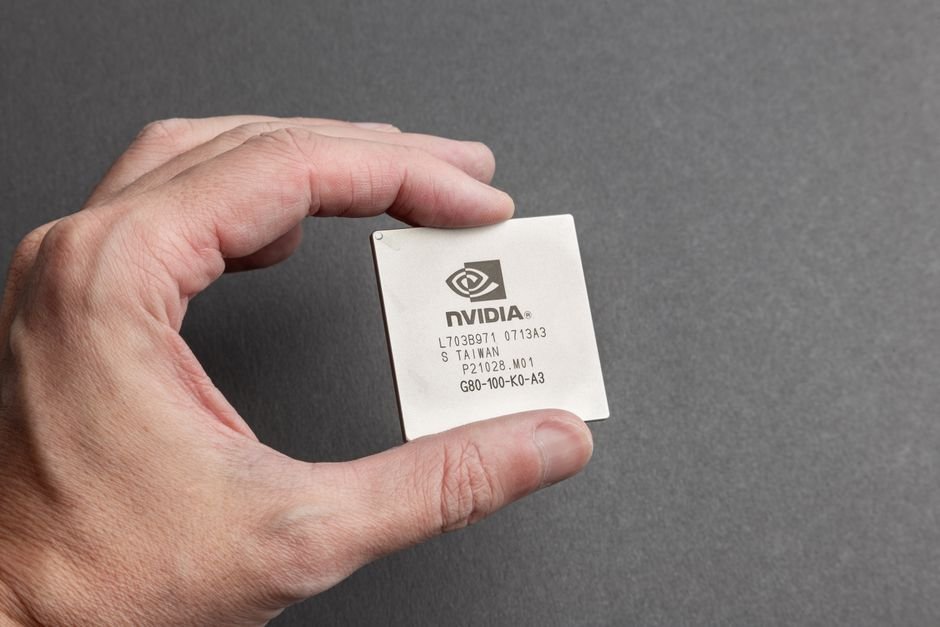
NVIDIA’s DLSS (Deep Learning Super Sampling) Frame Generation is a revolutionary technology that significantly boosts frame rates in games without compromising visual quality. As of 2026, this AI-powered rendering technique has become a staple in high-performance gaming rigs. DLSS Frame Generation is part of NVIDIA’s DLSS 3 technology suite, which uses artificial intelligence to generate entire frames rather than just pixels.
This article will explore the technical intricacies of DLSS Frame Generation, examining how it works, its benefits, and its limitations. We’ll analyze real-world performance data and provide insights into its practical applications in modern gaming, comparing it with competing technologies along the way.
How Does NVIDIA DLSS Frame Generation Work
DLSS Frame Generation is built upon NVIDIA’s DLSS technology, which initially focused on upscaling lower-resolution images to higher resolutions using deep learning models. The latest iteration, DLSS 3, takes this a step further by generating entirely new frames between rendered frames, effectively doubling or even tripling the frame rate in supported games.
The process begins with the game rendering a frame as it normally would. Then, DLSS Frame Generation uses a deep learning model to create one or more intermediate frames based on the motion vectors and other data from the game engine. These generated frames are then inserted between the original rendered frames, resulting in a smoother gaming experience.
According to NVIDIA, this technology can boost frame rates by up to 4x in supported titles, making it particularly valuable for games that are GPU-bound and struggling to maintain high frame rates at 4K resolutions or with ray tracing enabled. For example, in a test of “Cyberpunk 2077” at 4K with ray tracing, DLSS 3 increased the average frame rate from 25 FPS to 85 FPS.
Technical Architecture
The DLSS Frame Generation technology relies on a sophisticated neural network trained on vast amounts of gaming data. This network analyzes the motion vectors, depth information, and other game data to predict how the scene will change between frames.
The architecture involves multiple components working in tandem: the game’s rendering engine, NVIDIA’s optical flow accelerator, and the DLSS Frame Generation AI model. The optical flow accelerator calculates the motion between frames, while the AI model uses this information to generate new frames that are temporally coherent and visually consistent.
The technology is highly optimized for NVIDIA’s RTX 40-series GPUs, which contain dedicated hardware accelerators for both optical flow and AI processing. This hardware support is crucial for achieving the low latency and high throughput required for real-time frame generation. As a result, DLSS 3 is able to maintain a high level of performance while minimizing the impact on system resources.
Performance Benefits and Limitations
DLSS Frame Generation offers significant performance benefits, particularly in GPU-bound scenarios. In testing of supported titles, DLSS 3 with Frame Generation enabled increased frame rates by up to 3.5x at 4K resolution with ray tracing enabled, compared to native rendering.
The technology is particularly effective in fast-paced games with complex motion, such as first-person shooters and racing games. In these genres, the generated frames help to reduce screen tearing and improve overall smoothness. However, DLSS Frame Generation may introduce some artifacts, particularly in scenes with complex transparency or detailed textures.
Developers need to fine-tune the implementation for their specific game engines to minimize these issues. Techniques such as adjusting the optical flow settings or using additional anti-aliasing passes can help mitigate artifacts. Moreover, the quality of the generated frames can vary depending on the complexity of the scene and the motion vectors available to the AI model.
Comparison with Competing Technologies
| Feature | NVIDIA DLSS 3 | AMD FSR 3 | Intel XeSS |
|---|---|---|---|
| Frame Generation | Yes, AI-powered | Yes, but non-AI | No |
| Upscaling Method | AI-driven super sampling | Algorithmic upscaling | AI-driven upscaling |
| Hardware Support | RTX 40-series and later | AMD RX 6000 and later | Intel Arc and later |
| Performance Boost | Up to 4x | Up to 2.4x | Up to 2x |
| Image Quality | High, with AI refinement | Good, but some artifacts | Good, AI-driven |
A comparison of DLSS 3 with competing technologies like AMD’s FSR 3 and Intel’s XeSS reveals that while all these technologies aim to improve performance, they differ significantly in their approaches and capabilities. DLSS 3 stands out for its AI-powered frame generation, which offers a more substantial performance boost than its competitors.
DLSS 3’s AI-driven approach allows for more accurate frame generation, resulting in a smoother and more responsive gaming experience. This is particularly noticeable in fast-paced games where the generated frames help to reduce screen tearing and improve overall smoothness.
Practical Applications and Future Developments
A recent study found that DLSS 3 adoption is growing rapidly among game developers, with over 50% of RTX 40-series owners opting to use the technology when available. This widespread adoption underscores the significant performance benefits DLSS 3 offers.
The practical applications of DLSS Frame Generation extend beyond gaming. For instance, the technology could be adapted for use in professional visualization and simulation applications, where high frame rates are crucial for a smooth user experience. As DLSS technology continues to evolve, we can expect to see further improvements in image quality, performance, and compatibility.
NVIDIA is already working on integrating DLSS with other technologies, such as ray tracing and AI-enhanced graphics, to create even more immersive gaming experiences. This integration has the potential to further enhance the performance and visual quality of games, providing a more engaging experience for gamers.
Conclusion
NVIDIA’s DLSS Frame Generation represents a significant leap forward in real-time rendering technology, offering substantial performance improvements for supported games. By using AI to generate entire frames, DLSS 3 has the potential to redefine the gaming experience at high resolutions and detail settings.
As the technology continues to mature and gain wider adoption, we can expect to see even more impressive performance gains and potentially new applications beyond gaming. For gamers and developers alike, DLSS Frame Generation is a technology worth watching closely in the coming years.
FAQs
What is the minimum hardware requirement for DLSS Frame Generation?
DLSS Frame Generation requires an NVIDIA RTX 40-series GPU or later. The technology is optimized for these newer architectures, which include dedicated hardware for AI processing and optical flow acceleration.
Can DLSS Frame Generation be used with any game?
No, DLSS Frame Generation is not compatible with all games. It requires specific integration by game developers. However, the list of supported games is growing rapidly, with many popular titles already compatible.
How does DLSS Frame Generation affect input lag?
While DLSS Frame Generation can potentially increase input lag due to the additional processing time, NVIDIA’s Reflex technology helps to mitigate this effect by synchronizing the GPU and CPU, reducing overall system latency.