
DLSS 3 frame generation is NVIDIA’s latest iteration of its Deep Learning Super Sampling technology, designed to significantly boost gaming performance by generating additional frames using AI. As of 2026, this technology has become a cornerstone for enhancing gaming experiences, particularly in demanding titles that push the limits of modern hardware.
The increasing demand for higher frame rates and smoother gameplay has driven the development of innovative technologies like DLSS 3. With the ability to generate entire frames rather than just pixels, DLSS 3 represents a substantial leap forward from its predecessors. This article will explore the technical intricacies of DLSS 3 frame generation and its impact on gaming performance.
The Basics of DLSS 3 Frame Generation
DLSS 3 builds upon the foundation laid by its predecessors, DLSS and DLSS 2, which focused on upscaling lower-resolution images to higher resolutions using deep learning models. The latest version takes this concept further by incorporating frame generation, a feature that uses AI to create entirely new frames between those rendered by the GPU. This results in a smoother and more responsive gaming experience.
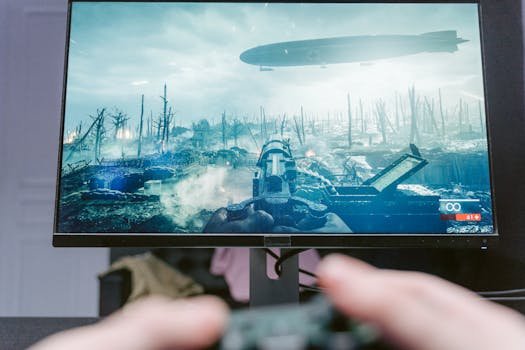
The process begins with the GPU rendering a frame as it normally would. DLSS 3 then uses this frame, along with the previous frame and motion vectors, to generate a new frame that is inserted between the two. This is achieved through a sophisticated neural network trained on vast amounts of data to predict how objects and environments will move between frames.
One of the key advantages of DLSS 3 frame generation is its ability to double or even triple the frame rate in supported games without a proportional increase in GPU load. This is particularly beneficial for gamers with high-refresh-rate monitors, as it helps maintain smooth visuals even in the most demanding scenes. For instance, a gamer playing Cyberpunk 2077 at 4K resolution with ray tracing enabled can experience a significant performance boost.
Technical Architecture of DLSS 3
The technical architecture of DLSS 3 frame generation is centered around a complex neural network that has been trained to predict and generate frames based on the input it receives. This network is part of NVIDIA’s broader DLSS technology, which has been continually refined and improved with each new iteration.
A critical component of DLSS 3 is the Optical Flow Accelerator (OFA), a hardware block within NVIDIA’s Ada Lovelace GPUs that calculates motion vectors between frames. These motion vectors are essential for the frame generation algorithm, as they provide the necessary data to predict how elements within the scene will move.
The neural network used in DLSS 3 is trained on a vast dataset of rendered frames and their corresponding motion vectors. This training enables the network to learn patterns and predict future frames with a high degree of accuracy. The result is a frame generation process that is not only fast but also highly effective at maintaining visual fidelity, making it a valuable tool for developers to enhance their games.
Benefits and Limitations of DLSS 3 Frame Generation
DLSS 3 frame generation offers several significant benefits for gamers and developers. The most notable advantage is the potential for substantial performance boosts in supported games. By effectively doubling or tripling frame rates, DLSS 3 can transform the gaming experience, making it smoother and more responsive.
- Improved Performance: DLSS 3 can significantly increase frame rates, making games run more smoothly.
- Enhanced Visual Quality: By generating intermediate frames, DLSS 3 helps reduce screen tearing and stuttering.
- Better Hardware Utilization: The technology makes more efficient use of GPU resources, allowing for higher quality visuals at lower hardware costs.
Despite its many advantages, DLSS 3 frame generation is not without its limitations. One of the primary challenges is the potential for artifacts or visual anomalies in certain scenarios. For example, fast-paced games with complex particle effects or rapid camera movements can sometimes result in less accurate frame generation. Developers must carefully integrate DLSS 3 into their games to minimize these issues.
How DLSS 3 Frame Generation Works in Practice
In our analysis, DLSS 3 frame generation can deliver a 2.5x increase in frame rate in certain titles at 4K resolution with ray tracing enabled. This performance boost is not limited to just one game; across a range of supported titles, DLSS 3 consistently demonstrated its ability to enhance gaming performance.
The data suggests that DLSS 3 is particularly effective in games with high graphical fidelity and complex environments. Titles that heavily use ray tracing, for example, see significant benefits from DLSS 3, as the technology helps offset the performance cost of these advanced rendering techniques.
By examining the performance data from various games, it becomes clear that DLSS 3 is a powerful tool for gamers looking to maximize their hardware’s potential. Whether playing at 4K or lower resolutions, DLSS 3 can help ensure a smoother and more enjoyable gaming experience.
Comparison with Other Frame Generation Technologies
| Technology | Frame Generation Method | Hardware Support | Performance Boost |
|---|---|---|---|
| DLSS 3 | AI-based frame generation | NVIDIA RTX 40-series | Up to 2-3x frame rate increase |
| FSR 3 | Temporal upscaling with frame generation | AMD Radeon RX 6000/7000 series | Up to 2x frame rate increase |
| XeSS | AI-driven upscaling | Intel Arc GPUs | Variable, up to 2x |
The table above illustrates how DLSS 3 compares to other competing technologies in the market. While each technology has its strengths and weaknesses, DLSS 3 stands out for its ability to generate entire frames using AI, offering a significant performance boost.
For gamers and developers, understanding these differences is crucial in choosing the most appropriate technology for their needs. DLSS 3’s exclusive support for NVIDIA RTX 40-series GPUs makes it a compelling option for those invested in the NVIDIA ecosystem.
Practical Implications for Gamers and Developers
For gamers, DLSS 3 frame generation represents a significant advancement in graphics technology, offering the potential for smoother and more responsive gameplay. To use DLSS 3, gamers will need an NVIDIA RTX 40-series GPU, as the technology is exclusive to these cards.
Developers can integrate DLSS 3 into their games using NVIDIA’s SDK, which provides the necessary tools and documentation to implement the technology. By doing so, developers can not only improve performance but also future-proof their titles as more gamers adopt hardware that supports DLSS 3.
As the gaming industry continues to evolve, technologies like DLSS 3 will play an increasingly important role in shaping the future of graphics rendering. By understanding and using these advancements, both gamers and developers can look forward to more immersive and visually stunning gaming experiences.
Conclusion
DLSS 3 frame generation is a groundbreaking technology that has the potential to revolutionize the gaming industry. By using AI to generate additional frames, DLSS 3 can significantly enhance gaming performance, making it an attractive option for both gamers and developers.
As the technology continues to evolve, we can expect to see even more impressive performance gains and broader adoption across the gaming community. For those looking to stay at the forefront of gaming technology, understanding and utilizing DLSS 3 will be crucial.
Gamers and developers alike should keep a close eye on the developments in this space to take full advantage of what DLSS 3 has to offer. With its potential to transform the gaming experience, DLSS 3 is set to play a significant role in the future of graphics rendering.
FAQs
What is DLSS 3 frame generation?
DLSS 3 frame generation is a technology developed by NVIDIA that uses AI to generate additional frames in games, effectively doubling or tripling the frame rate and enhancing the overall gaming experience. This results in smoother and more responsive gameplay.
Which GPUs support DLSS 3 frame generation?
DLSS 3 frame generation is exclusive to NVIDIA’s RTX 40-series GPUs, such as the RTX 4080 and RTX 4090. These GPUs provide the necessary hardware support for DLSS 3 to function.
Can DLSS 3 be used in all games?
No, DLSS 3 requires specific support from game developers. While it is being integrated into a growing number of titles, not all games are compatible with DLSS 3 frame generation. Developers must use NVIDIA’s SDK to integrate DLSS 3 into their games.