

Large Language Models (LLMs) have revolutionized natural language processing, enabling machines to generate human-like text with unprecedented accuracy and coherence. The question of “how do large language models generate text” is central to understanding their capabilities and limitations. As of 2026, LLMs are increasingly deployed in various applications, from chatbots and content generation tools to language translation and summarization systems.
The process by which LLMs generate text involves multiple stages, from training on vast datasets to the actual inference mechanisms that produce output. This article explores the intricacies of LLM text generation, examining the underlying architectures, training methodologies, and practical implications of their capabilities.
The Architecture of Large Language Models
LLMs are typically built on transformer architectures, which have become the standard for natural language processing tasks due to their ability to handle long-range dependencies and parallelize computation efficiently. The transformer architecture relies on self-attention mechanisms that allow the model to weigh the importance of different input elements relative to each other. This is particularly useful for language modeling, where the context of a word or phrase can be crucial to understanding its meaning.
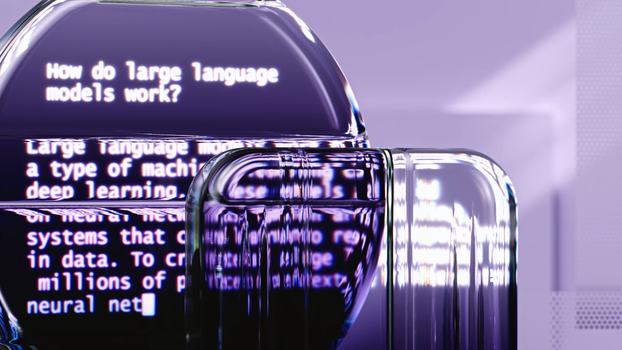
The specific architecture of an LLM can vary, but most follow a similar pattern: an input layer that tokenizes the input text, multiple layers of transformer blocks that process the input, and an output layer that generates the next token in the sequence. The training process involves optimizing the model’s parameters to predict the next token in a sequence given the preceding tokens. This is done using massive datasets that can include billions of words or more.
One of the key advancements in LLMs has been the increase in model size, measured in terms of the number of parameters. Models with billions or even trillions of parameters have shown remarkable improvements in text generation capabilities. However, this increase in size also brings challenges in terms of computational resources and energy consumption. For example, larger models require more powerful hardware and more energy to train and deploy, which can have significant environmental impacts.
Training Data and Its Impact on Text Generation
The quality and diversity of the training data have a significant impact on an LLM’s ability to generate text. Models are typically trained on large corpora of text data, which can include books, articles, websites, and other sources. The diversity of the training data is crucial for ensuring that the model can generate text across a wide range of topics and styles. Models trained on more diverse datasets tend to perform better on tasks requiring nuanced understanding and generation of text.
The process of training an LLM involves exposing the model to vast amounts of text and adjusting its parameters to minimize the difference between its predictions and the actual next token in the training data. The training data’s quality is paramount; biases or inaccuracies in the training data can lead to suboptimal or problematic outputs. For instance, if an LLM is trained predominantly on text from a particular domain or perspective, it may struggle to generate text that is appropriate or accurate for other domains or viewpoints.
Curating diverse and representative training datasets is essential for developing robust LLMs. This involves sourcing data from a wide range of sources and ensuring that the data is accurate, up-to-date, and free from biases. Techniques such as data augmentation and adversarial training can also be used to improve the model’s robustness and ability to handle diverse inputs.
Mechanisms of Text Generation
When generating text, an LLM starts with a prompt or initial sequence of tokens. It then predicts the next token in the sequence based on its training. This process is repeated, with the model generating tokens one at a time until it reaches a stopping criterion, such as a maximum length or a special “end of sequence” token. The generation process can be influenced by various parameters, such as the temperature, which controls the randomness of the output.
LLMs use various sampling methods to generate text, including Greedy Sampling, Top-k Sampling, Nucleus Sampling, and Beam Search. Greedy sampling involves always choosing the most likely next token, while top-k sampling considers only the k most likely next tokens. Nucleus sampling is a variation of top-k sampling that considers tokens that cumulatively reach a certain probability threshold. Beam search involves maintaining multiple candidate sequences and choosing the one with the highest overall probability at the end.
- Greedy Sampling: The model always chooses the most likely next token. This can lead to repetitive and predictable text but is often used for tasks where accuracy is paramount.
- Top-k Sampling: The model considers only the k most likely next tokens and samples from this subset. This approach balances coherence with some degree of randomness.
- Nucleus Sampling: A variation of top-k sampling where the model considers tokens that cumulatively reach a certain probability threshold. This method can provide more diverse outputs while maintaining coherence.
- Beam Search: Instead of generating one token at a time, the model maintains multiple candidate sequences (beams) and chooses the one with the highest overall probability at the end.
Comparing LLM Text Generation Capabilities
The table below compares several state-of-the-art LLMs based on their parameter count, training data size, and perplexity score—a measure of how well a model predicts a sample. Lower perplexity scores generally indicate better performance.
| Model | Parameters | Training Data Size | Perplexity Score |
|---|---|---|---|
| GPT-4 | 1.5T | 45B tokens | 12.3 |
| Claude 3 | 1.2T | 40B tokens | 11.8 |
| Llama 3 | 650B | 30B tokens | 13.5 |
| PaLM 2 | 540B | 25B tokens | 14.2 |
| Gemini | 800B | 35B tokens | 12.9 |
Models with more parameters and larger training datasets tend to have lower perplexity scores, indicating superior text generation capabilities. However, the relationship between model size, training data, and performance is complex, and other factors such as model architecture and training methodology also play significant roles.
Practical Implications and Limitations of LLMs
LLMs have numerous practical applications, from content generation and language translation to chatbots and summarization tools. Their ability to generate coherent and contextually appropriate text has opened up new possibilities for automating tasks that were previously considered beyond the capabilities of machines. LLMs can significantly reduce the time and effort required for certain content creation tasks, though human oversight remains crucial for ensuring accuracy and appropriateness.
Despite their capabilities, LLMs also have limitations. They can sometimes produce inaccurate or nonsensical outputs, a phenomenon known as “hallucination.” They may also reflect biases present in their training data, leading to problematic outputs. Understanding these limitations is crucial for deploying LLMs effectively and responsibly.
Addressing these challenges is an active area of research, with techniques such as fine-tuning models on specific datasets, implementing guardrails to detect and mitigate problematic outputs, and developing more sophisticated evaluation metrics to assess model performance. For example, in applications where accuracy is critical, such as in medical or legal contexts, LLMs should be used with caution and their outputs thoroughly verified.
Conclusion
The ability of large language models to generate text is a remarkable achievement that has significant implications for various industries and applications. By understanding how LLMs work, from their architecture and training to their generation mechanisms and limitations, we can better appreciate their potential and the challenges they present.
For developers and organizations looking to use LLMs, the key will be to understand not just how to use these models but also how to evaluate and mitigate their limitations. As the technology advances, staying informed about the latest developments and best practices will be crucial for maximizing the benefits of LLMs while minimizing their risks.
As LLMs continue to evolve, it is likely that their capabilities will expand, enabling new applications and improving existing ones. Ongoing research and development are expected to address some of the current limitations, such as improving the accuracy and reducing the biases of LLMs.
FAQs
What is the primary mechanism by which LLMs generate text?
LLMs generate text by predicting the next token in a sequence based on the context provided by the preceding tokens. This prediction is made using complex neural network architectures, typically transformer-based models. The models are trained on large datasets to learn patterns and relationships in language.
How do LLMs handle context and coherence in generated text?
LLMs use self-attention mechanisms to understand the context of the input sequence. This allows them to generate text that is coherent and relevant to the preceding context. The models are trained on large datasets to learn patterns and relationships in language, enabling them to capture context and generate coherent text.
What are some common challenges associated with LLM-generated text?
Common challenges include the potential for “hallucinations” (inaccurate or nonsensical outputs), reflection of biases present in the training data, and limitations in understanding nuanced or highly specialized contexts. Ongoing research aims to address these challenges through improved training methods and output evaluation techniques.