
The closest books like The Night Circus are Erin Morgenstern’s own The Starless Sea, Stephanie Garber’s Caraval, Christopher Priest’s The Prestige and Susanna Clarke’s Jonathan Strange & Mr Norrell. Caraval trades the circus for a magical once-a-year game, while The Prestige and Jonathan Strange & Mr Norrell both follow pairs of rival magicians in 19th-century England.
About The Night Circus
The Night Circus is Erin Morgenstern’s debut novel, published by Doubleday in the US in September 2011, with Harvill Secker as its UK publisher. Its circus, Le Cirque des Rêves, arrives without warning, fills black-and-white striped tents with attractions that seem to defy physics, and opens only at night. Behind the show, two powerful magicians have each trained a young protégé, Celia Bowen and Marco Alisdair, to compete in a contest staged inside the circus, and neither competitor is told who the other is.
Morgenstern has said most of the book is Victorian or Edwardian in period, and she began it as a National Novel Writing Month project. The novel won the 2012 Locus Award for Best First Novel. It turns 15 in 2026, with a new Harvill Secker hardcover in the UK and a redesigned Vintage paperback in the US.
Where to start: The Night Circus stands alone, so new readers can begin there, and none of the picks require it. The 12 books similar to The Night Circus below are grouped by the part of the novel each one echoes, with the year each was first published.
If you loved the circus itself
1. Caraval by Stephanie Garber
First published 2017 (Flatiron Books). Scarlett and her younger sister, Tella, have grown up on a small island under the thumb of a cruel father, and Scarlett is about to be married off to a man of his choosing. When the invitation to Caraval she has wanted for years finally comes, the sisters travel to the yearly show, where the audience plays along. Soon after they arrive, Legend takes Tella, and this year’s game is to find her. Scarlett has five nights.
What it shares: a magical spectacle run by an elusive showman, where players are told it is all a performance. The publisher’s listing quotes Entertainment Weekly pitching the series as The Hunger Games meets The Night Circus. Legendary (2018), Finale (2019) and Spectacular continue it, and more sequences are mapped in these series reading orders.
2. Something Wicked This Way Comes by Ray Bradbury
First published 1962 (Simon & Schuster). Will Halloway and Jim Nightshade are 13-year-old best friends in Green Town, Illinois. One October night, a week before Halloween, Cooger & Dark’s Pandemonium Shadow Show rolls into town, and the boys watch it arrive at three in the morning. The carnival promises dreams and youth regained, and the boys begin to learn what its wishes cost.
What it shares: a traveling show that rolls into town after midnight, with something sinister behind its attractions. A 2011 review in the Washington Independent Review of Books named it among The Night Circus’s influences, and Morgenstern has called her novel a “very autumnal book”; Bradbury’s is set in October.
3. Nights at the Circus by Angela Carter
First published 1984 (Chatto & Windus). Sophie Fevvers is a celebrated aerialiste who claims she was hatched from an egg and sprouted real wings. Jack Walser, a young American journalist, interviews her in London and is so taken with her that he joins Colonel Kearney’s circus as a clown, following its tour to St. Petersburg and across Siberia as the 19th century draws to a close.
What it shares: a touring circus at the end of the 1800s, a star performer whose powers may or may not be real, and a journalist drawn into her world. It shared the 1984 James Tait Black Memorial Prize for fiction with J. G. Ballard’s Empire of the Sun.
4. Water for Elephants by Sara Gruen
First published 2006 (Algonquin Books). In the Great Depression, Jacob is about to finish veterinary school when his parents’ deaths leave him with nothing. He hops a passing circus train, the Benzini Brothers Most Spectacular Show on Earth, and ends up looking after its animals. He falls for Marlena, who performs with the show’s horses and is married to August, the animal trainer, a man who can be charming one moment and brutal the next. Jacob tells the story as an old man looking back.
What it shares: a love story set inside a traveling circus, told across two time periods. It has no magic, but like The Night Circus it was written during National Novel Writing Month.
If you loved the magicians and their rivalry
5. The Prestige by Christopher Priest
First published 1995 (Touchstone, Simon & Schuster UK). In late 1800s England, two stage magicians, Alfred Borden and Rupert Angier, fall out early in their careers, and the feud lasts for years as both become world-renowned and Angier grows desperate to learn the secret of Borden’s signature illusion. Their story is told through their diaries, which their descendants read in the present day.
What it shares: two magicians locked in a long feud in a Victorian setting, where each man’s obsession is learning how the other does it. It won the James Tait Black Memorial Prize for fiction for 1995 and the 1996 World Fantasy Award for Best Novel, and it was shortlisted for the 1996 Arthur C. Clarke Award. Christopher Nolan filmed it in 2006.
6. Jonathan Strange & Mr Norrell by Susanna Clarke
First published 2004 (Bloomsbury). In an alternate England during the Napoleonic Wars, no one has performed practical magic for centuries until the pedantic Gilbert Norrell proves he can. Jonathan Strange, a young gentleman from Shropshire, turns out to have the gift too and becomes Norrell’s pupil, though the two men disagree about nearly everything in magic, and the country soon takes sides as Norrellites and Strangites.
What it shares: two magicians, teacher and pupil, whose clashing ideas about magic divide a 19th-century England where magic is real. Reviewers compared The Night Circus to it on release. Clarke’s debut won the 2005 Hugo Award for Best Novel, the 2005 World Fantasy Award for Best Novel and the Locus Award for Best First Novel, and it was longlisted for the 2004 Man Booker Prize.
7. Carter Beats the Devil by Glen David Gold
First published 2001 (Hyperion). In August 1923, President Warren G. Harding volunteers for an illusion by Charles Carter and dies soon afterward. Carter, billed as Carter the Great, then draws the attention of a Secret Service agent. As the agent investigates the magician, flashbacks trace Carter’s life from his first brush with magic through his vaudeville years and his rivalry with a magician called Mysterioso. Carter was a real American stage magician, and Gold’s first novel blends his biography with invention.
What it shares: a historical setting built around stage magic, a rival illusionist and detailed scenes of stage performances.
If you loved the atmosphere and the hidden worlds
8. The Starless Sea by Erin Morgenstern
First published 2019 (Doubleday). Graduate student Zachary Ezra Rawlins finds a book called Sweet Sorrows in his university library and, inside it, an account of something that happened to him as a child, though the book predates his birth. Its clues send him to a masquerade, a secret society and a painted door that opens onto an underground maze of books and stories beside the Starless Sea.
What it shares: Morgenstern’s layered structure, with the main story interrupted by tales from the books the characters read, plus a hidden magical place and a love story tangled up with fate and time. It won the 2020 Dragon Award for Best Fantasy Novel.
9. Piranesi by Susanna Clarke
First published 2020 (Bloomsbury). Piranesi lives in the House, an apparently endless maze of halls filled with statues, with clouds drifting through the upper floors and a sea below whose tides he follows closely. The novel is his journal, and twice a week he meets a man he calls the Other, who is searching the House for what he calls a Great and Secret Knowledge.
What it shares: a labyrinthine magical place whose rules are discovered slowly, entry by entry. Clarke’s second novel won the 2021 Women’s Prize for Fiction and was a finalist for the 2021 Hugo Award for Best Novel.
10. The Ten Thousand Doors of January by Alix E. Harrow
First published 2019 (Redhook). In the early 1900s, January Scaller grows up in a mansion as the ward of Mr. Locke, a wealthy collector, while her father travels the world collecting rare objects for him and is rarely home. At seven she found a door that seemed to lead somewhere else. Years later she discovers a book called The Ten Thousand Doors, and its tale of doors into other worlds starts to look less like fiction.
What it shares: a turn-of-the-century setting, a story within a story and magical doorways hidden in the ordinary world. Harrow’s debut was a finalist for the Hugo, Nebula and World Fantasy Awards for best novel.
If you loved the slow-burn romance and the history
11. The Golem and the Jinni by Helene Wecker
First published 2013 (Harper). In 1899, a golem made of clay arrives in New York after the man who commissioned her dies on the voyage, and an elderly rabbi takes her in and names her Chava. In Little Syria, a tinsmith accidentally frees Ahmad, a jinni of fire trapped for centuries in a copper flask. The two meet by chance and become friends despite their opposite natures.
What it shares: two magical beings drawn together in a turn-of-the-century city; the publisher calls them soul mates. Wecker’s debut won the 2014 Mythopoeic Award for adult literature and was a finalist for the Nebula and World Fantasy Awards. It opens a trilogy: The Hidden Palace followed in 2021 and The Gates of Midnight in September 2026.
12. The Invisible Life of Addie LaRue by V. E. Schwab
First published 2020 (Tor Books). In 1714, running from a marriage she does not want, a young Frenchwoman named Adeline LaRue strikes a bargain with a dark power for a life without end, and pays for it: no one she meets can remember her. Nearly three centuries later, in a bookshop in New York, she finds someone who does.
What it shares: a romance shaped by a magical bargain, and a story that moves between past and present. It was nominated for the 2021 Locus Award for Best Fantasy Novel.
Frequently asked questions
Is there a sequel to The Night Circus?
No sequel has been published. Morgenstern’s only other novel is The Starless Sea (2019), and her official FAQ says her third novel is still being written, with no release date.
Is The Starless Sea connected to The Night Circus?
Not as a sequel. The Starless Sea tells a separate story with a new cast, following Zachary Ezra Rawlins into an underground world of stories. Shortly before it was published, Morgenstern told BookPage that it shares her sensibility but is a very different book.
What is the best book to read after The Night Circus?
If you liked The Night Circus for Morgenstern herself, The Starless Sea is the natural next step. Among other Night Circus read-alikes, Caraval is closest for the spectacle and the game, and The Prestige and Jonathan Strange & Mr Norrell for the rival magicians.
Is Caraval like The Night Circus?
Both center on a magical spectacle with a mysterious figure behind it, and in both a contest with real stakes plays out under cover of a show. Caraval is published for young adult readers aged 13 to 18 and its game lasts five nights, while The Night Circus was published as an adult novel and its contest plays out over years.
Is The Night Circus a young adult book?
No. It was written for adults, though it has been recommended for teens. It won a 2012 Alex Award, which the American Library Association gives to books written for adults that have special appeal to readers aged 12 to 18.
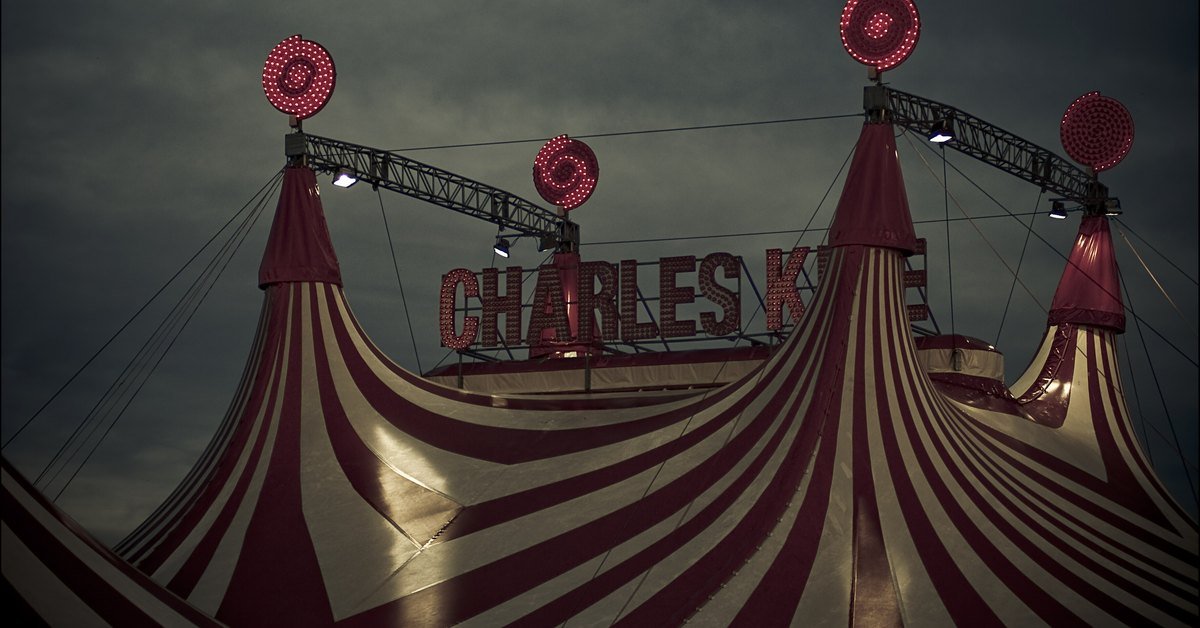
Lead photo: The big top of Circus Charles Knie at night, Germany. Photo: def110, CC BY-SA 2.0, via Wikimedia Commons (cropped).