

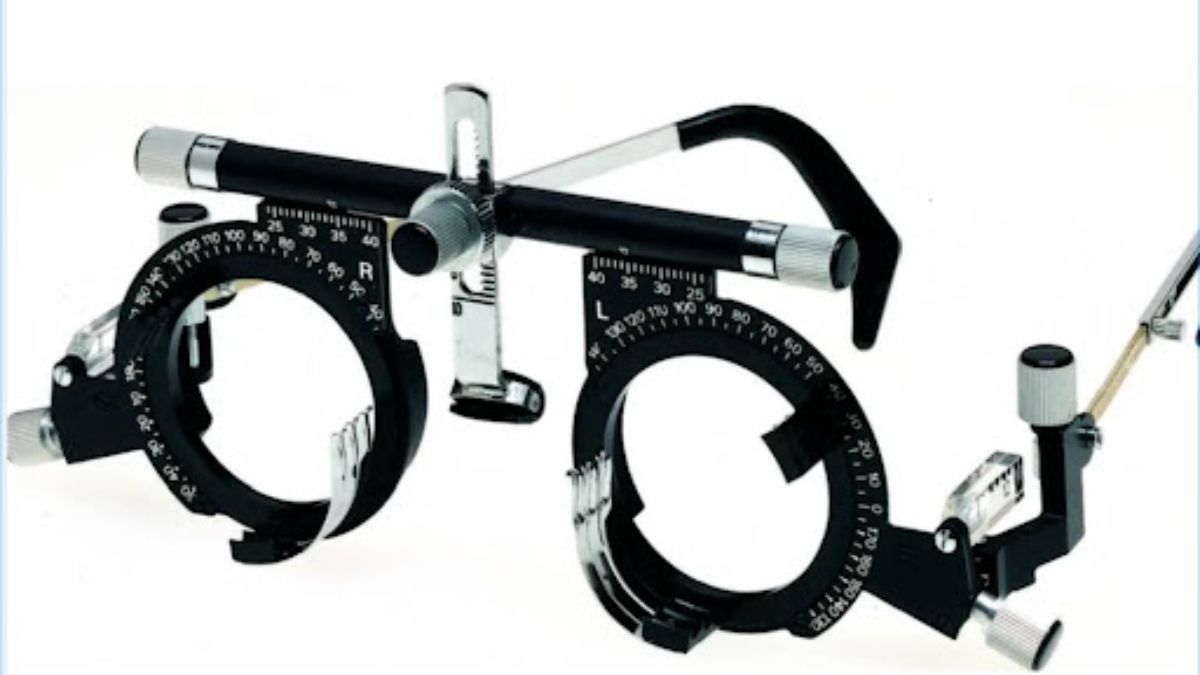
Accurate vision testing is essential for diagnosing refractive errors and prescribing corrective lenses. While automated equipment has become common in many clinics, traditional diagnostic tools remain highly valuable for precise patient assessment. One such tool widely used by optometrists and ophthalmologists is the trial frame. Many clinics rely on equipment such as the TF-600 trial frame available at BOC Instruments to perform detailed manual refraction tests and confirm prescription accuracy.
Trial frames provide flexibility, comfort and precision during eye examinations, helping clinicians evaluate visual performance under realistic conditions.
What Is a Trial Frame?
A trial frame is an adjustable spectacle-like device used during eye examinations. It holds different corrective lenses so practitioners can determine the most accurate prescription for a patient. Unlike automated instruments, trial frames allow the clinician to manually test combinations of lenses and observe how the patient responds. This process is known as subjective refraction and is an essential step in prescribing glasses or contact lenses. Trial frames also allow the use of accessories such as prisms or occluders, which help assess more complex visual conditions.
Why Manual Refraction Is Still Important
Automated refraction systems can provide quick estimates of a patient’s prescription, but they cannot always replace manual assessment.
Manual testing with trial frames allows clinicians to:
- Fine-tune prescription accuracy
- Assess binocular vision
- Evaluate patient comfort with different lenses
- Test vision at natural viewing distances
Because patient feedback is incorporated directly into the process, the results are often more personalised and precise.
The Role of Trial Frames in Clinical Practice
Trial frames remain a core component of optometry and ophthalmology clinics around the world. They are particularly valuable in situations where automated equipment may not provide the full picture.
For example, trial frames are useful for:
- Confirming automated refractor results
- Testing complex prescriptions
- Assessing presbyopia or reading vision
- Evaluating binocular balance
These tools allow practitioners to adjust lenses quickly and observe how small changes affect the patient’s vision.
Key Features of the TF-600 Trial Frame
Modern trial frames are designed for flexibility and comfort, allowing clinicians to perform detailed testing efficiently.
The Magnon TF-600 trial frame offers several practical features:
- Compatibility with standard 38 mm trial lens rings
- Independent pupillary distance adjustments for each eye
- Adjustable bridge and temple settings for comfortable fit
- Smooth cylinder holder rotation for accurate axis positioning
These adjustments help practitioners align lenses precisely with the patient’s visual axis, which is essential for accurate refraction results.
Improving Patient Comfort During Testing
Comfort is an important factor during eye examinations, particularly when multiple lens combinations need to be tested. Trial frames such as the TF-600 are designed to be lightweight while still providing a durable metal structure. This balance allows patients to wear the frame comfortably during extended testing sessions. Adjustable nose bridges and temple arms ensure the frame fits securely on a wide range of face shapes. Comfortable positioning reduces movement and helps maintain consistent alignment throughout the test.
Flexibility for Different Patient Needs
Eye care professionals treat patients of varying ages and facial structures. A well-designed trial frame must accommodate these differences.
Adjustable trial frames allow practitioners to modify:
- Bridge height and width
- Temple length and angle
- Pupillary distance alignment
These adjustments help ensure that lenses are positioned accurately for each patient, improving the reliability of test results. This flexibility also allows the same frame to be used for both adult and paediatric patients.
Supporting Precision in Lens Testing
Accurate lens positioning is crucial when determining corrective prescriptions. Trial frames allow practitioners to stack multiple lenses within the holders, enabling precise combinations of spherical, cylindrical and prism lenses. Proper spacing between lenses helps maintain optical accuracy during testing. By adjusting lens combinations incrementally, clinicians can determine the exact correction needed to achieve optimal vision.
Complementing Modern Diagnostic Equipment
While modern digital devices provide fast measurements, manual tools like trial frames continue to complement automated systems. Automated refractors can estimate prescriptions quickly, but trial frames allow clinicians to refine those results using patient feedback. This combination of technology and manual assessment ensures both efficiency and accuracy in clinical practice.
Essential Tool for Training and Education
Trial frames are also valuable in educational settings. Optometry students learn refraction techniques using these instruments before transitioning to advanced equipment. Manual refraction teaches fundamental concepts such as lens power adjustment, axis alignment and binocular balance. Developing these skills strengthens clinical judgement and improves diagnostic confidence.
Conclusion
Trial frames remain an essential instrument in modern eye care, providing flexibility and precision during vision testing. They allow clinicians to refine prescriptions, assess binocular vision and tailor corrections to each patient’s needs.
Equipment such as the TF-600 trial frame combines durable construction with adjustable features that enhance both practitioner control and patient comfort. When used alongside modern diagnostic technologies, trial frames help ensure accurate prescriptions and high standards of patient care in optometry and ophthalmology practices.