AI text-to-image generators have revolutionized visual content creation by transforming textual descriptions into coherent images. Understanding how these generators work is crucial for artists, designers, and those interested in technology and creativity. The technology has made significant advancements since its inception.
The rapid advancement of AI text-to-image generators has made them increasingly accessible and powerful, with applications ranging from artistic expression to commercial design. This article explores their inner workings, underlying technology, and key components.
The Architecture of AI Text-to-Image Generators
At their core, AI text-to-image generators rely on diffusion models, which iteratively refine a random noise signal until it converges into a specific image matching the given text prompt. The process involves a series of transformations that progressively denoise the input, guided by the textual description.
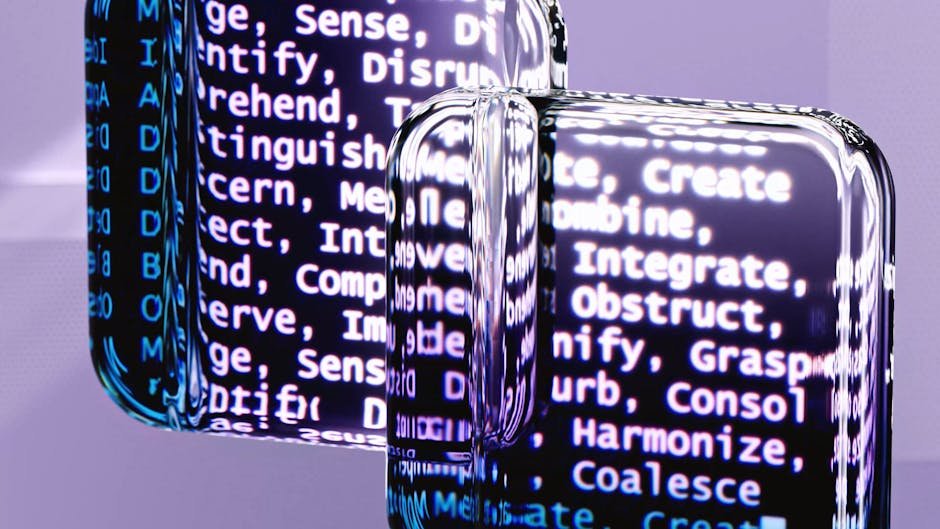
The architecture combines a text encoder, which converts input text into a numerical representation, and a diffusion model that generates the image based on this representation. Techniques like CLIP create a shared embedding space for text and images.
Key Components and Their Functions
The main components include a text encoder, diffusion model, training data, CLIP embedding, noise schedulers, and fine-tuning mechanisms. These work together to enable the generation of coherent images from text prompts.
The text encoder converts input text into a numerical representation, while the diffusion model transforms noise into a coherent image. Large datasets like LAION-5B are used for training.
How Do AI Text-to-Image Generators Work in Practice
Popular generators like DALL-E 3, Stable Diffusion, Midjourney, and Imagen use different model architectures and have varying key features. For example, DALL-E 3 is known for its high prompt adherence and detailed outputs, while Stable Diffusion is open-source and customizable.
| Generator | Model Architecture | Key Features | Output Resolution |
|---|---|---|---|
| DALL-E 3 | Diffusion model with CLIP | High prompt adherence, detailed outputs | Up to 1024×1024 |
| Stable Diffusion | Latent diffusion model | Open-source, customizable, fast generation | Up to 2048×2048 |
| Midjourney | Proprietary diffusion model | Artistic style focus, high-quality outputs | Up to 2048×2048 |
| Imagen | Diffusion model with text encoder | High photorealism, strong text understanding | Up to 1024×1024 |
Challenges and Limitations
AI text-to-image generators face challenges such as potential bias in generated images and difficulty in representing complex concepts. These issues stem from biases in training data and limitations in model architectures.
Addressing these challenges requires ongoing research into better training methods, more diverse datasets, and improved model architectures. Techniques like data augmentation and adversarial training are being explored.
Future Directions and Implications
The evolution of AI text-to-image generators will significantly impact industries like entertainment, advertising, education, and design. New forms of creative expression and innovative applications are expected to emerge as these tools become more sophisticated.
Future developments will be shaped by advancements in multimodal understanding, improved controllability, and ethical considerations. Ensuring responsible use of these powerful tools will be crucial.
Conclusion
AI text-to-image generators represent a significant advancement in AI technology, offering unprecedented capabilities for creative expression and visual content generation. Their operation involves complex interplay between text encoding, diffusion models, and training data.
The effectiveness and ethical use of these tools depend on ongoing research and responsible development. Staying informed about these developments and considering their applications in various fields will be essential.
FAQs
What is the main technology behind AI text-to-image generators?
The primary technology is based on diffusion models, which refine noise into coherent images guided by textual descriptions. This process involves iterative transformations.
How do AI text-to-image generators understand text prompts?
They use text encoders, often based on CLIP, to convert text into a numerical representation associated with visual content. This enables the model to understand the relationship between text and images.
What are the limitations of current AI text-to-image generators?
Limitations include potential biases in generated images and difficulty with complex concepts. These stem from biases in training data and model limitations.
How are AI text-to-image generators likely to evolve in the future?
Future developments will focus on improved multimodal understanding, better controllability, and enhanced ethical considerations. More sophisticated model architectures are also expected.