
The Harry Potter books in order are Harry Potter and the Philosopher’s Stone (titled Harry Potter and the Sorcerer’s Stone in the US), Chamber of Secrets, Prisoner of Azkaban, Goblet of Fire, Order of the Phoenix, Half-Blood Prince and Deathly Hallows. J.K. Rowling’s seven novels were published from 1997 to 2007, and because each one follows the next year of Harry’s life, publication order and story order are the same. The three companion books and the Cursed Child play script are optional extras that work best once the novels are finished.
Below are the UK and US publication years, a spoiler-free setup for each novel, where the extras fit, suggested orders by reader, and the film and HBO series status as of October 2026.
Harry Potter books in order
Bloomsbury publishes the UK editions and Scholastic the US editions, which originally appeared under the Arthur A. Levine Books imprint. The years below come from ISFDB’s Harry Potter series listing and its edition records, and the US years match Scholastic’s publishing milestones.
| Book | First UK publication | First US publication |
|---|---|---|
| 1. Harry Potter and the Philosopher’s Stone (US title: Harry Potter and the Sorcerer’s Stone) | 1997 | 1998 |
| 2. Harry Potter and the Chamber of Secrets | 1998 | 1999 |
| 3. Harry Potter and the Prisoner of Azkaban | 1999 | 1999 |
| 4. Harry Potter and the Goblet of Fire | 2000 | 2000 |
| 5. Harry Potter and the Order of the Phoenix | 2003 | 2003 |
| 6. Harry Potter and the Half-Blood Prince | 2005 | 2005 |
| 7. Harry Potter and the Deathly Hallows | 2007 | 2007 |
The first book came out in the UK on June 26, 1997, and Scholastic published it in the US in September 1998. The US editions of books 2 and 3 followed in June and September 1999. From Goblet of Fire onward, the two countries released each new novel on the same day: July 8, 2000, June 21, 2003, July 16, 2005 and July 21, 2007.
Philosopher’s Stone or Sorcerer’s Stone?
They are the same novel under two titles. Scholastic renamed book 1 for its American edition in 1998, but its newest editions use the original British title. According to the official Harry Potter site, Scholastic’s TV tie-in paperback, due November 3, 2026, is titled Philosopher’s Stone to match the HBO series, with the text unchanged, and Scholastic also lists a paperback of Jim Kay’s illustrated edition under the Philosopher’s Stone title.
The seven novels, spoiler-free
Each novel covers one year of Harry’s life, starting when he is 11. The lines below describe only each book’s setup.
- Philosopher’s Stone (1997; US Sorcerer’s Stone, 1998). Raised by an aunt and uncle who make him sleep in a cupboard under the stairs, Harry finds out on his 11th birthday that he is a wizard with a place waiting at Hogwarts School of Witchcraft and Wizardry. School means Quidditch, friendship with Ron and Hermione, and a corridor the headmaster has told every student to avoid.
- Chamber of Secrets (1998). Ron and his brothers Fred and George rescue Harry from a miserable summer at the Dursleys’ in a flying car. Back at school, a message on a corridor wall announces that the Chamber of Secrets has been opened, and someone starts attacking students.
- Prisoner of Azkaban (1999). Harry arrives for his third year after running away from the Dursleys, just as the wizarding world is talking about one escape: Sirius Black, the first prisoner known to break out of Azkaban. The Ministry of Magic posts Azkaban’s guards, the Dementors, around Hogwarts, and they affect Harry more than anyone.
- Goblet of Fire (2000). An age limit of 17 should keep 14-year-old Harry out of the Triwizard Tournament, the revived contest that brings students from Beauxbatons and Durmstrang to Hogwarts for his fourth year and lets a magical goblet pick the champions.
- Order of the Phoenix (2003). The year of O.W.L. exams starts badly: Harry uses magic to drive off two Dementors near the Dursleys’ home and ends up facing a Ministry hearing. At school, the Ministry installs Dolores Umbridge as the new Defense Against the Dark Arts teacher.
- Half-Blood Prince (2005). Harry’s sixth year is split between two kinds of lessons: private sessions in which Dumbledore shows him memories of Voldemort’s early life, and Potions classes where Harry suddenly excels, thanks to a secondhand textbook filled with handwritten notes by a previous owner identified only as the Half-Blood Prince.
- Deathly Hallows (2007). The final novel opens with Harry saying goodbye to Privet Drive for good. With Ron and Hermione beside him, he takes on a dangerous mission as the long conflict with Lord Voldemort reaches its last stage.
Where Cursed Child, the companion books and the illustrated editions fit
Harry Potter and the Cursed Child
Harry Potter and the Cursed Child: Parts One and Two is a play script, not a novel. Playwright Jack Thorne wrote it from an original story he created with director John Tiffany and the series author, and the script went on sale just after midnight on July 31, 2016, following the play’s official opening night at the Palace Theatre in London, where previews had begun that June. The official London production site calls it the eighth Harry Potter story. It is set many years after the novels end, so it belongs at the very end of any reading order.
In London, the original two-part staging closed on September 20, 2026, after a ten-year run, and a reimagined one-part version began performances on October 9, 2026. The script published in 2016 follows the two-part version.
The companion books
Three short companion books were written for charity: royalties from the two 2001 titles benefit Comic Relief and Lumos, and royalties from Beedle the Bard benefit Lumos. Each one is presented as a book that exists inside Harry’s world, and Bloomsbury and Scholastic also sell them together as the Hogwarts Library box set.
- Fantastic Beasts and Where to Find Them (2001). A copy of a Hogwarts textbook by the fictional magizoologist Newt Scamander, cataloging the creatures of the wizarding world. A 2017 revision added six North American beasts and a new foreword. The 2016 film with the same title tells a separate story set in 1920s New York.
- Quidditch Through the Ages (2001). A history and rulebook of the wizarding sport, credited to the fictional sportswriter Kennilworthy Whisp.
- The Tales of Beedle the Bard (2008). Five wizarding fairy tales with commentary by Albus Dumbledore. One of them, “The Tale of the Three Brothers,” first appeared in Deathly Hallows. Before its general release in December 2008, the book existed as a handwritten, illustrated edition of just seven copies.
Illustrated editions
Bloomsbury and Scholastic also publish full-color illustrated editions of the novels, and they slot into the same order as the standard books. Jim Kay began the line with Philosopher’s Stone in October 2015 and illustrated the first five books, with guest artist Neil Packer joining him for Order of the Phoenix in 2022. Levi Pinfold took over for Half-Blood Prince, an unabridged edition that Bloomsbury published on October 6, 2026, and the publisher says he will also illustrate Deathly Hallows, as listed on Bloomsbury’s illustrated editions page. Interactive illustrated editions and illustrated versions of all three companion books are also available.
Harry Potter reading order: suggestions by reader
None of these orders comes from the publishers; they are editorial suggestions. In every one, the seven novels stay in publication order.
Novels only
Read books 1 to 7 in the order shown in the table above. This covers the whole main series.
Novels, then the companion books
- Books 1 to 7, in publication order
- Fantastic Beasts and Where to Find Them
- Quidditch Through the Ages
- The Tales of Beedle the Bard
All three are short and can be read in any order after the novels. Finishing Deathly Hallows first matters most for Beedle the Bard, since one of its tales first appears in that novel.
The complete reading list
Read books 1 to 7, then the three companion books, then Cursed Child last.
Younger readers and read-alouds
Scholastic lists the novels for ages 8 and up. The books get longer up to Order of the Phoenix, the longest, and more intense as Harry gets older: Bloomsbury’s 2014 paperbacks run from 352 pages for Philosopher’s Stone to 816 for Order of the Phoenix. As of October 2026, illustrated editions exist for books 1 to 6, and their artwork suits reading aloud.
Looking for the next series to start? Browse more reading orders.
The Harry Potter films and the HBO series
Warner Bros. adapted the novels into eight films released from 2001 to 2011. Seven books became eight films because Deathly Hallows was split into Part 1 and Part 2, and the first film was released in the US as Harry Potter and the Sorcerer’s Stone.
A new television adaptation is on the way. HBO set a December 25 premiere date when it released a teaser trailer in March 2026, as reported by Engadget, and as of October 2026 the official Harry Potter site still lists a Christmas 2026 debut on HBO and HBO Max. The first season is titled Harry Potter and the Philosopher’s Stone. Dominic McLaughlin, Arabella Stanton and Alastair Stout play Harry, Hermione and Ron. A second season has been confirmed. The original announcement described a decade-long series, and HBO’s Casey Bloys has said it will go deep into each book.
Frequently asked questions
How many Harry Potter books are there?
There are seven Harry Potter novels, published from 1997 to 2007. Alongside them sit three short companion books and the Cursed Child play script, which are not part of the seven-novel sequence.
What order should I read Harry Potter in?
Read the novels in publication order, starting with Philosopher’s Stone (Sorcerer’s Stone in the US) and ending with Deathly Hallows. Each book follows the next year of Harry’s life, so publication order is also story order. The companion books and Cursed Child can follow afterward.
Is Harry Potter and the Cursed Child the eighth book?
It is promoted as the eighth Harry Potter story, but it is the published script of the play, not a novel. Jack Thorne wrote the play from a story he developed with John Tiffany and the series author, and the script was published in July 2016.
Is Sorcerer’s Stone the same book as Philosopher’s Stone?
Yes. Sorcerer’s Stone is the title Scholastic gave the first book for its US edition in 1998, and the story is the same. Scholastic’s TV tie-in paperback, due November 3, 2026, and its paperback of the Jim Kay illustrated edition use the Philosopher’s Stone title instead.
Do I need to read the companion books?
No. The seven novels form the complete main series, and the companion books are short extras set inside Harry’s world. They read best after the novels, and The Tales of Beedle the Bard in particular should wait until after Deathly Hallows.
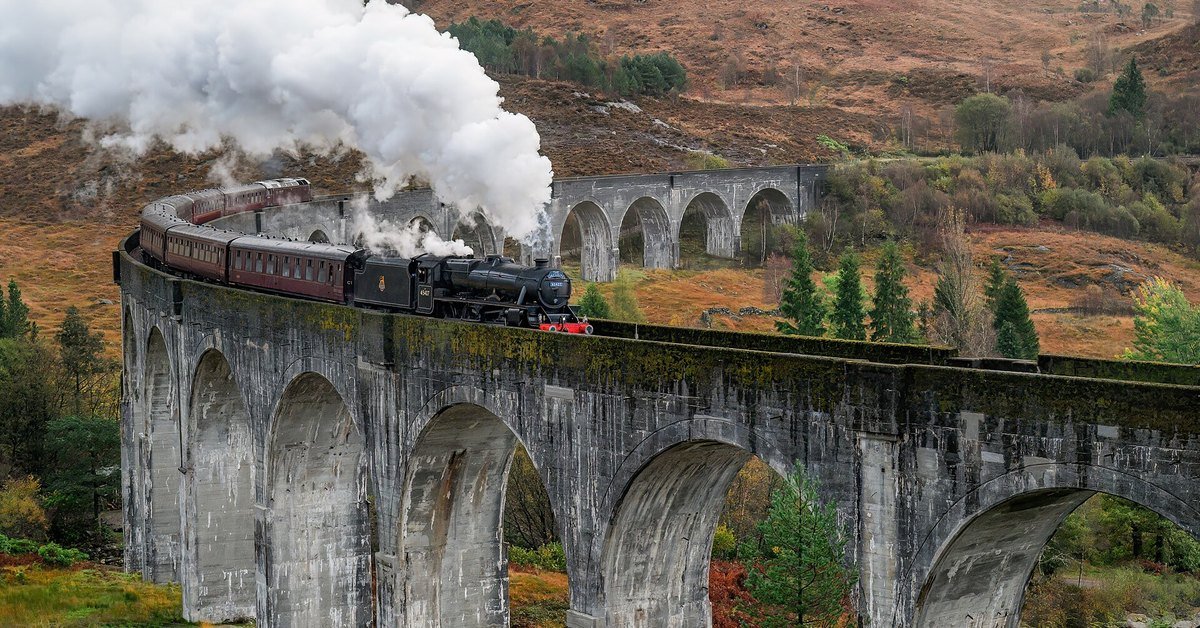
Lead photo: The Jacobite steam train crossing the Glenfinnan Viaduct in the Scottish Highlands, a filming location for the Harry Potter films. Photo: Eric Kilby, CC BY-SA 4.0, via Wikimedia Commons (cropped).