

Quick Answer
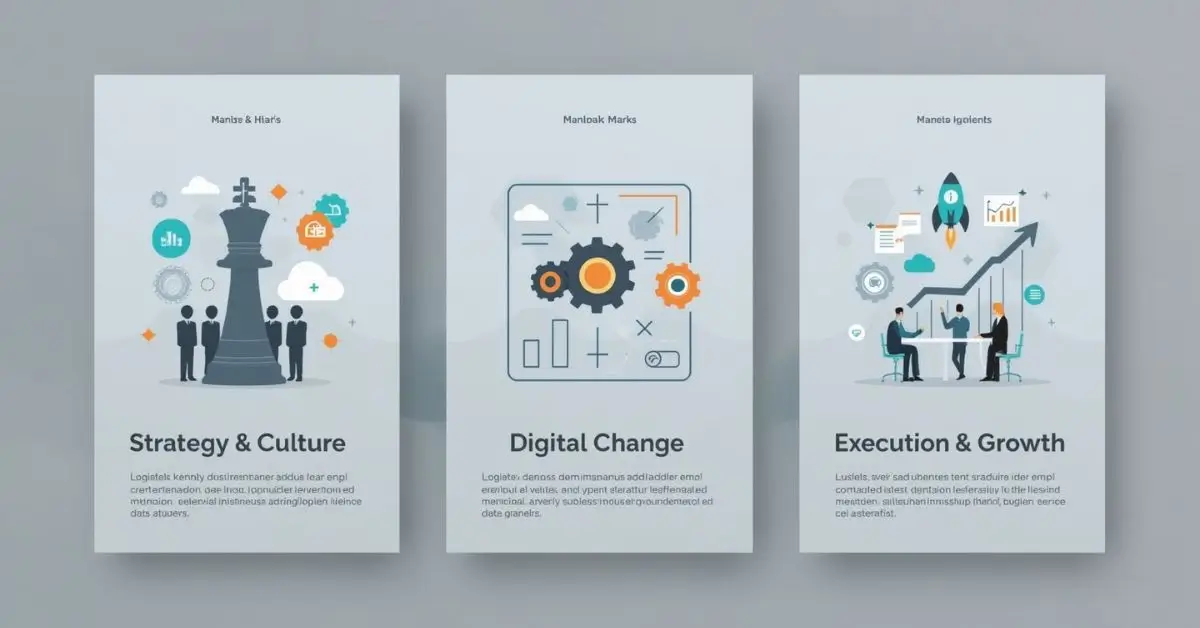
What is business transformation consulting? It helps organizations rethink their strategy, operations, and culture to achieve large-scale change. It goes beyond short-term fixes, guiding leaders through digital upgrades, organizational change, and new business models that ensure long-term growth.
Unlock More Insights
Introduction
If you’re a CEO under pressure to modernize, a CFO balancing costs in a merger, or a private equity investor chasing portfolio growth, you already know: the old playbook isn’t enough. Markets move faster than boardrooms. Competitors reinvent themselves overnight. Customers demand digital-first experiences. That’s where business transformation consulting comes in, it’s the structured way to reinvent, without chaos.
What Does Business Transformation Consulting Mean?
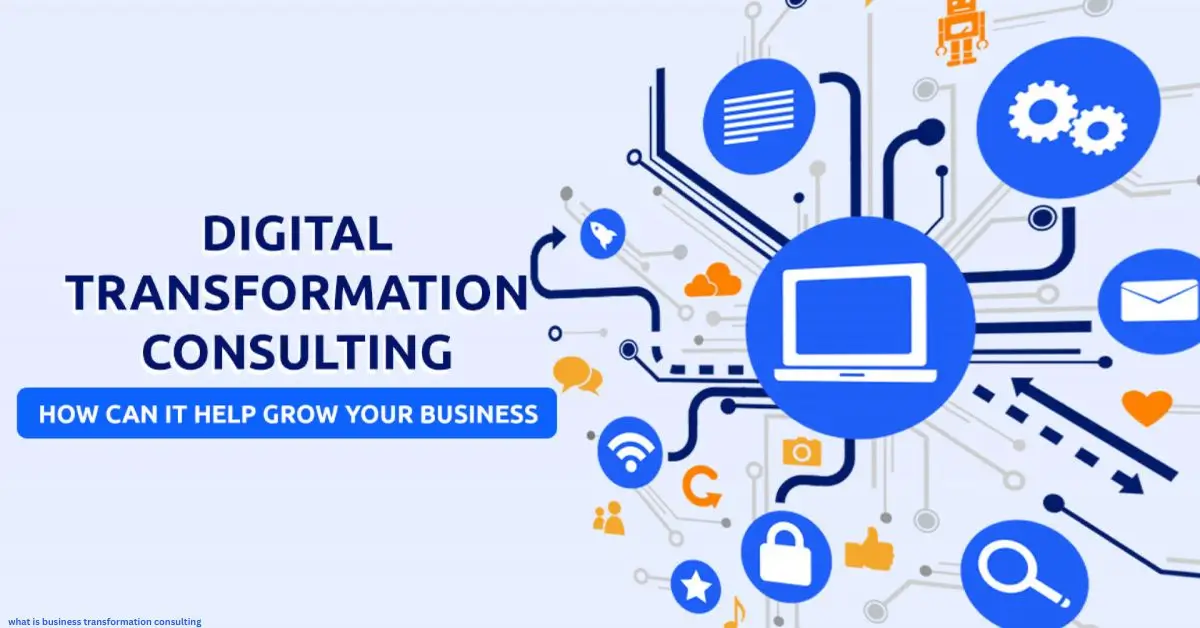
At its core, business transformation consulting means helping organizations shift how they operate, make money, and deliver value. It’s about:
- Strategic redesign: Aligning corporate strategy with market realities.
- Operational excellence: Streamlining processes and eliminating waste.
- Cultural transformation consulting – Building agile, innovative workplaces.
- Digital adoption – Leveraging technology for scale and speed.
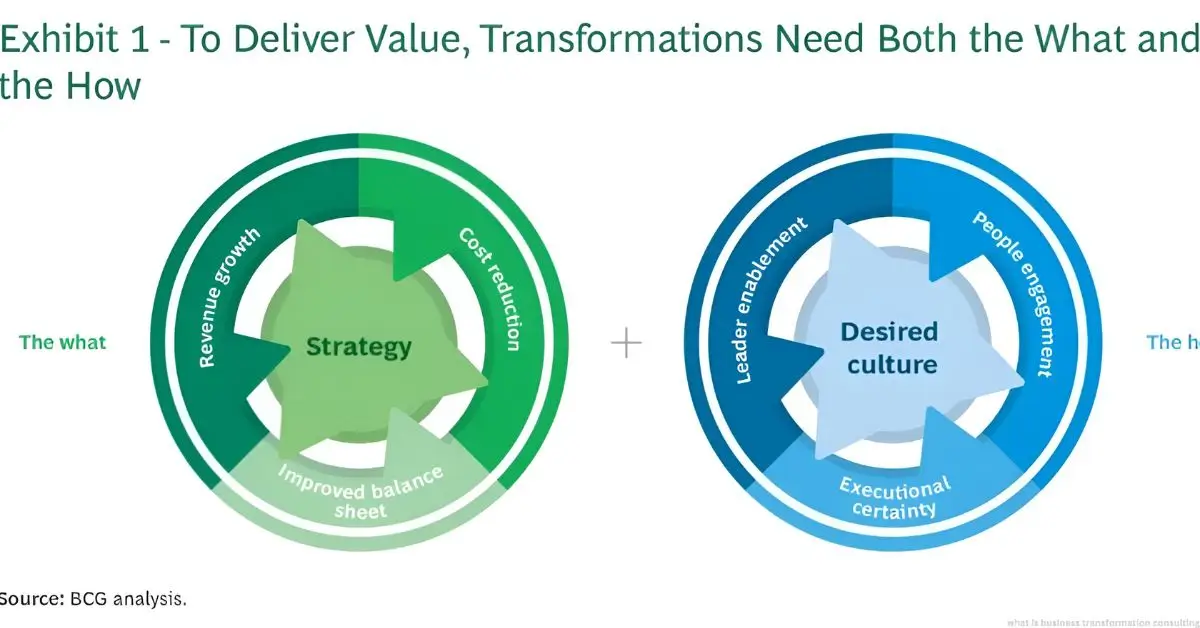
Unlike narrow change management strategy, transformation consulting integrates people, processes, and platforms under one roadmap.
Difference Between Business Transformation and Digital Transformation
Digital transformation consulting focuses on technology adoption—AI, cloud, automation.
Business transformation consulting goes broader: it includes strategy, leadership, and culture, not just tech.
Think of it this way: digital is the engine, business transformation is the vehicle. You need both to get to the future.
Why Companies Need Business Transformation Consulting
- Mergers and acquisitions: Aligning operations and cultures post-deal.
- Market disruption: Adapting to new competitors or business models.
- Performance decline: Turning around struggling companies.
- Investor demands: Driving portfolio efficiency and growth.
McKinsey’s research shows that companies that undergo structured transformation are 1.5x more likely to achieve sustained performance gains.
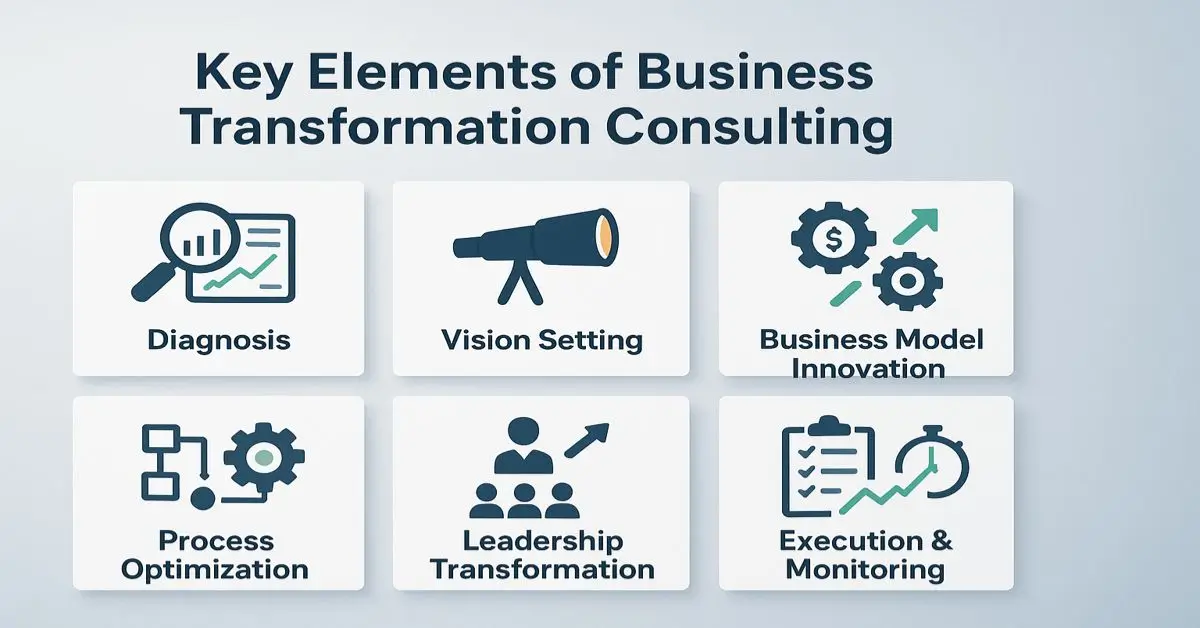
Key Elements of Business Transformation Consulting
- Diagnosis – Assessing current state.
- Vision setting – Defining desired outcomes.
- Business model innovation – Creating new revenue streams.
- Process optimization consulting – Cutting inefficiencies.
- Leadership transformation programs – Upskilling executives.
- Execution & monitoring – Delivering measurable results.
Examples of Business Transformation Consulting Projects
- A retail chain moving from brick-and-mortar to omnichannel e-commerce.
- A bank adopting blockchain for faster settlement.
- A manufacturer implementing AI-driven supply chain automation.
- A healthcare provider merging clinical and digital operations.
Business Transformation Consulting vs Management Consulting
Traditional management consulting provides analysis and recommendations.
Business transformation consulting delivers hands-on execution, change management, and end-to-end ownership.
It’s not just about what to do it’s about making it happen.
How Business Transformation Consulting Improves Profitability
- Streamlining costs via operational excellence consulting.
- Creating new revenue through business model innovation.
- Driving engagement via cultural transformation consulting.
- Accelerating growth with enterprise transformation services.
According to Harvard Business Review, transformation efforts that integrate people and process changes can increase profitability by up to 30% within three years.
Expert Insights on Business Transformation Consulting
- PwC highlights that leadership alignment is the #1 predictor of success.
- Deloitte stresses that transformation must be customer-centric, not just efficiency-driven.
- Gartner notes that by 2026, over 70% of large enterprises will use formal transformation frameworks to stay competitive.
Trends in Business Transformation Consulting 2025
- AI-driven enterprises: Consultants now design AI-native business models.
- Sustainability integration: ESG is no longer optional.
- Resilience over efficiency: Post-pandemic, leaders prioritize adaptability.
- Employee-centric design: Retention depends on culture, not perks.
How to Choose a Business Transformation Consultant?
- Check track record with case studies of successful business transformation consulting.
- Assess industry expertise.
- Ask about frameworks used.
- Look for transparency in cost and ROI measurement.
Sources
- Harvard Business Review (HBR) – Provides deep research on transformation success factors. Example embedded hyperlink: Harvard Business Review on transformation success rates.
- McKinsey & Company – Widely recognized for its global studies on corporate transformation and operational excellence. (mckinsey.com)
- Deloitte Insights – Strong coverage on digital and enterprise transformation trends. (deloitte.com/insights)
Conclusion
In today’s volatile markets, standing still is the fastest way to fall behind. Business transformation consulting gives leaders a structured, proven path to reinvent strategy, streamline operations, and embed a culture of adaptability. Whether you’re navigating mergers, driving digital adoption, or chasing profitability, the right consultant can help turn disruption into opportunity. For forward-thinking executives, the real question isn’t what is business transformation consulting, it’s how soon can we start?
FAQ’s
Q1. What skills do business transformation consultants need?
They need strategic vision, change management, tech literacy, and strong leadership coaching skills.
Q2. What’s the cost of business transformation consulting?
It varies, anywhere from $250,000 to multi-million contracts, depending on scope, industry, and duration.
Q3. Who are the top business transformation consulting companies 2025?
Firms like McKinsey, Bain, BCG, Deloitte, and Accenture dominate. Niche players, however, often bring faster results for mid-market firms.
Final Takeaway
Business transformation consulting isn’t buzzword theater. It’s a structured, expert-driven path to reinvent your business model, operations, and culture for long-term success. For leaders facing disruption, it’s not a luxury, it’s a survival strategy.
Author Bio
Written by Daniel Mercer is a Business and technology content strategist with 8+ years of experience writing for consulting firms and Fortune 500 leaders. Holds a Master’s in Business Communication and specializes in executive-level B2B content.
For more information watch: