

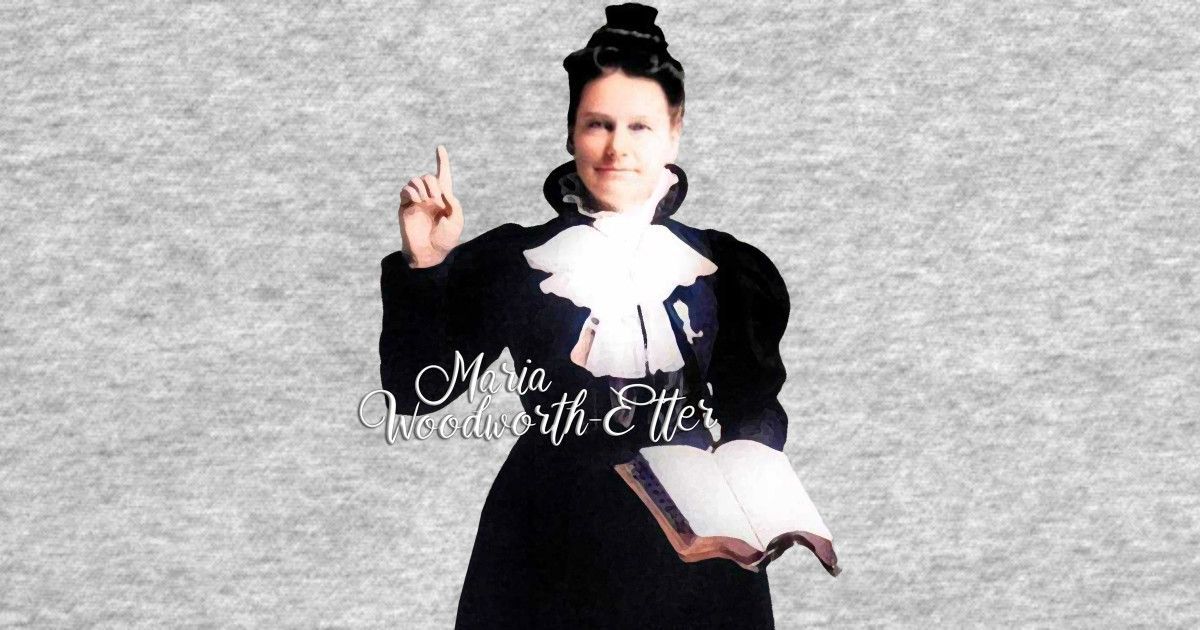
In the annals of American religious history, few figures stand out as boldly as Maria Woodworth Etter. At a time when women were rarely seen—let alone heard—in public ministry, she emerged as a powerful voice of revival, healing, and spiritual authority. Her life spanned a critical period in American Christianity, bridging the 19th-century Holiness movement and the explosive rise of 20th-century Pentecostalism. Though often overlooked in mainstream historical accounts, Maria Woodworth Etter’s influence was profound, paving the way for generations of female preachers and shaping the theology and practice of charismatic Christianity. This article explores her remarkable journey—from humble beginnings in rural Ohio to national prominence as a faith healer and evangelist—and examines her enduring legacy in the context of religious innovation, gender roles, and spiritual fervor.
Table of Contents
Early Life and Spiritual Awakening
Mariah Beulah Woodworth was born on July 22, 1840, in New Lisbon, Ohio, to German immigrant parents. Her father, Samuel Woodworth, was a devout Methodist who instilled strong religious values in the household. Her mother, Matilda, struggled with alcoholism—a fact that deeply affected young Maria and later fueled her passionate stance against intemperance. Growing up in a modest farming family, Maria received little formal education but was deeply immersed in the Bible and Methodist teachings from an early age.
Her spiritual awakening came at the age of thirteen during a Methodist revival meeting. Overwhelmed by a sense of sin and conviction, she experienced what she described as a “second blessing”—a profound encounter with God that marked her conversion and sanctification. This experience aligned with the Wesleyan doctrine of entire sanctification, a core tenet of the Holiness movement that emphasized a post-conversion crisis leading to a life of holiness and purity.
Despite her early devotion, Maria’s path to ministry was not immediate. She married Philo Etter in 1863, and the couple settled in Indiana, where they raised six children—though tragically, all would die in infancy or childhood. These devastating losses, coupled with her husband’s skepticism toward her spiritual calling, created immense personal and emotional strain. Yet, even in grief, Maria felt an unshakable pull toward evangelism. She began holding small prayer meetings in her home, where reports of healings and conversions began to circulate.
It wasn’t until 1884—after nearly two decades of inner turmoil and spiritual preparation—that Maria Woodworth Etter officially launched her public ministry at the age of 44. Her late start did not hinder her impact; if anything, it lent her message authenticity and urgency born of deep suffering and unwavering faith.
Ministry and the Power of Divine Healing
Maria Woodworth Etter’s ministry was defined by its emphasis on divine healing, prophecy, and the tangible presence of the Holy Spirit. Drawing from both Methodist roots and emerging Holiness theology, she preached a message centered on faith, holiness, and the availability of God’s miraculous power for all believers. At a time when mainstream Protestantism was becoming increasingly rational and institutionalized, her revivals offered a raw, emotional, and supernatural alternative.
She traveled extensively across the Midwest and later the West, often holding tent meetings that drew thousands. Her services were marked by dramatic manifestations: people falling under the power of the Spirit (a phenomenon she called being “slain in the Spirit”), speaking in tongues, prophetic utterances, and reports of physical healings—from blindness and paralysis to chronic illnesses. Critics dismissed these events as emotional hysteria or outright fraud, but her followers saw them as undeniable evidence of God’s active presence.
One of the most distinctive aspects of Maria Woodworth Etter’s ministry was her role as a woman in leadership. In an era when most denominations barred women from preaching, she defied convention with quiet authority. She did not frame her calling as a feminist statement but as a divine mandate. “God called me,” she often said, “and who am I to argue with Him?” Her confidence in her divine commission gave her the resilience to face opposition from clergy, skeptics, and even fellow Christians who questioned the propriety of a woman leading such large, public gatherings.
Her approach to healing was both compassionate and uncompromising. She insisted that healing came through faith, not through her own power. She would often lay hands on the sick, pray fervently, and command sickness to leave “in the name of Jesus.” Yet she also warned against unbelief and emphasized the necessity of a holy life. For Maria Woodworth Etter, healing and holiness were inseparable—two sides of the same spiritual coin.
Writings and Theological Contributions
Though not formally educated, Maria Woodworth Etter was a prolific writer. She authored several books and pamphlets that became foundational texts in early Pentecostal and Holiness circles. Her most famous work, Life, Work and Experience (1894), chronicled her spiritual journey, testimonies of healings, and theological reflections. Later works like Marvels and Miracles (1922) and Holy Ghost Sermons compiled her sermons and visions, offering a window into her charismatic theology.
Her writings reveal a deep reliance on Scripture, particularly the Gospels and the Book of Acts, which she saw as blueprints for contemporary Christian life. She emphasized the baptism of the Holy Spirit—not merely as an emotional experience but as an empowering encounter that enabled believers to perform signs and wonders. While she did not initially emphasize speaking in tongues as the initial evidence of Spirit baptism (a hallmark of later Pentecostalism), her openness to supernatural manifestations made her a natural forerunner to the movement.
Importantly, Maria Woodworth Etter’s theology was deeply experiential. She believed that faith must be lived, not just believed. Her sermons often blended biblical exposition with personal anecdotes and dramatic testimonies. This narrative style resonated with ordinary people who longed for a faith that was real, powerful, and transformative.
Her influence extended beyond her own revivals. Many early Pentecostal leaders, including Aimee Semple McPherson and John G. Lake, acknowledged her impact. Some historians even refer to her as the “grandmother of Pentecostalism,” recognizing her role in creating a spiritual climate where the Azusa Street Revival (1906) could flourish.
Challenges and Controversies
Maria Woodworth Etter’s ministry was not without opposition. As a woman preacher in the late 19th and early 20th centuries, she faced constant scrutiny. Clergy accused her of fanaticism; newspapers mocked her as a “hysterical woman” or a “money-grabbing charlatan.” In 1885, she was even arrested in Indiana on charges of disturbing the peace—though the case was quickly dismissed when no evidence of wrongdoing was found.
Financial transparency was another area of criticism. Unlike some itinerant preachers of her day, Maria Woodworth Etter refused to take a salary from offerings. Instead, she lived simply, often relying on the hospitality of supporters. She published detailed financial records in her books to demonstrate accountability—a rare practice at the time.
Perhaps her greatest personal trial came in 1894, when her husband Philo, long unsupportive of her ministry, filed for divorce. The public scandal was painful, but Maria remained steadfast. She viewed her suffering as part of her calling, writing, “If I must walk through the valley alone, I will trust the Lord to carry me.”
Despite these challenges, her ministry only grew. By the early 1900s, she was holding revivals in major cities like Chicago, St. Louis, and San Francisco. Her 1913 campaign in Indianapolis drew over 10,000 people nightly and was widely covered by the press—some skeptically, others with awe.
Connection to the Pentecostal Movement
While Maria Woodworth Etter began her ministry within the Holiness tradition, her later years aligned closely with the burgeoning Pentecostal movement. Though she never formally joined a Pentecostal denomination, her emphasis on the Holy Spirit’s power, spiritual gifts, and divine healing made her a natural bridge between Holiness and Pentecostalism.
Her 1913 Indianapolis revival occurred just seven years after the Azusa Street Revival in Los Angeles, often cited as the birth of modern Pentecostalism. Many who attended her meetings reported speaking in tongues and experiencing Spirit baptism—phenomena central to Pentecostal identity. Though she did not insist on tongues as the sole evidence of Spirit baptism (as some Pentecostals later would), she welcomed and validated such experiences.
In 1918, at the age of 78, Maria Woodworth Etter founded a church in Indianapolis called the “Etter Tabernacle.” It became a hub for healing services and spiritual renewal. Even in her final years, she continued preaching with remarkable energy, driven by a conviction that the end times were near and that the Church must be prepared through holiness and power.
Her legacy within Pentecostalism is significant. She demonstrated that women could lead large-scale revivals, operate in spiritual authority, and shape theological discourse—all without compromising biblical fidelity (as she understood it). Her life challenged rigid gender roles and expanded the possibilities for female ministry in conservative Christian spaces.
Legacy and Lasting Influence
Maria Woodworth Etter passed away on September 16, 1924, at the age of 84. She was buried in Indianapolis, but her influence did not end with her death. In the decades that followed, her writings were reprinted and studied by new generations of charismatic believers. Her model of faith healing, Spirit-led worship, and bold evangelism became embedded in the DNA of Pentecostal and charismatic Christianity.
Today, she is celebrated not only as a pioneer of divine healing but as a trailblazer for women in ministry. While modern feminism was not part of her vocabulary, her life embodied a quiet revolution: a woman standing on a platform, commanding attention, healing the sick, and declaring the gospel with unshakable authority—all in the name of Jesus.
Scholars of American religion now recognize Maria Woodworth Etter as a key figure in the transition from 19th-century revivalism to 20th-century Pentecostalism. Her story illustrates how grassroots movements, often led by marginalized voices, can reshape religious landscapes. She operated outside institutional structures, yet her impact reverberated through them.
Contemporary Pentecostal and charismatic churches—many of which now ordain women and emphasize spiritual gifts—owe a debt to pioneers like Maria Woodworth Etter. Her insistence on the immediacy of God’s power, her compassion for the suffering, and her unwavering faith continue to inspire believers worldwide.
Conclusion
Maria Woodworth Etter’s life is a testament to the power of faith, resilience, and divine calling. Born into obscurity and shaped by profound loss, she rose to become one of the most influential female evangelists in American history. Her ministry defied social norms, challenged religious conventions, and offered a vision of Christianity that was both holy and supernatural.
In an age increasingly skeptical of religious claims, her story reminds us that spiritual movements often begin with individuals who dare to believe in the impossible. Maria Woodworth Etter did not seek fame or power; she sought to obey what she believed was God’s voice. And in doing so, she left an indelible mark on the Christian faith.
As we reflect on her legacy, we see not just a historical figure but a living example of how one person’s obedience can ripple across generations. Whether viewed through the lens of church history, gender studies, or spiritual renewal, Maria Woodworth Etter remains a compelling and prophetic voice. Her life invites us to consider the boundaries we place on who can minister, how God moves, and what faith can accomplish.
Indeed, the story of Maria Woodworth Etter is far more than a footnote in religious history—it is a beacon for all who believe that the Spirit still speaks, heals, and empowers today. And as long as her name is remembered, her mission continues. Maria Woodworth Etter may have walked the earth over a century ago, but her voice still echoes in tents, churches, and hearts wherever faith dares to rise.
Did you find this article helpful? Check out the rest of our site for more great content!