

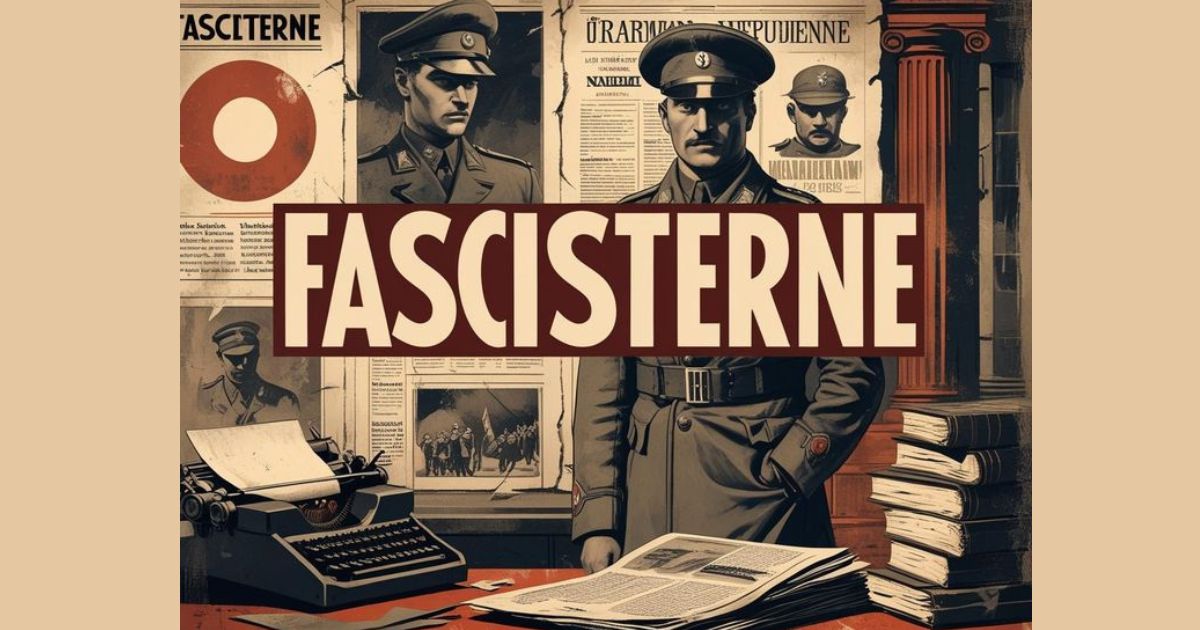
In the turbulent interwar period of the 20th century, Europe witnessed the rise of numerous far-right political movements that sought to reshape society through authoritarianism, nationalism, and anti-democratic ideals. While fascism is often associated with Italy under Mussolini or Germany under Hitler, similar movements emerged across the continent—even in smaller, traditionally democratic nations like Denmark. One such movement was Fascisterne, the Danish fascist organization that briefly gained attention in the early 1930s. Though short-lived and never politically dominant, Fascisterne offers a compelling case study of how global ideological currents can take root—even in societies seemingly resistant to extremism.
This article explores the history, ideology, and lasting impact of Fascisterne. By examining its origins, key figures, beliefs, and eventual decline, we can better understand not only this specific group but also the broader dynamics of political extremism in democratic societies. The story of Fascisterne is a reminder that even in nations with strong democratic traditions, the seeds of authoritarianism can sprout under the right—or wrong—conditions.
Table of Contents
Origins of Fascisterne
Fascisterne (literally “The Fascists” in Danish) was founded in 1931 by a former Danish army officer named Cay Lembcke. Lembcke had previously been involved in conservative and monarchist circles, but the economic turmoil of the Great Depression and the perceived weakness of Denmark’s parliamentary democracy led him to seek more radical solutions. Inspired by Benito Mussolini’s success in Italy, Lembcke believed that Denmark needed a strong, centralized leadership to restore national pride, economic stability, and social order.
The movement officially launched in January 1931 with a public meeting in Copenhagen. It quickly attracted a small but vocal following, primarily among disaffected veterans, young nationalists, and middle-class citizens alarmed by rising unemployment and labor unrest. Unlike many other fascist groups in Europe, Fascisterne did not emerge from a mass grassroots movement. Instead, it was largely driven by Lembcke’s personal charisma and organizational efforts.
In its early months, Fascisterne adopted many of the visual and rhetorical trappings of Italian Fascism: black uniforms, Roman salutes, and public rallies emphasizing discipline, unity, and national renewal. The group published its own newspaper, Fascisten, which served as a mouthpiece for its ideology and helped recruit new members.
Despite its ambitions, Fascisterne struggled to gain widespread support. Denmark’s political culture was deeply rooted in consensus, compromise, and social democracy. The country had avoided the worst violence of World War I and maintained a relatively stable economy compared to its neighbors. As a result, most Danes viewed Fascisterne with skepticism or outright hostility.
Ideology and Beliefs
The ideology of Fascisterne combined elements of Italian Fascism with distinctly Danish nationalist sentiments. At its core, the movement rejected liberal democracy, Marxism, and internationalism. Instead, it promoted a vision of Denmark as a unified, hierarchical nation led by a strong leader who could transcend partisan politics and act decisively in the national interest.
Nationalism and Anti-Communism
Like other fascist movements, Fascisterne placed extreme emphasis on national identity. It portrayed Denmark as a unique cultural and racial entity that needed protection from foreign influences—particularly from the Soviet Union and international socialism. The group viewed communism as an existential threat to Danish values, property rights, and social order. Anti-communism was one of its most consistent rallying cries and helped attract support from conservative business owners and landowners.
Corporatism and Economic Vision
Fascisterne advocated for a corporatist economic model, inspired by Mussolini’s Italy. This system would organize society into state-controlled “corporations” representing different sectors—such as agriculture, industry, and labor—under the guidance of a centralized authority. The goal was to eliminate class conflict by integrating workers and employers into a harmonious national community. In practice, however, Fascisterne offered few concrete economic policies beyond vague promises of order and efficiency.
Authoritarian Leadership
Central to Fascisterne’s ideology was the belief in a charismatic, authoritarian leader. Cay Lembcke positioned himself as this figure—a disciplined, patriotic man who could rescue Denmark from chaos. The movement rejected the idea of parliamentary debate and compromise, arguing that democracy led to division and inefficiency. Instead, it called for a “national government” that would bypass traditional institutions and rule by decree during a period of national emergency.
Cultural Conservatism
Fascisterne also promoted traditional Danish values, including Christianity, family life, and rural virtues. It criticized modern art, secularism, and what it saw as the moral decay of urban society. While not as overtly racist as Nazi Germany, the movement expressed concerns about preserving Danish “racial purity,” though this was less central to its platform than in other fascist regimes.
Organization and Activities
Fascisterne was organized along paramilitary lines, with members wearing black shirts and participating in drills and marches. The group held public rallies, often provoking counter-demonstrations from socialists and communists. These events sometimes led to street violence, though on a much smaller scale than in Germany or Italy.
The movement established local chapters in several Danish cities, but its membership never exceeded a few thousand. Its newspaper, Fascisten, had a modest circulation and served more as a propaganda tool than a serious journalistic enterprise. Despite its efforts, Fascisterne failed to build a sustainable grassroots network or gain significant media attention beyond sensationalist coverage of its rallies.
One of the group’s few notable public actions was its participation in the 1932 parliamentary elections. Fascisterne ran candidates but received less than 0.2% of the national vote—demonstrating its marginal status in Danish politics. The poor electoral performance was a major blow to the movement’s credibility and morale.
Decline and Dissolution
By 1933, Fascisterne was already in decline. Several factors contributed to its rapid fall from relevance:
- Lack of Popular Support: Most Danes remained committed to democratic institutions and were wary of extremist solutions. The Social Democratic Party, which dominated Danish politics at the time, successfully addressed economic concerns through welfare policies and labor reforms, reducing the appeal of radical alternatives.
- Internal Divisions: Like many small political movements, Fascisterne Fascisterne suffered from infighting and leadership struggles. Cay Lembcke’s authoritarian style alienated some members, and rival factions emerged with differing visions for the group’s future.
- Rise of Competing Movements: In 1933, a new far-right group called the National Socialist Workers’ Party of Denmark (DNSAP) was founded, modeled more closely on Hitler’s Nazi Party. Though also marginal, DNSAP attracted some of Fascisterne’s supporters with its more aggressive rhetoric and clearer ideological stance.
- Government Response: While Denmark did not ban Fascisterne outright, authorities monitored its activities closely. Public opinion, combined with police surveillance and media criticism, made it difficult for the group to operate openly.
By 1934, Fascisterne had effectively ceased to exist as an organized movement. Cay Lembcke faded from public view, and most members either returned to mainstream politics or joined other fringe groups. The movement left behind little institutional legacy.
Fascisterne in the Context of European Fascism
To understand Fascisterne, it is essential to place it within the broader landscape of interwar European fascism. While sharing core tenets with Italian Fascism and German Nazism—such as anti-liberalism, nationalism, and authoritarianism—Fascisterne lacked the mass appeal, ideological coherence, and state support that enabled fascism to succeed elsewhere.
Denmark’s political culture played a crucial role in limiting Fascisterne’s influence. Unlike Italy or Germany, Denmark had a long tradition of consensus-based governance, strong labor unions, and a relatively egalitarian society. The Danish welfare state was already taking shape in the 1930s, providing a safety net that reduced the desperation that fueled extremism in other countries.
Moreover, Fascisterne never developed a compelling alternative to the existing system. Its ideology was derivative, borrowing heavily from Mussolini without adapting it meaningfully to Danish conditions. It offered slogans rather than solutions, and spectacle rather than substance.
In contrast, fascist movements in countries like Romania or Hungary found fertile ground due to ethnic tensions, economic collapse, or weak democratic institutions. Denmark experienced none of these to the same degree, making it inhospitable terrain for Fascisterne.
Lasting Impact and Historical Legacy
Although Fascisterne disappeared quickly, its brief existence raises important questions about the vulnerability of democracies to extremist movements. Its story illustrates how even stable, prosperous societies can produce fringe groups that challenge democratic norms—especially during times of crisis.
Historians generally agree that Fascisterne had minimal direct impact on Danish politics. It never held office, influenced legislation, or altered the course of national policy. However, its presence served as a warning sign—a reminder that authoritarian ideas could find adherents even in unlikely places.
In the decades following World War II, Denmark, like much of Europe, engaged in a process of reckoning with its wartime past. While the country is celebrated for its resistance to Nazi occupation—particularly the rescue of Danish Jews in 1943—scholars have also examined the existence of domestic fascist sympathizers. Fascisterne, though defunct by the time of the German invasion in 1940, is often cited as part of this broader context of far-right activity in pre-war Denmark.
Today, Fascisterne is primarily studied as a historical curiosity—a footnote in the larger narrative of European fascism. Yet it remains relevant as a case study in political extremism. In an era of rising populism and democratic backsliding around the world, the story of Fascisterne underscores the importance of civic vigilance, strong institutions, and inclusive political discourse.
Interestingly, the term fascisterne has occasionally resurfaced in Danish political debates—not as a self-identifier, but as a pejorative label used to discredit opponents. This rhetorical use reflects the enduring stigma attached to fascism in post-war Europe.
Comparisons with Other Danish Far-Right Movements
While Fascisterne was the first explicitly fascist organization in Denmark, it was not the only far-right movement of the era. The DNSAP (National Socialist Workers’ Party of Denmark), founded in 1930, modeled itself more closely on the Nazi Party and enjoyed slightly more support, peaking at around 1.8% of the vote in 1939. Even so, it remained marginal.
After World War II, far-right politics in Denmark largely went underground due to the association with Nazism. However, in recent decades, parties like the Danish People’s Party (Dansk Folkeparti) and, more recently, the Hard Line (Stram Kurs) have drawn on nationalist and anti-immigration rhetoric that echoes—though does not replicate—earlier fascist themes.
It is crucial to distinguish between historical fascism and contemporary right-wing populism. Modern Danish parties may share Fascisterne’s emphasis on national identity or skepticism of multiculturalism, but they operate within democratic frameworks and reject violence and authoritarianism. Nevertheless, scholars continue to debate the boundaries between legitimate conservatism and extremist ideology—a conversation in which the memory of fascisterne occasionally surfaces.
Why Fascisterne Failed: Lessons for Democracy
The failure of Fascisterne offers several lessons for understanding how democracies can resist authoritarian movements:
- Strong Institutions Matter: Denmark’s parliamentary system, independent judiciary, and free press provided checks against extremist takeovers.
- Economic Security Reduces Extremism: The Social Democrats’ ability to implement social welfare policies during the Depression undercut the appeal of radical alternatives.
- Civic Culture is Protective: A public committed to dialogue, compromise, and tolerance makes it harder for divisive ideologies to gain traction.
- Ideological Clarity is Key: Fascisterne’s vague, borrowed ideology failed to resonate because it didn’t address Danish realities in a meaningful way.
These insights remain relevant today. As democracies worldwide face challenges from populist leaders, disinformation, and polarization, the story of Fascisterne serves as both a caution and a source of hope—it shows that extremism can emerge anywhere, but also that it can be contained through collective resilience.
Conclusion
Fascisterne may have been a minor player in the grand drama of 20th-century European politics, but its history is far from insignificant. As Denmark’s first organized fascist movement, it reflected the global anxieties of the interwar period while also revealing the unique strengths of Danish democracy. Though short-lived and ultimately unsuccessful, Fascisterne provides valuable insights into how extremist ideologies take root—and why they sometimes fail to flourish.
The eight mentions of fascisterne throughout this article underscore its role as both a historical entity and a symbolic reference point. While the group itself vanished by the mid-1930s, the questions it raises about nationalism, leadership, and democratic fragility continue to resonate. In studying fascisterne, we are not just examining a relic of the past; we are engaging with enduring challenges that every open society must confront.
In the end, the legacy of Fascisterne is not one of influence or achievement, but of warning. It reminds us that democracy is not self-sustaining—it requires active participation, shared values, and constant vigilance. And in that lesson, the brief history of fascisterne remains profoundly relevant for our times.