
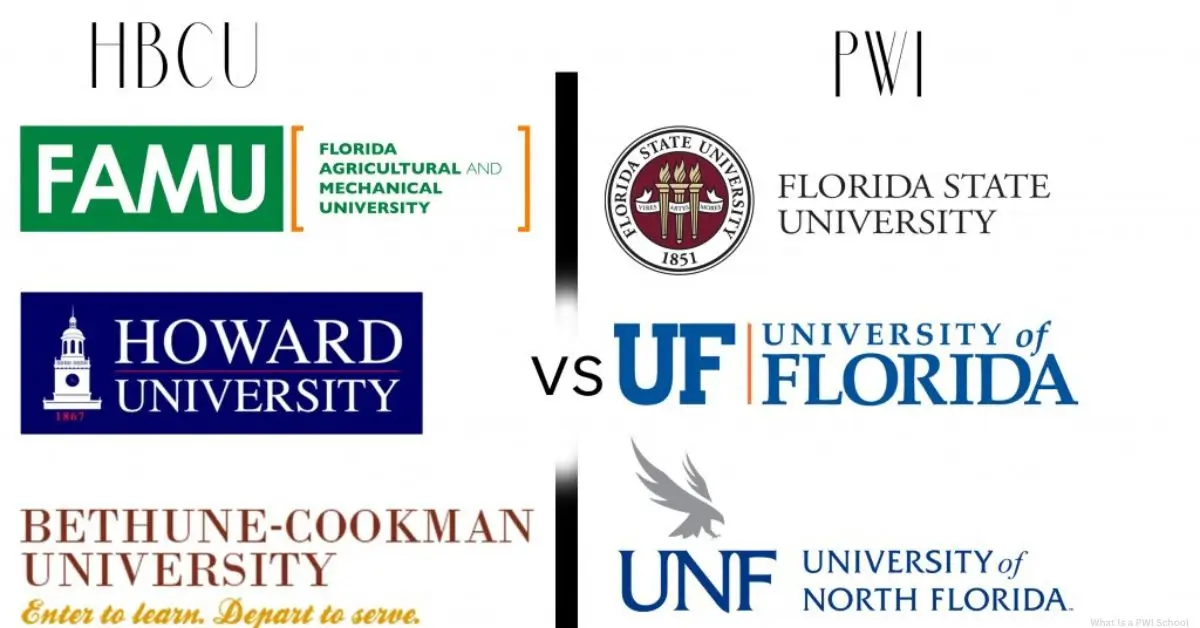
Ever wonder why some colleges are called PWIs? A PWI school short for Predominantly White Institution is a U.S. college or university where 50% or more of the students identify as white. According to the U.S. Department of Education, 53% of Black college students attend PWIs, highlighting their prevalence in American higher education. Research from Georgetown University shows that PWI graduates earn an average of $62,000 annually, though students of color often face unique social and mental health challenges (Education Trust). Understanding what is a PWI school is key for parents and students exploring inclusive and supportive campus options.
Explore More:
Quick Answer: What Is a PWI School?
A PWI school is any U.S. college where over half of the student body is white. It’s a descriptive term, not an official label. PWIs exist across public and private universities, providing academic resources and networking opportunities, but students of color may encounter microaggressions or feel less included on campus.
PWI vs. HBCU: Key Differences and Statistics
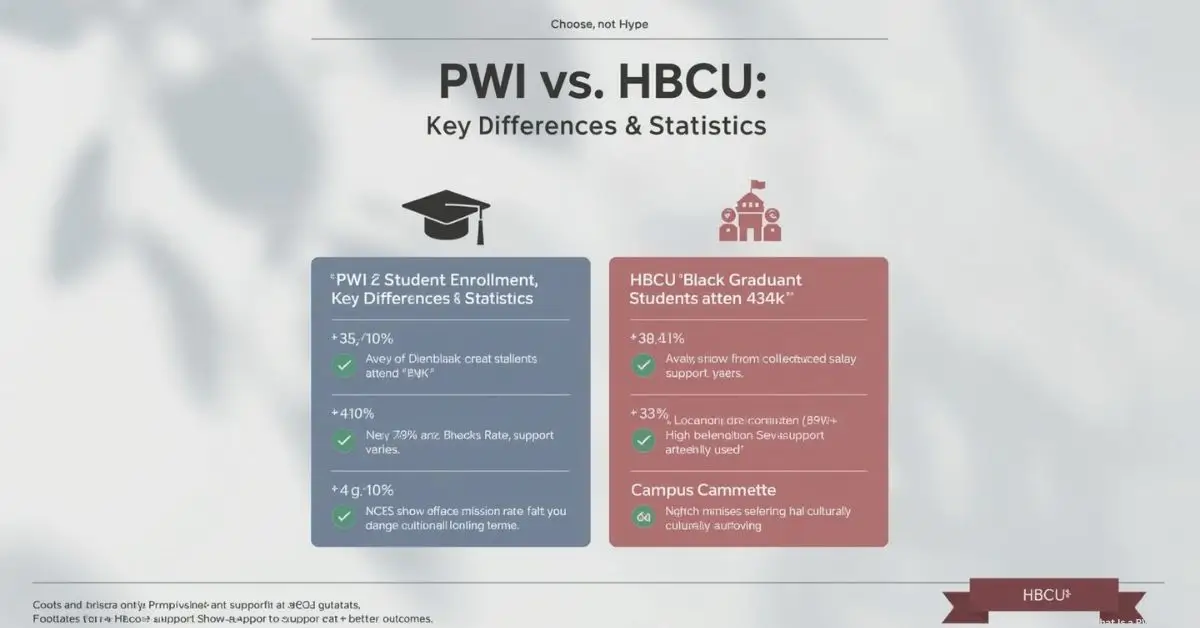
| Metric | PWI | HBCU |
| Black Student Enrollment | 53% of all Black students | 7% of all Black students |
| Avg. Graduate Salary | $62,000 | $51,000 |
| 4-Year Grad Rate (Black Students) | 44% | 33% |
| Campus Climate | Feelings of isolation common | Strong sense of belonging |
Key Intake:
Higher education researcher Crystal Chase says that While most Black students attend PWIs, HBCUs often provide stronger cultural support and higher graduation rates. Think of it as the difference between scale and inclusion: PWIs offer bigger networks, HBCUs deliver culturally focused communities. For those researching what is a PWI school versus an HBCU, these metrics highlight practical differences.
Expert Insight:
Jessie Hernandez-Reyes from Education Trust notes, “University leadership must address poor campus racial culture, as it affects belonging and graduation rates for students of color.”
5 Inclusive Campus Opportunities:
PWIs can offer meaningful ways to support students of color when inclusivity is prioritized. Based on research and real-world student experiences, here are five opportunities to look for:
1. Cultural and Identity-Based Student Organizations
Clubs like Black Student Unions, Latino/Hispanic Student Associations, or LGBTQ+ groups provide safe spaces for connection and expression. These communities foster belonging and support.
2. Dedicated Support Centers
Resources such as a Black Cultural Center, Multicultural Center, or First-Generation Student Programs help students navigate academics, social challenges, and mentorship opportunities.
3. Inclusive Mentorship Programs
Pairing students of color with faculty or alumni mentors can boost career readiness and confidence while providing guidance on navigating campus culture.
4. Diversity-Focused Events and Workshops
Events like cultural festivals, speaker series, or inclusion workshops promote awareness and celebrate student identities while encouraging cross-cultural engagement.
5. Faculty Diversity and Representation Initiatives
Schools that actively recruit and retain diverse faculty provide students with role models, mentorship, and a more inclusive academic environment.
Pro Tip: When evaluating a PWI, look for measurable evidence of these programs such as dedicated staff, event calendars, and student testimonials to understand how well inclusivity is embedded on campus. This is essential when assessing what is a PWI school beyond enrollment numbers.
The Student Experience: Pros, Cons, and Realities
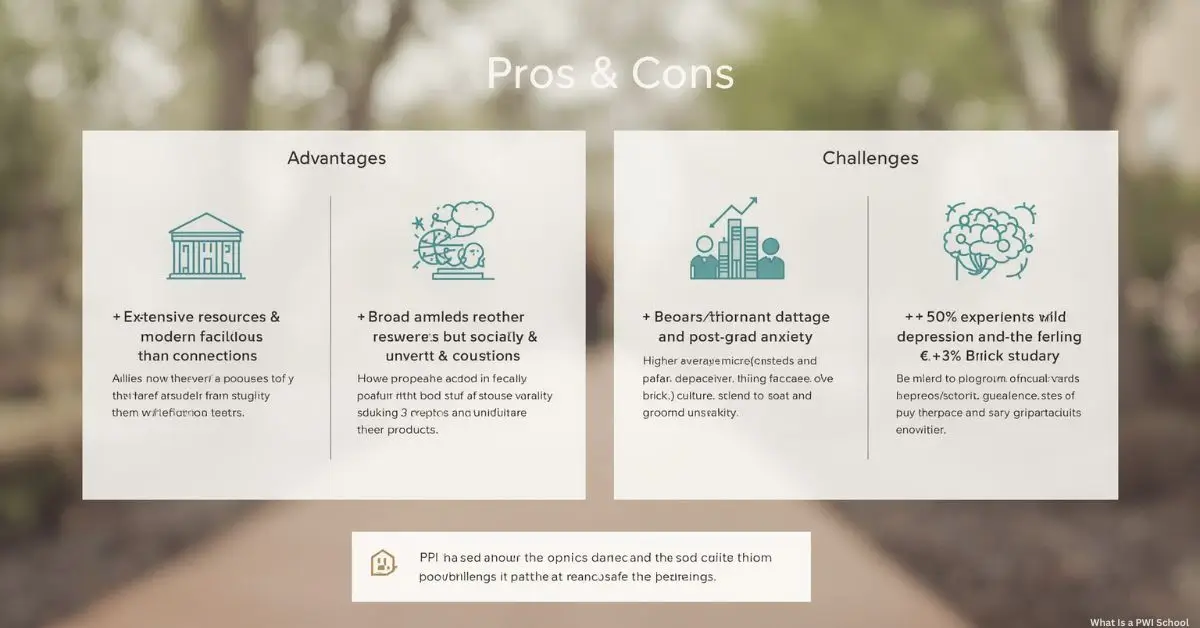
Advantages:
- Access to extensive resources and modern facilities
- Broad alumni networks and career connections
- Higher average post-graduation salaries
Challenges:
- 75% of students of color report feeling unwelcome
- Over 50% experience mild depression or anxiety
- Microaggressions and low faculty diversity (<3% Black faculty) are common
Observational Note: Based on real-world student reports, PWIs can be “academic goldmines” but socially tricky for minority students. Including cultural programs and mentoring can help bridge the gap. Understanding what is a PWI school includes knowing both the academic advantages and social challenges.
Myth vs. Fact: Debunking Common PWI Misconceptions
Myth: PWIs provide superior education.
Fact: Graduation likelihood for Black students can be 33% higher at HBCUs, controlling for factors.
Myth: Students of color are treated equally.
Fact: University of Georgia research shows over half report mild depression due to social isolation.
Myth: PWIs are naturally inclusive.
Fact: Campus racial diversity doesn’t always mean inclusion; active programs and cultural support matter more.
Clarifying these points is essential for families researching what is a PWI school to set realistic expectations.
How to Choose: A Checklist for Evaluating a PWI
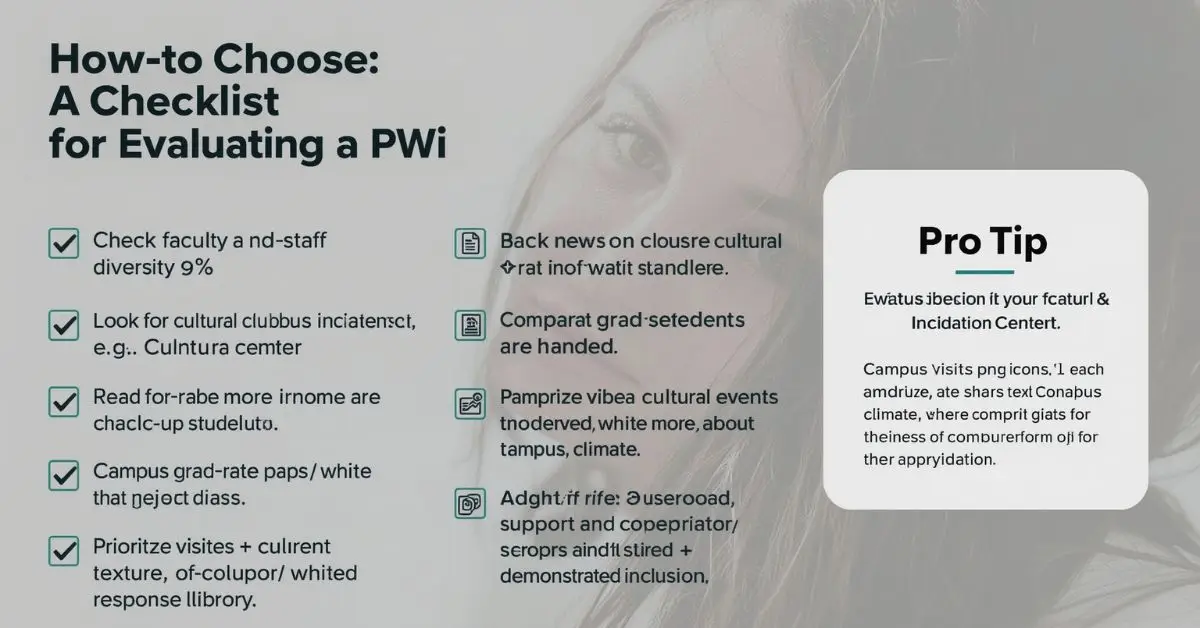
Checklist:
- Check faculty and staff diversity percentages
- Look for cultural clubs and support centers (e.g., Black Cultural Center)
- Read news about racial incident handling
- Compare graduation rate gaps between white and non-white students
- Talk to current students of color about campus climate
Pro Tip: Visiting campuses and attending cultural events can reveal more than official statistics when deciding what is a PWI school that fits your child’s needs.
Sources:
- College Reporter: Black History Month VS Predominantly White Institutions
- Learn.org: HBCU Vs. PWI: Understanding the Difference & How To Choose
- Every Learner Everywhere: What Predominantly White Institutions Can Learn from Tribal Colleges and Universities and HBCUs
- Education Trust: Creating Positive College Campus Racial Climates for Students of Color
- National Center for Education Statistics: Report on the Condition of Education 2024
FAQ’s
What percentage of Black students go to PWIs?
53% of all Black college students attend Predominantly White Institutions (US Department of Education, 2024).
How does a PWI differ from an HBCU?
HBCUs were founded to educate Black students, while PWIs are colleges where over 50% of students are white.
Are PWIs inclusive for minorities?
Many PWIs struggle with inclusion. Students of color often face microaggressions and mental health challenges.
Do PWI graduates get paid more?
On average, yes. Georgetown research reports $62,000 for PWI grads versus $51,000 for HBCU grads, though this varies by major.
Which schools are considered PWI?
Many U.S. universities, including Harvard, Yale, UCLA, and most state schools, are classified as PWIs based on demographics.
What are PWI advantages for students?
Resources, alumni networks, and high-name recognition can boost career opportunities, though social challenges exist.
How to identify a PWI school?
Look at student population makeup if 50% or more of enrolled students are white, it’s a PWI.
Author Bio
Alexandra Ridley is an Education Analyst having 7 years of experience covering school demographics, diversity, and college admissions insights. Provides research-driven advice for parents and students navigating U.S. education.