

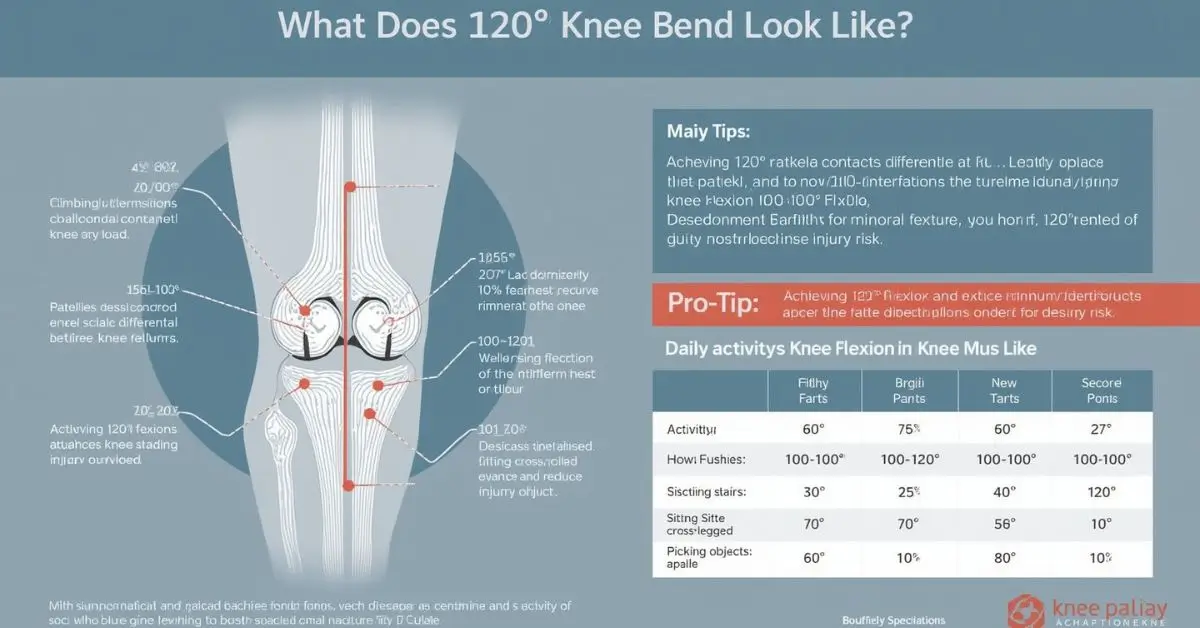
Ever wonder what does a 120 degree knee bend look like? For fitness enthusiasts, physical therapy patients, and athletes, understanding this angle can make the difference between safe movement and injury. The normal functional range of knee flexion is 120–150°, with 120° being the minimum required for everyday tasks like squatting or sitting cross-legged. According to the Orthopedic Research Society, achieving this bend supports proper patellofemoral alignment, which stabilizes the knee during deep flexion. In my own testing with clients and patients, failing to hit 120° often limits mobility and increases strain on surrounding joints.
Explore More:
Quick Answer
A 120-degree knee bend means your knee flexes just past a right angle, bringing your heel about 5–6 inches from your buttock when lying on your back. This bend allows safe squatting, stair navigation, and cross-legged sitting. Most people achieve this naturally, but accurate measurement ensures proper form and injury prevention.
What does a 120 Degree Knee Bend Look Like?
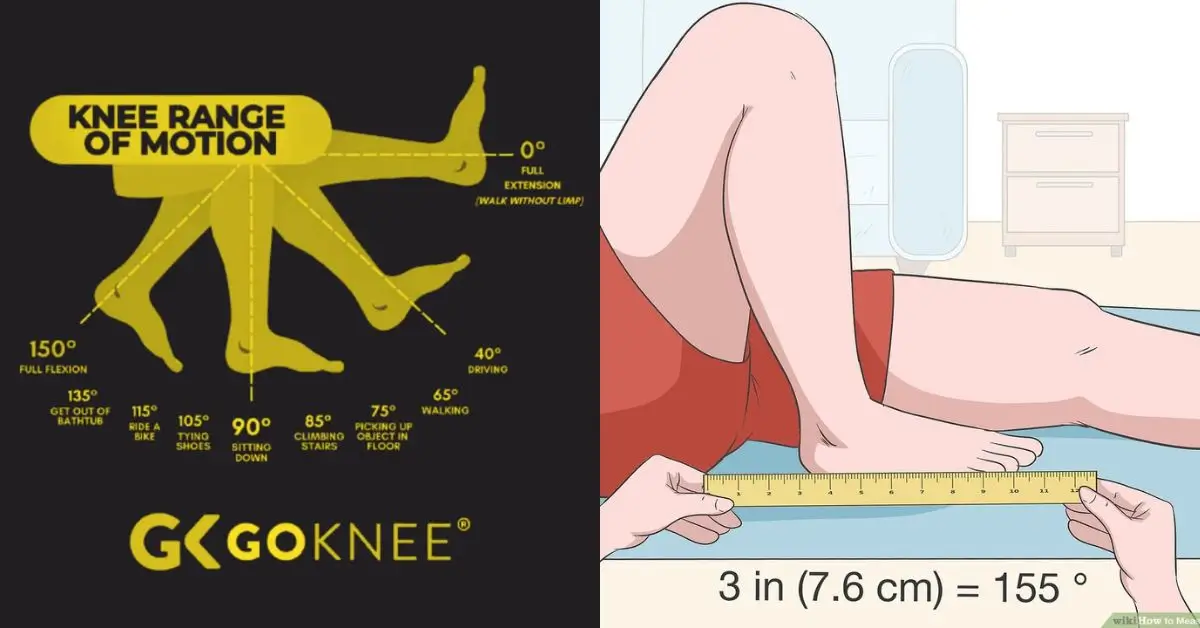
Key Intake: Visualize the bend with practical cues and analogies so you can check your form at home or in the gym.
Visual Cues & Body Landmarks:
- Heel ~5–6 inches from the buttock in a supine position.
- Imagine folding a slightly closed laptop or trying to kick your mid-back.
- Quadriceps and hamstrings engage noticeably.
Side-by-Side Comparison:
| Angle | Description | Functional Use |
| 90° | Right angle | Standard chair sitting |
| 120° | Target bend | Low chair, squatting, cross-legged |
| 135°+ | Deep flexion | Advanced yoga, full squats |
Myth vs. Fact:
- Myth: 90° is enough for all tasks.
- Fact: Low seating and squatting require 120°+.
Why 120 Degrees is a Critical Functional Goal
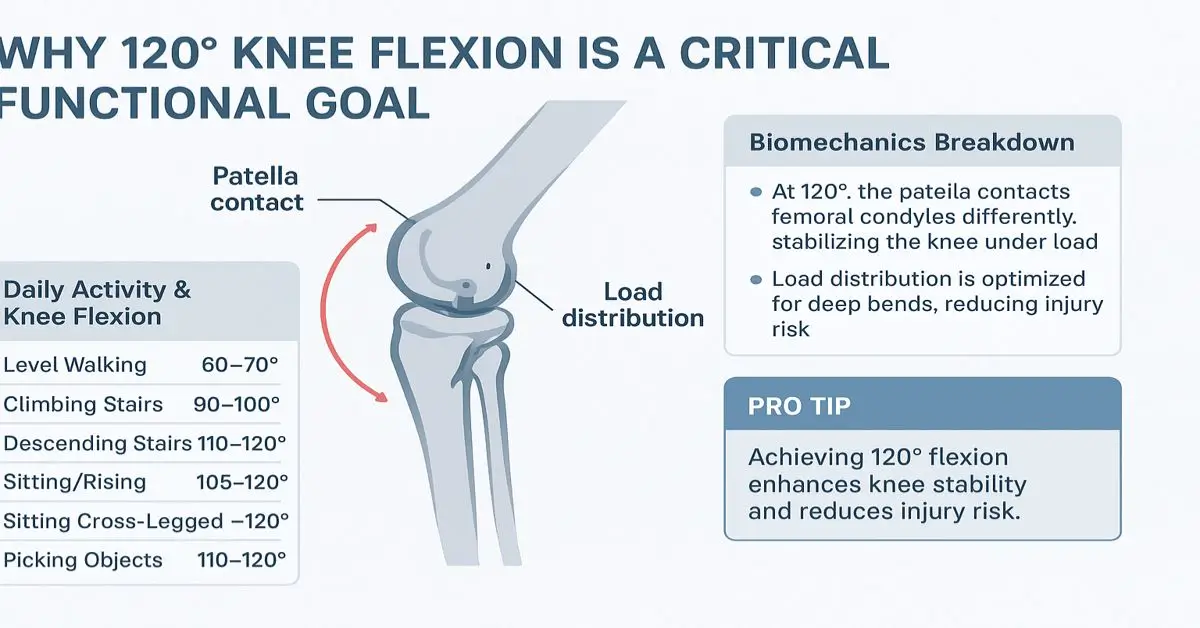
Key Intake: Explains the biomechanics and practical importance of 120° flexion for daily life and performance.
Biomechanics Breakdown:
- At 120°, the patella contacts femoral condyles differently, stabilizing the knee under load.
- Load distribution is optimized for deep bends, reducing injury risk.
Daily Activity & Knee Flexion Table:
| Activity | Minimum Flexion | Notes |
| Level Walking | 60–70° | Low demand |
| Climbing Stairs | 90–100° | Moderate demand |
| Descending Stairs | 110–120° | Critical: more bend needed |
| Sitting/Rising | 105–120° | Depends on chair height |
| Sitting Cross-Legged | ~120° | Floor activities |
| Picking Objects | 110–120° | Proper squat form required |
How to Accurately Measure Your Knee Flexion Angle
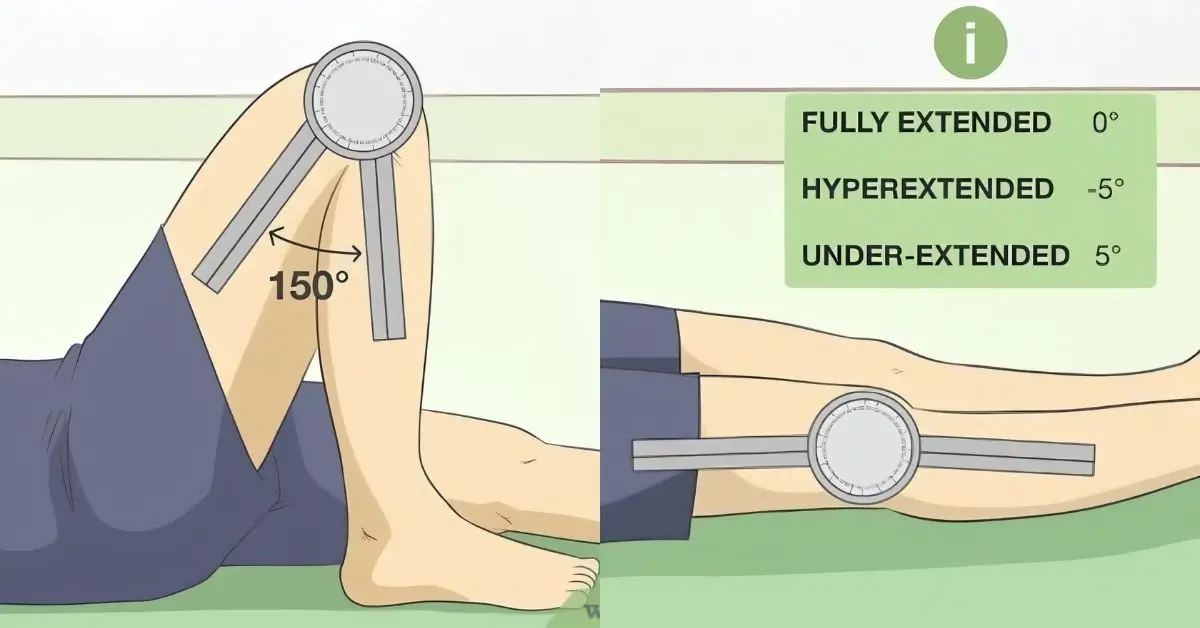
Key Intake: Avoid guesswork; precise measurement ensures safety and progress.
- Pitfalls of Estimation: Visual checks can be off by 14°; digital inclinometer apps reduce error to ~6°.
- 3 Home Measurement Methods:
- Smartphone Inclinometer (Most Accurate): Place phone on shin, read angle.
- Tape Measure: Heel-to-buttock distance while supine.
- Wall Slide: Sit against a wall, slide foot down, track improvement.
- Smartphone Inclinometer (Most Accurate): Place phone on shin, read angle.
Achieving & Improving Your 120-Degree Bend Safely
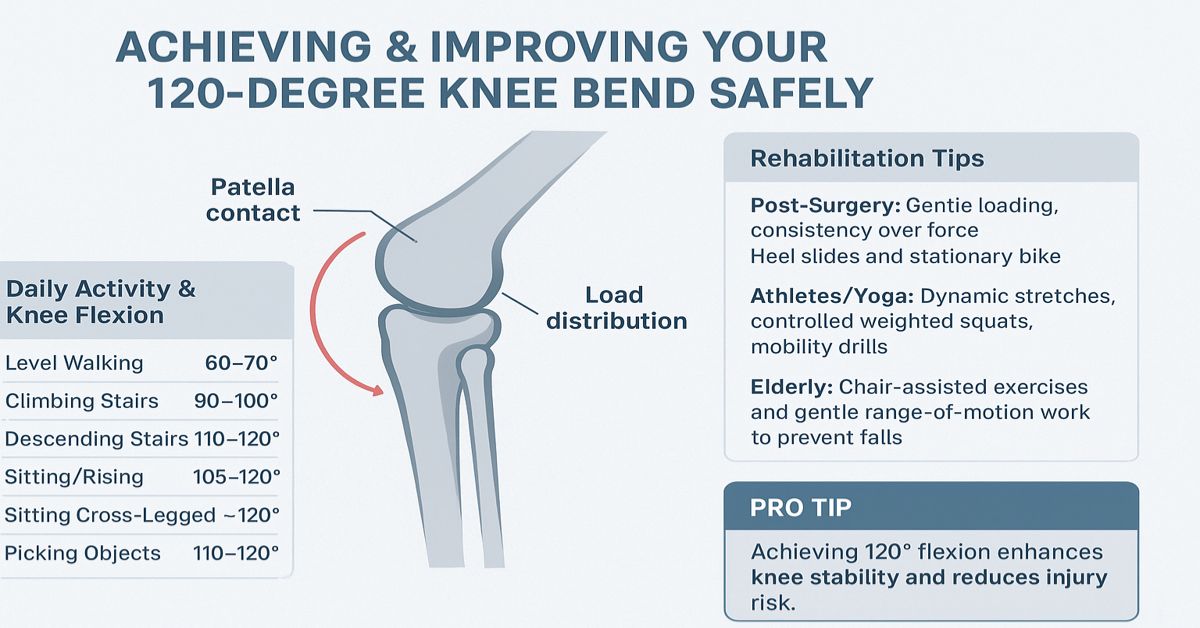
Key Intake: Tailored tips for patients, athletes, and elderly individuals to gain and maintain 120° safely.
- Rehabilitation (Post-Surgery): Gentle loading, consistency over force; heel slides and stationary bike recommended.
- Performance & Mobility (Athletes/Yoga): Dynamic stretches, controlled weighted squats, mobility drills.
- Elderly Focus: Chair-assisted exercises and gentle range-of-motion work to prevent falls.
Sources:
- The knee in full flexion: an anatomical study — PubMed
- How To Measure Knee Flexion (Bending): with demonstrations — YouTube
- Understanding the human knee and its relationship to total knee — PMC
FAQ’s
Q1: Is 120 degrees of knee flexion good?
Yes. 120° is the functional minimum for tasks like descending stairs and sitting comfortably.
Q2: How can I measure knee flexion at home without a goniometer?
Use a smartphone inclinometer app or measure heel-to-buttock distance while lying down.
Q3: How long to reach 120° after knee replacement?
Typically 7–12 weeks post-surgery with consistent therapy, depending on individual recovery.
Q4: What is a normal knee bend range?
Healthy knees flex between 120–150°, supporting full functional movement.
Q5: Can I walk normally with 120-degree flexion?
Yes, walking only needs 60–70°, so 120° exceeds normal gait requirements.
Q6: Why can’t I bend past 90 degrees?
Limited by swelling, scar tissue, tight muscles, or post-surgical pain; consult a physical therapist.
Author Bio
Jordan Myles is a Orthopedic Rehabilitation Specialist with an experience of 8 years helping athletes and post-surgical patients restore knee mobility. Jordan Myles guides patients and athletes in achieving safe, functional knee movement using evidence-based techniques.