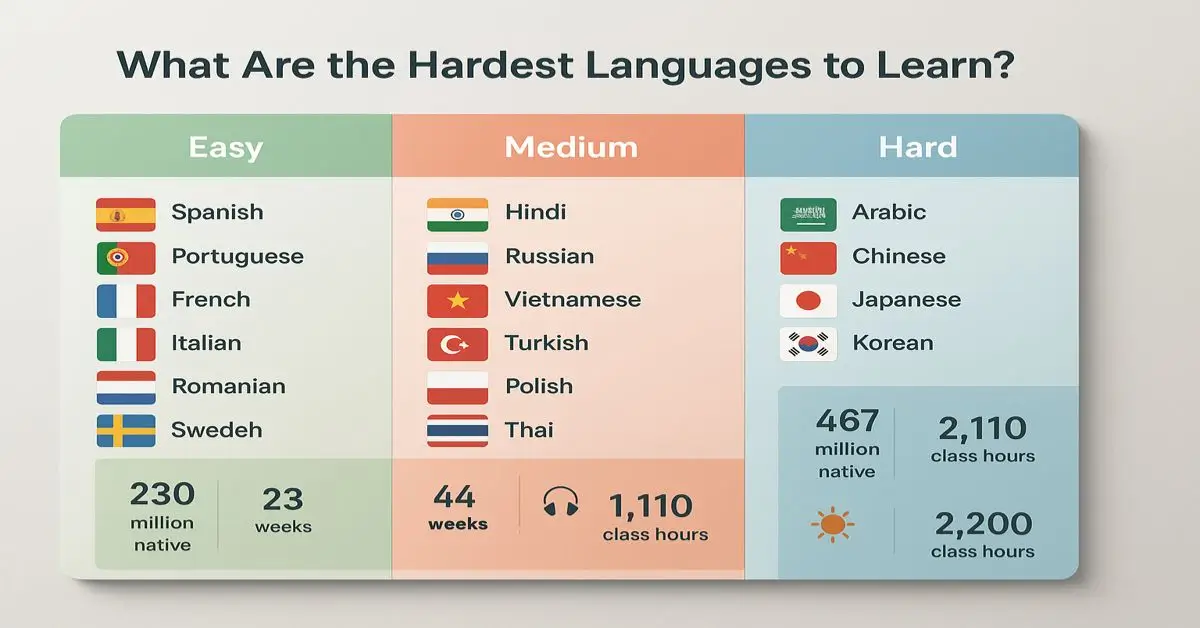
Ever wondered why some languages seem impossible while others feel natural? You’re not alone. Language learners, travelers, students, and even polyglots often ask the same question: what’s the hardest language to learn? According to the U.S. Foreign Service Institute (FSI), English speakers need anywhere from 600 to 2,200 class hours to master a foreign language. That means the “hardest” ones take nearly four times longer than easier options. Experts like the Modern Language Association confirm that grammar complexity, writing systems, and cultural context all play huge roles.
So let’s cut through the noise and give you a direct answer backed by research, real-world insights, and practical examples.
Explore More:
Instant Answer
The hardest languages to learn for English speakers are Arabic, Mandarin Chinese, Japanese, and Korean, each requiring over 2,000 hours of study. They’re difficult because of unique scripts, complex grammar, cultural depth, and tonal or honorific systems. While difficulty varies by learner, these languages consistently top expert rankings worldwide.
Why “Hardest” Depends on Where You Start
Difficulty isn’t universal. A Spanish speaker may find Portuguese easy, while an English speaker struggles with tones in Mandarin.
- FSI Group I (easiest): Spanish, French, Dutch takes ~600 hours.
- FSI Group V (hardest): Arabic, Chinese, Japanese, Korean takes ~2,200 hours.
Key takeaway: What’s the hardest language to learn depends on your native language, learning style, and cultural exposure.
Why Mandarin Feels Like a Marathon
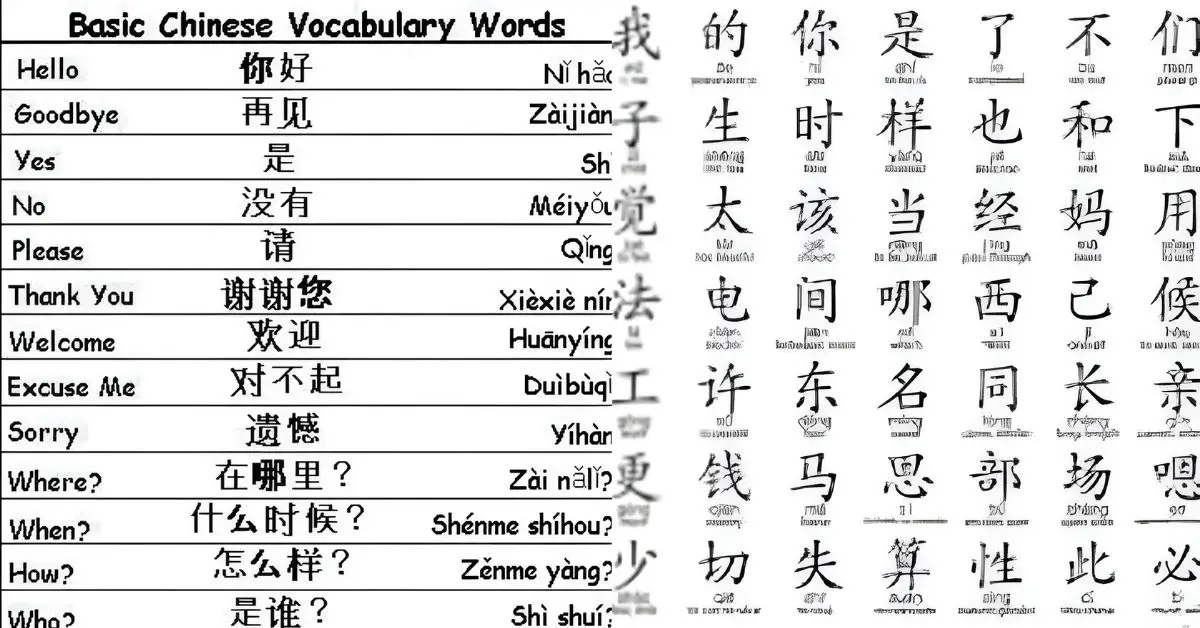
Mandarin is often ranked the hardest because:
- It has 50,000+ characters, though 3,000 cover daily use.
- It’s tonal, the same sound can mean 4+ different things.
- Grammar is simple, but pronunciation creates the real challenge.
Example: The word “ma” can mean mother, horse, or scold depending on tone.
What Makes Arabic a Puzzle
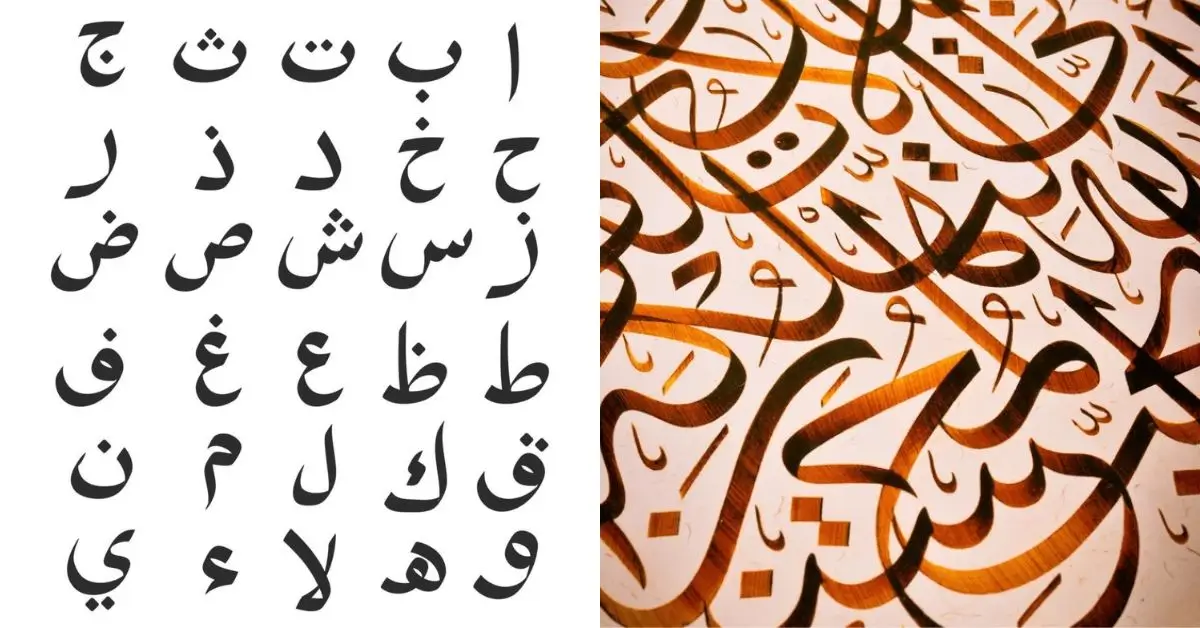
Arabic challenges learners with:
- A different alphabet (written right to left).
- Omitted vowels, forcing heavy reliance on context.
- Regional dialects that differ dramatically from Modern Standard Arabic.
Truth is, most people miss this: the Arabic you learn in class may not match what’s spoken in Cairo or Dubai.
Japanese vs. Chinese: Which Is Harder?
This is a common debate.
- Japanese: Three scripts (hiragana, katakana, kanji), complex politeness levels.
- Chinese: Thousands of characters, tones, but simpler sentence structures.
Expert view: Japanese takes longer for writing mastery, while Chinese demands more listening and speaking focus.
Why Korean Tricks Beginners
Korean looks approachable because of its alphabet (Hangul). But here’s the catch:
- Grammar has layered politeness forms.
- Word order differs from English.
- Vocabulary blends Sino-Korean and native words, which confuses learners.
Tip: Hangul can be learned in a week, but fluency may still take years.
The Silent Struggle: European “Hard” Languages
Not all tough languages are Asian. Hungarian, Finnish, and Polish are considered Europe’s hardest.
- Hungarian: 18 grammatical cases.
- Finnish: Agglutinative structure, no Indo-European roots.
- Polish: Complex consonant clusters, gendered grammar.
Quick fact: Finnish often ranks alongside Japanese in “hardest to master” lists.
Are Tonal Languages Always Harder?
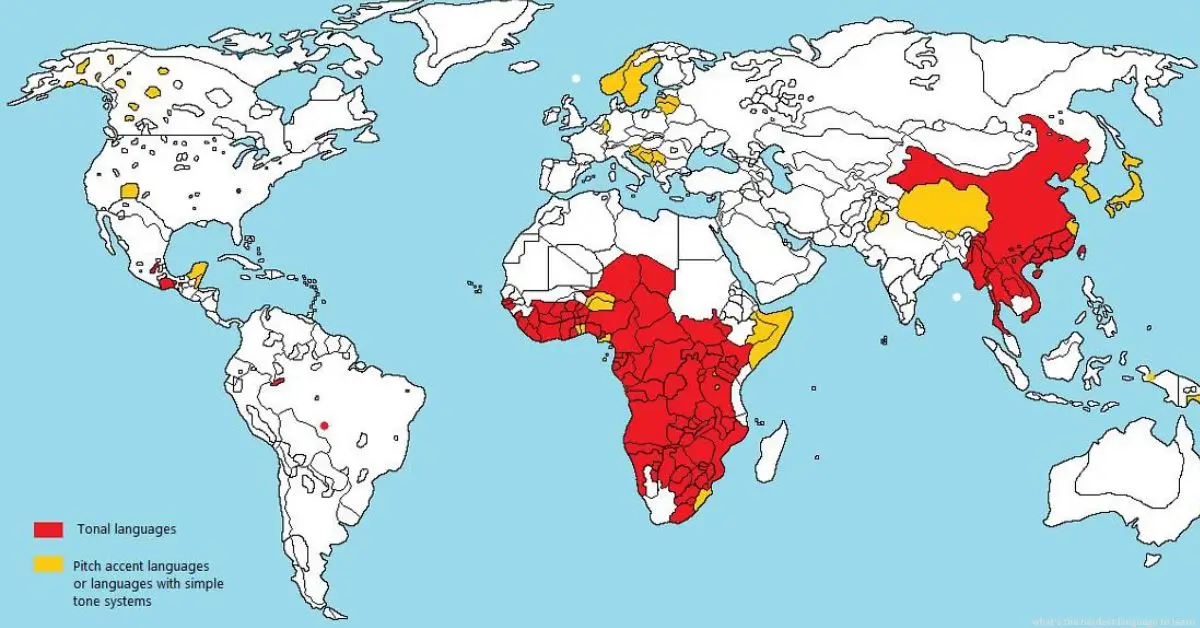
Tonal systems (Mandarin, Thai, Vietnamese) confuse English speakers, but difficulty is relative. Alphabetic languages like Russian or Greek can also be hard due to grammar rules or unfamiliar sounds.
Truth: Tonal ≠ impossible. With practice, even tonal shifts become second nature.
Real-World Applications: Why Difficulty Matters
- Travelers: Knowing language difficulty helps pick practical goals.
- Parents: Can choose languages that balance challenge with long-term career benefits.
- Polyglots: Benchmark against hardest spoken languages for motivation.
- Students: Use difficulty rankings for credible research papers.
Bottom line: The hardest language to learn isn’t a barrier it’s a strategy signal.
Sources
The following five reputed sources provide the most authoritative insights into language difficulty rankings and learning challenges:
- Berlitz: Recognized globally for its expertise in language education and cultural training, offering detailed insights into which languages are hardest for English speakers.
- Rosetta Stone: A trusted leader in digital language learning, presenting a complete breakdown of difficulty rankings for global languages.
- Business Insider: Published an accessible map-based view of the hardest languages for English speakers, widely referenced in media and academia.
- Atlas & Boots: Travel and culture authority summarizing the Foreign Service Institute’s official difficulty rankings (Atlas & Boots).
- EC Innovations: A professional translation and localization company providing updated global insights on the top 10 hardest languages (EC Innovations).
FAQ’s
What is the hardest language in the world to learn?
Arabic, Mandarin Chinese, Japanese, and Korean rank as the hardest due to grammar, script, and time needed.
Which language takes the longest time to learn?
Japanese tops the list with 2,200+ hours for English speakers.
Why is Mandarin considered difficult for English speakers?
Its tones and thousands of characters make speaking and reading especially tough.
Is Japanese harder than Chinese to learn?
Japanese writing is harder, while Chinese speaking is more complex.
What makes Finnish challenging for learners?
Its grammar system has many cases and little overlap with English vocabulary.
Are tonal languages harder than alphabetic ones?
They’re tricky at first, but grammar in alphabetic systems can be equally challenging.
Which European language is the hardest?
Hungarian and Finnish are often ranked toughest due to grammar complexity.
Author Bio
Elena Marquez is a Language Research Writer with 9 years of experience in applied linguistics and multilingual education. She specializes in breaking down complex topics into clear, practical insights for learners worldwide.
For detailed insight try watching: