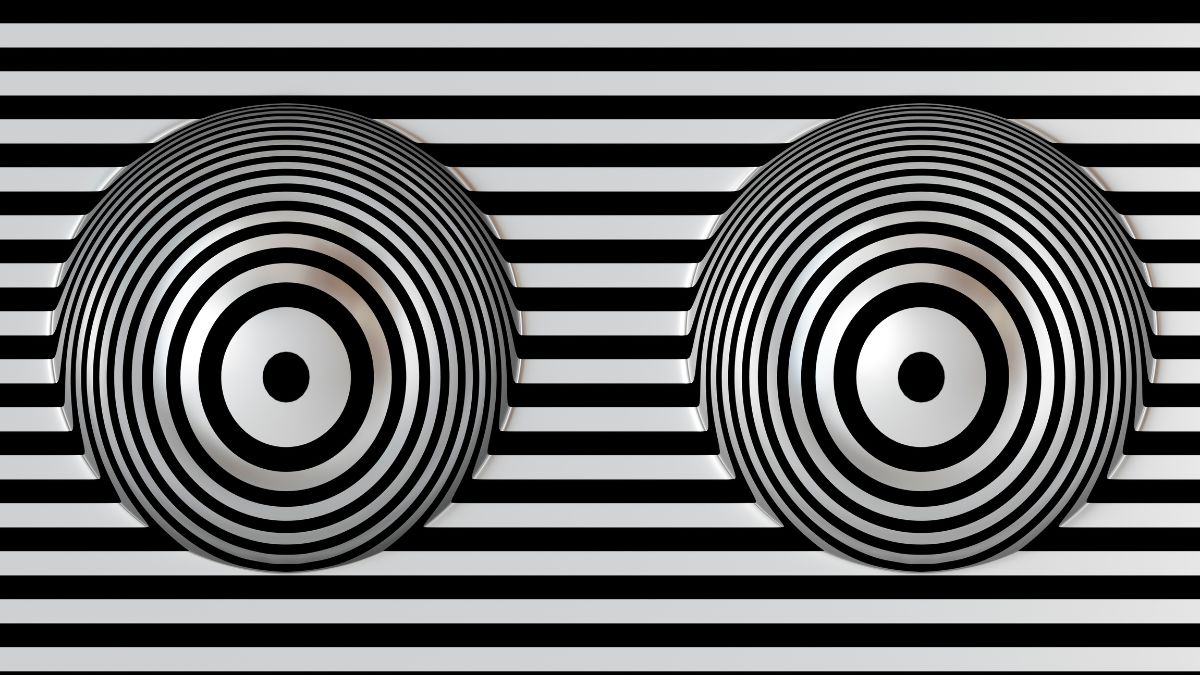
Optical art (Op Art) is a striking modern artistic movement characterized by intricate designs and visual illusions that captivate viewers and challenge their perception of reality. This art form, which skillfully combines aesthetics, geometry, and color, creates compositions that appear to move and pulse. Its influence extends beyond galleries into various fields, including fashion, architecture, and design, thanks to its engaging, participatory nature, which invites viewers into a dynamic relationship with the artwork. The fascination with Op Art is rooted in the psychological and scientific principles of perception, highlighting its unique power to create experiences distinct from other art forms.
Table of Contents
Origins and Evolution of Op Art
The roots of Op Art can be traced back to the experimental movements of the mid-twentieth century, particularly the surge of interest in geometric abstraction. As artists like Victor Vasarely and Bridget Riley began to explore the possibilities latent in basic shapes and bold contrasts, they found ways to imbue static images with apparent motion. Vasarely’s pieces, designed with striking mathematical precision, encouraged the viewer’s eye to roam. Riley, meanwhile, became celebrated for her meticulous use of line and color, which created sensory experiences that alternately felt soothing and disorienting. Today, contemporary designers and collectors continue to celebrate these visual experiments, with creations such as luxury kaleidoscopes drawing inspiration from the same principles that made Op Art so compelling. These pioneers gave Op Art its modern form during the 1950s and 1960s, sparking global interest and giving rise to a movement that would soon infiltrate multiple realms of visual culture.
Scientific Foundations Behind Optical Illusions
The mesmerizing impact of optical art is not simply a triumph of style. It stems from the deep interplay between artistic design and the mechanisms of human visual perception. The effectiveness of Op Art relies on manipulating elements such as spatial frequency, line orientation, and color contrast to provoke reactions such as shimmering, warping, and shifts in depth perception. Scientists have studied these effects and found that our brains interpret these cues using the same systems that understand spatial relationships and movement in the real world. When confronted with certain patterns, the neurons in our visual cortex become stimulated in unusual ways, generating the perceptual phenomena that make optical illusions so fascinating. This close relationship between art and science has propelled Op Art into a subject of interest for both psychologists and neuroscientists.
Applications in Modern Design
The legacy of Op Art resonates strongly in today’s design world. Fashion designers have long harnessed the power of optical patterns to create textiles that appear to shift with movement, imparting dynamic flair to clothing. Interior designers, too, draw from Op Art to craft spaces that feel lively and energetic, using patterned wallpaper, flooring, or furnishings to infuse their environments with visual vitality. Beyond aesthetics, these patterns also influence branding, product packaging, and digital media, where a strong visual identity is often synonymous with innovation and modernity.
Contemporary Artists and Innovations
Modern practitioners continue to experiment with the visual principles first popularized by the early Op Art pioneers. Jen Stark is a prominent example, known for her vividly colored, multidimensional works that echo natural forms such as fractals, topographies, and cellular structures. Her approach bridges the gap between traditional, hand-crafted illusions and the possibilities of digital manipulation. As new materials and digital tools become available, artists now explore interactive and immersive formats, including virtual reality and large-scale installations, taking the optical art experience into new sensory realms.
Psychological Impact on Viewers
Experiencing optical art is often an emotional as well as an intellectual journey. The illusions can evoke a sense of dynamic movement, even in perfectly static images, eliciting excitement, intrigue, or a pleasurable sense of confusion. Audiences may feel deep engagement as their brains attempt to discern what is real and what is illusion. Sometimes, this heightened activity can even lead to brief feelings of disorientation or vertigo, underscoring the powerful nature of the visual phenomena at play.
Educational Value and Cognitive Studies
Op Art is not just for galleries or enthusiasts; it is a valuable educational tool. Teachers use optical illusions to introduce students to fundamental principles of geometry, color theory, and psychological processing. Research suggests that engaging with these artworks strengthens spatial reasoning skills and improves visual literacy, setting the stage for expanded learning in both science and art. The study of Op Art’s effects offers insights into the way we see and interpret the world.
Preserving and Exhibiting Optical Art
Displaying optical art is an art in itself. Because these works rely on precision in pattern, color, and light, museums and galleries must carefully control conditions to maintain the intended effect. Specialized lighting is often necessary to avoid glare that can disrupt the illusions, while climate control preserves the vibrancy of pigments and materials. Curators take care to present these works so that each visitor experiences them as the artist intended, preserving the legacy of Op Art for future generations.
Conclusion
Optical Art endures because it taps into the fundamental processes of perception that all humans share. The movement’s capacity to both challenge and delight our visual senses speaks to a universal curiosity, the desire to see more and understand more about how we experience the world around us. Whether in the form of accessible artworks, contemporary installations, or interactive spectacles like luxury kaleidoscopes, Op Art continues to inspire creativity and wonder in audiences everywhere.