Are you embarking on a building or recladding project in 2026?
The new year is a great time to take a look at emerging trends and gain some insights into what to consider in terms of design and innovation over the next 12 months, and which will perform and please long into the future. For commercial and industrial buildings, this means exploring your options for exterior façade cladding and how it can enhance and improve modern construction outcomes.
Key Points
- Exterior façade cladding offers both functional and aesthetic benefits, protecting buildings from weather, heat, cold, and fire, as well as providing distinctive visual outcomes.
- Cladding on all new buildings and renovations in Australia must now comply with strict legislation and Australian standards for fire safety performance. This means using DtS non-combustible cladding on commercial, industrial, and high-rise or high-occupancy residential buildings.
- Choosing DtS non-combustible cladding is the wisest way forward, and Network Architectural is the Australian distrubutor of industry-leading ALPOLIC ™ non-combustible mineral-core aluminium cladding panels in a vast range of colours to suit any building aesthetic.
What is Exterior Façade Cladding?
The “skin” covering a building’s structure, exterior cladding delivers both in terms of aesthetics, offering a distinct, streamlined, on-brand appearance, as well as functionally, by providing weather protection and insulation. The right choice of DtS non-combustible cladding also improves the energy efficiency of a building, as well as its fire safety performance.
The use of DtS non-combustible cladding is essential for commercial, industrial and high-occupancy residential buildings, also including hotels, hospitals, schools, and aged care facilities.
Cladding Trends to Watch in 2026
2026 will see a continuing strong focus on bold aesthetics, energy efficiency, fire resistance, and sustainability. Driven by the desire to imbue modern buildings with high-end aesthetics that blend technology with the surrounding environment, contemporary cladding systems must meet strict building codes, be cost- and labour-efficient, and meet the challenges of the push towards ever more sustainable building practices and outcomes.
Key cladding trends to expect include:
- Timber-look aluminium composite panels that mimic natural wood, but optimise thermal insulation, fire safety, longevity, facilitate easier installation, and have minimal maintenance requirements.
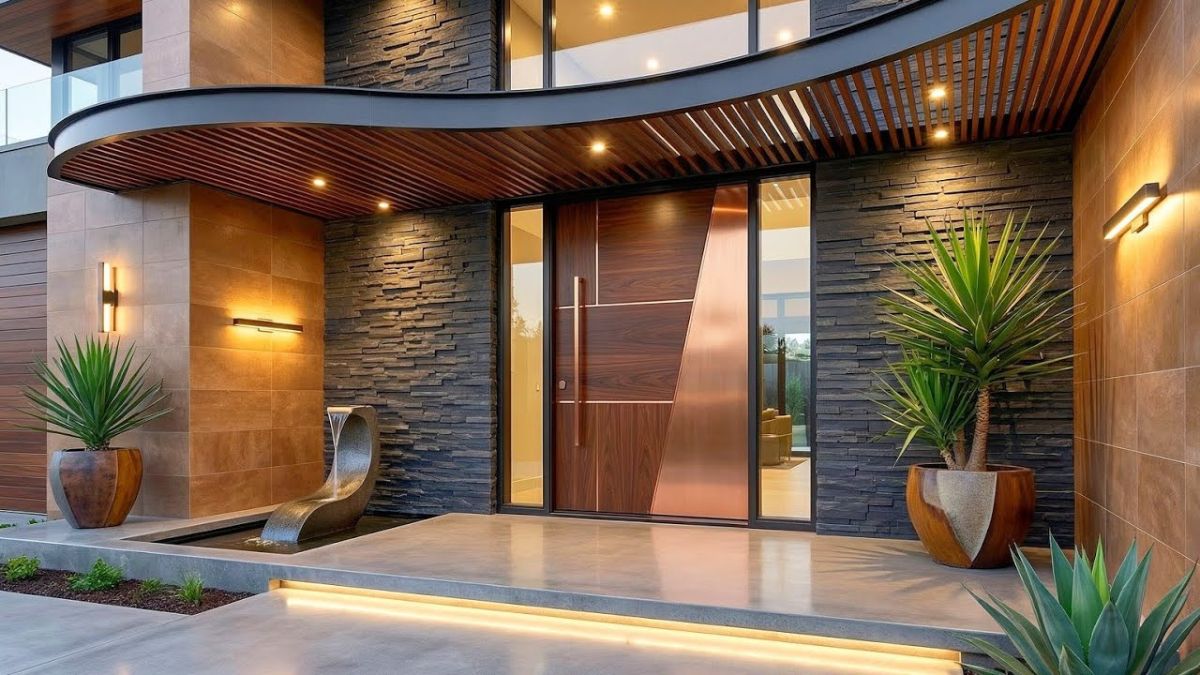
- Mixed-material cladding with varied colours and textures; for example, bold, dark colours such as black and charcoal in matte or metallic finishes combined with timber-look aluminium or natural wood – this combination provides a warmer, contrasting aesthetic.
- Minimalist architectural detailing with bold linear profiling, as clean geometric lines are applied for sleek, contemporary appeal. This includes use not just for vertical and horizontal exterior applications, but also on accent walls and privacy screens.
- Customisation of colours and finishes, as architects, designers, and building owners actively seek unique aesthetic outcomes and a wider range of finish combinations. These may extend from matte neutral colours to metallics, with one single overall surface panel type or distinctive accents included.
- The commitment to using non-combustible cladding materials is no longer optional, and as more new buildings go up and more older buildings are remediated and reclad, the use of DtS non-combustible aluminium cladding as the material of choice will increase.
- Sustainability will reign, and mineral core aluminium composite panels can be an eco-friendly, fully recyclable solution that is made from predominantly recycled materials and does not contribute to landfill at the end of its lifespan.
Looking Ahead
Innovation and technological advancements are driving major transformations in the exterior cladding industry, and visionary approaches to materials and the science that supports non-combustibility, high performance, and unmatched aesthetics will continue to influence how we build into and beyond 2026.
Moreover, the commitment to meeting safety obligations, complying with strict building codes, and availing of sustainability incentives will continue to guide material choice.
For architects, designers, builders, property owners and managers, the options are myriad in terms of exterior façade cladding in Australia, but the benchmark for commercial and industrial buildings (including high-occupancy and high-rise residential buildings) is the use of DtS non-combustible cladding.
For example, DtS non-combustible aluminium cladding sourced from Network Architectural in Australia is a superior range of high-quality, versatile mineral-core aluminium composite panel products that are extensively fire tested for compliance with the world’s highest fire safety standards.
The future is here – and the design options for DtS non-combustible cladding materials are myriad and very exciting.