
Key Takeaways:
- Hybrid cloud models offer a blend of on-premises and cloud resources, enhancing flexibility and resilience.
- Businesses are adopting hybrid strategies to optimize costs, improve security, and meet regulatory requirements.
- Integrating AI and automation within hybrid environments can lead to significant operational efficiencies.
Table of Contents:
- Understanding Hybrid Cloud
- Drivers of Hybrid Cloud Adoption
- Benefits of Hybrid Cloud
- Challenges in Implementing Hybrid Cloud
- The Role of AI in Hybrid Cloud
- Case Studies
- Future Trends
- Conclusion
In today’s rapidly evolving digital landscape, businesses face increasing demands for agility, scalability, and reliability in their IT operations. Traditional on-premises infrastructure often struggles to keep pace with these requirements, prompting organizations to explore more flexible solutions. Hybrid cloud models have emerged as a critical strategy in this context, blending the control of private systems with the scalability of public cloud services. By distributing workloads across multiple environments, companies can optimize performance, enhance resilience, and respond more effectively to changing market conditions. The ability to seamlessly integrate legacy systems with modern cloud technologies allows enterprises to maintain operational continuity while embracing innovation.
As organizations continue to adapt to digital transformation, the concept of the cloud in enterprise has gained prominence as a cornerstone of strategic IT planning. Hybrid cloud models not only support cost efficiency and resource optimization but also offer improved disaster recovery and data protection capabilities. By enabling dynamic resource allocation, these models empower businesses to meet fluctuating demands, maintain service continuity, and build a more resilient IT infrastructure for the future.
Understanding Hybrid Cloud
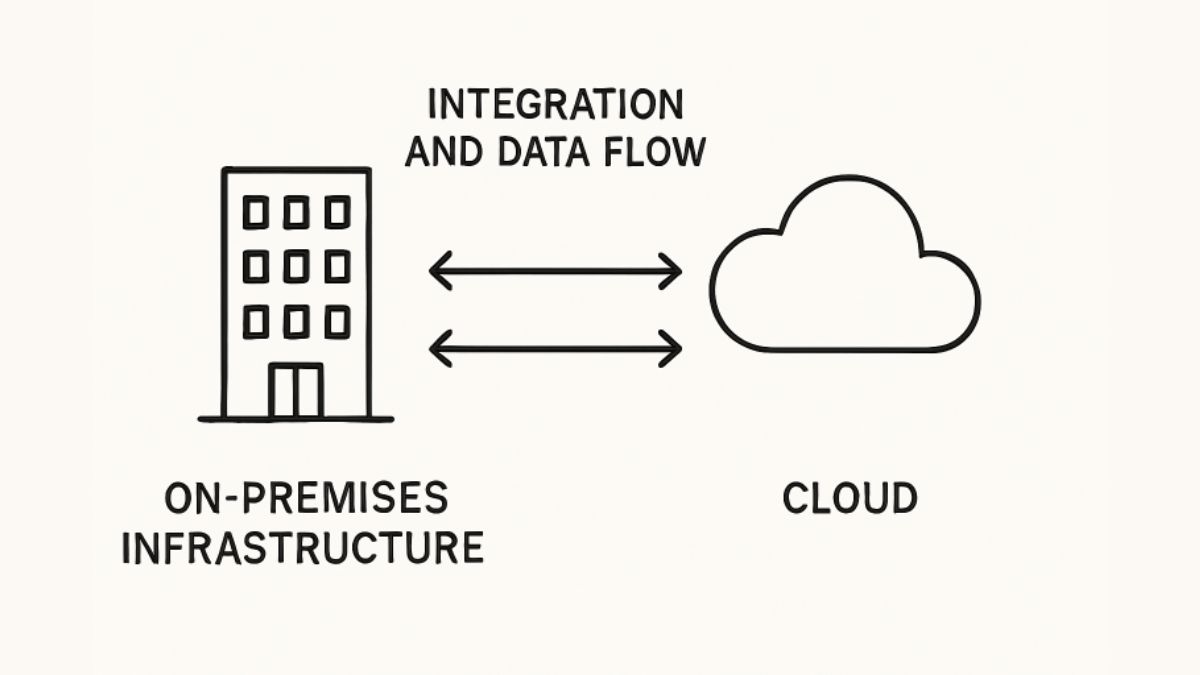
A hybrid cloud is a unified architecture that enables organizations to connect private infrastructure and third-party cloud services. This integration allows seamless management of data and applications regardless of physical location. Hybrid strategies often combine traditional data centers, private clouds managed on-premises, and scalable public cloud environments, offering a mix of security, performance, and agility to suit diverse workloads.
Maintaining the right balance between different environments is key. While public clouds excel in flexibility and rapid scaling, private clouds and on-premises solutions serve critical workloads requiring stricter security, compliance, or latency controls. The synergy achieved through hybridization allows for dynamic workload placement and resource optimization.
Drivers of Hybrid Cloud Adoption
The shift toward hybrid cloud architecture is driven by several compelling business needs. Cost management remains paramount, as organizations look to reduce capital expenses by offloading less sensitive workloads to the public cloud while maintaining vital operations on-premises. This balance can translate to significant savings and reduced overhead.
Regulatory compliance also propels hybrid adoption, especially in sectors such as healthcare, finance, and government. Sensitive data and workloads are kept within organizational boundaries to satisfy legal and privacy mandates, while less critical operations leverage cloud elasticity.
Business continuity and disaster recovery form another core driver. By distributing applications and data across both on-premises and cloud environments, organizations can minimize risk and recover quickly from unexpected disruptions. Hybrid models support redundancy, backup, and failover systems with greater ease than strictly on-premises solutions.
Benefits of Hybrid Cloud
- Flexibility: Hybrid cloud enables businesses to strategically locate workloads across on-premises and cloud resources, enhancing agility and efficiency.
- Scalability: Resources can be swiftly scaled up or down to address changing business requirements without significant new hardware investments.
- Security: Mission-critical data remains in-house, reducing potential exposure while still enabling off-site scalability for other workloads.
In today’s digital-first environment, these advantages allow organizations to innovate rapidly while effectively managing risk. According to Gartner, by 2025, over 85% of enterprises will have adopted a cloud-first principle, predominantly in a hybrid or multi-cloud configuration.
Challenges in Implementing Hybrid Cloud
- Complexity: Managing disparate environments can be challenging, often requiring specialized skills and sophisticated orchestration tools.
- Integration: Achieving seamless communication and interoperability between on-premises solutions and cloud-native applications necessitates robust integration strategies.
- Cost Management: Hybrid ecosystems can lead to unexpected costs if cloud usage is not regularly monitored and optimized.
Enterprises must invest in the right management platforms and governance processes to fully reap the rewards of hybrid models while minimizing operational burden.
The Role of AI in Hybrid Cloud
Artificial Intelligence is emerging as a game-changer in the optimization of hybrid cloud environments. AI-driven tools can automate resource allocation, continuously analyzing workloads to dynamically distribute them according to performance and cost criteria. Research suggests that AI-based management can reduce IT operational spending by up to 40%, allowing businesses to focus on strategic innovation rather than manual oversight.
Additionally, AI enhances security by providing real-time anomaly detection, safeguarding assets across cloud and on-premises platforms. With intelligent automation, organizations can build more resilient, responsive, and cost-effective hybrid environments.
Case Studies
Public Sector Transformation
U.S. public agencies have pioneered the use of hybrid cloud to rejuvenate aging infrastructure, improve performance, and strengthen regulatory compliance. By retaining sensitive data onsite while utilizing the cloud’s global reach for citizen-facing services, government entities have achieved impressive gains in speed, reliability, and cost-effectiveness.
Enterprise Adoption
Corporate leaders are increasingly gravitating toward ‘cloud-smart’ rather than ‘cloud-first’ strategies. Leading enterprises now evaluate each workload to determine whether it should be hosted on-premises, in a private cloud, or in the public cloud. This nuanced evaluation lowers both risk and cost while harnessing the full benefits of a hybrid model.
Future Trends
- Increased AI Integration: Forward-looking organizations are expanding their use of AI to further automate infrastructure management, reduce human error, and support better business decisions through predictive analytics.
- Edge Computing: By coupling hybrid cloud strategies with edge computing, businesses can process data closer to its origin, dramatically improving latency and enabling new use cases in IoT, real-time analytics, and more.
- Enhanced Security Measures: As digital threats evolve, expect robust, integrated cybersecurity systems—spanning encryption, identity management, and proactive threat detection—to become foundational to hybrid cloud architectures.
The hybrid cloud model is steadily evolving—organizations must stay agile and adaptive to remain ahead of the curve.
Conclusion
Hybrid Cloud Models environments represent the vanguard of resilient, flexible IT infrastructure. By combining the strengths of both on-premises resources and external cloud platforms, businesses are empowered to meet modern demands for speed, security, and innovation. The future belongs to those who leverage hybrid models to create IT strategies that aren’t just robust but truly transformative.