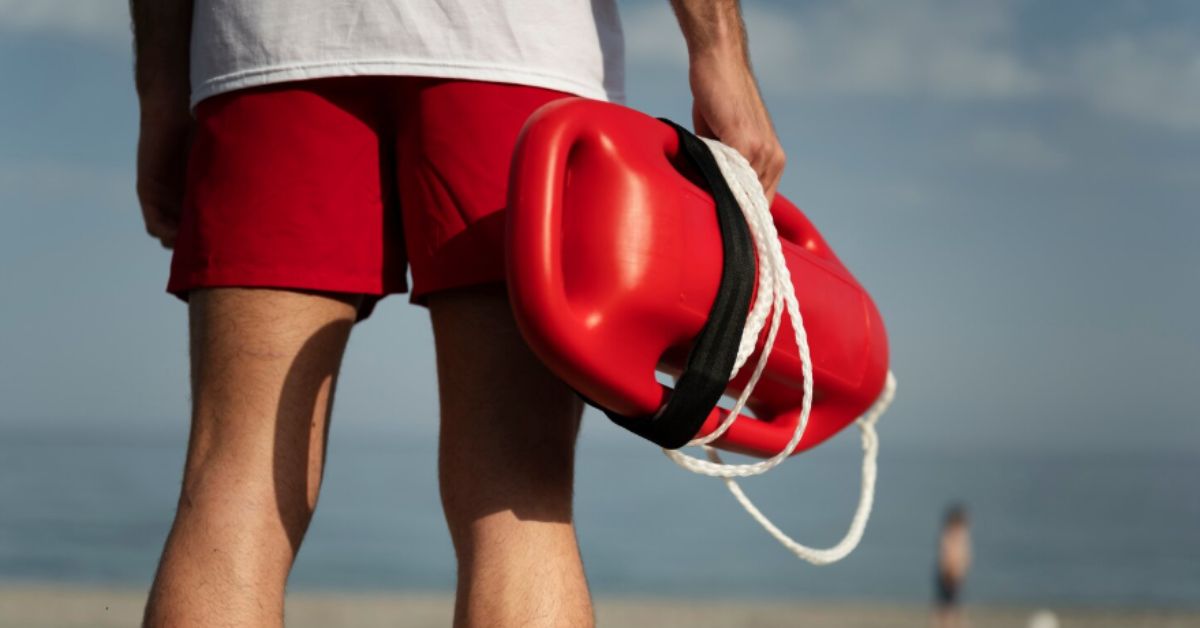
Lifeguards are often thought of as a familiar symbol – someone standing tall in support of our swimming pools, lakes and oceans. For many, being a lifeguard isn’t just a summer job; it’s an opportunity to serve and protect, as well as make sure that enjoyment and safety are both involved in having fun! However, under all of that sun hat and whistle is a demanding job that requires superior skills, unwavering confidence and dedicated training. The question now becomes, how do you go about obtaining that whistle and finding the best lifeguard training programs?
Why Is Lifeguarding More Than Just Watching the Water?
To put it simply, avoiding accidents is the main goal of the lifeguard service. Consequently, they would always be trying to envision how each situation might turn out to be hazardous and take measures to thwart it. This whole process of accident prevention requires no less than a comprehension of the water dynamics, human behavior, and what might go wrong, but also the ability to detect problems very early, such as from a little child going too deep into the water to a sudden shift in weather.
The lifeguard’s responsibility entails a combination of physical power, mental acuity, and emotional stability that will enable him/her to take difficult decisions in very stressful situations. Thus, the excellent swimming skill is not the only attribute of the great lifeguard; the first-class training which guarantees that they are ready to encounter the most unexpected situations is.
What Are the Concrete Steps to Get Lifeguard Certification?
The certificate route is tough and planned out, purposed to guarantee that only the best receive the credential. Therefore, how to get lifeguard certification? The whole trip basically includes a couple of key stages.
To begin with, candidates must fulfill a series of requirements, which generally comprise a minimum age of 15 years, successful completion of a swimming skills test (generally consisting of 300 yards swim, brick retrieval, and treading water performed under a time limit), and demonstrating physical fitness.
Then, the next step is to register for a certified course. In-person training is for skill-sharpening. Candidates spend hours in the pool practicing rescues, on the banks practicing CPR compressions, and in cases that mimic high-stress emergencies. The training is continuous and physically hard by plan, so that reactions become second nature.
Why Should You Choose the American Lifeguard Association for Your Training?
Among the many organizations that provide the certification, why is the American Lifeguard Association still the top choice? The ALA has established its name through years of excellent service and advanced techniques in the aquatic safety industry. The instructors of ALA are not only teachers but also professional lifeguards, emergency responders, and aquatic managers, thus providing firsthand reflections to the learners on the pool deck and classroom. The curriculum of the ALA is always updated to consider the current research in drowning prevention and emergency care, so the graduates will be capable of tackling the modern problems.
Besides, the ALA promotes a “safety-first” attitude that permeates all areas of technical skills as well. They view the lifeguard who has been trained by them as a leader and an educator in the community, hence water safety being taught as the first line of defense against accidents. Their certification has gained great respect and employer acceptance throughout the U.S.A., from city pools, high-end resorts, and large beach patrols to everybody’s favorite baths.
For people who are determined to make a career in lifeguarding or just wish to be super prepared for saving lives, the ALA is the highest standard of training quality. To find out about their programs, which hold national recognition, you can read more about their services on their website.
What Happens After You Get Certified?
Earning a certification is not a point of completion but the start of the road to a commitment to ongoing learning and also watchfulness. Certified lifeguards must be in top physical shape and constantly hone their skills. Many opt for the area of expertise certifications like waterpark lifeguarding, waterfront lifeguarding, or lifeguard trainer. The sector presents a well-defined career ladder from deck lifeguard through to head lifeguard, supervisor, and aquatic facility manager.
Are You Ready to Answer the Call and Make a Difference?
Choosing to be a lifeguard, therefore, is choosing to be responsible, to serve others, and to be the always-present and supportive safety in the community. It is a hard, but at the same time, a rewarding activity and quite significant. The first step of the whole process is to sign up for a professional training program that will give you the necessary knowledge, skills, and, most importantly, the confidence to be among the best.
In case you are up for this challenging yet rewarding career, your search for the best lifeguard training comes to an end with the American Lifeguard Association. Their time-tested and proven program will turn you from just a good and strong swimmer into a very good, competent, and confident lifesaver. Do not hesitate to make a difference tomorrow. If you satisfy the requirements and are completely ready to take the challenge, you can click here to enroll in the nearest American Lifeguard Association certification course that will be held soon. The water in your community needs devoted guardians. Will you be one of them?