
Boxing has long been a sport that blends strategy, strength, and heart, and the tangible symbols of achievement in the sport — boxing medals — carry stories that go far beyond metal and ribbon. Whether displayed on a wall, stored in a box, or worn for a moment on the victor’s neck, these medals mark milestones: a first local tournament win, a national championship, or the once-in-a-lifetime Olympic podium. This article walks you through the history of boxing medals, the different kinds you can earn, how they are designed and awarded, why they matter to athletes and fans, and practical advice for preserving and understanding their value. The aim is to be clear, accessible, and thorough, so anyone reading will leave with a richer appreciation for what boxing medals represent.
Table of Contents
The history and cultural meaning of boxing medals
Boxing as a form of organized sport stretches back centuries, and the practice of awarding winners with tokens of achievement is nearly as old. In ancient societies, victors were celebrated with crowns, plaques, and prizes that signified honor and status. In modern organized boxing, medals as we recognize them today began to gain prominence as competitions became standardized and international. The Olympic Games played a central role in shaping the visual language of medals, and boxing medals awarded at the Olympic level carry a particularly intense cultural weight because they connect an athlete to a global legacy.
Over time, boxing medals evolved from simple circular tokens into carefully crafted artifacts that reflect the identity of the organizing body, the venue, and the era. They become more than awards; they become heirlooms. To many boxers, a medal encapsulates months or years of training, sacrifice, and small daily choices that added up to a moment on the podium. For communities and nations, medals become proof points of development and pride. Historical boxing medals can also tell us about political contexts: designs, inscriptions, and issuing authorities often reflect the time and place in which the competition occurred.
How boxing medals symbolize achievement beyond sport
A boxing medal can mark personal transformation. For a first-time competitor, a regional bronze might signal a newfound confidence, while an international gold can change the trajectory of a career, opening doors to sponsorships, coaching opportunities, or professional contracts. Beyond financial or career effects, boxing medals serve as psychological anchors. They remind athletes of a specific moment when training met opportunity, and they can motivate future performance. Families and communities often rally around these medals as well; shared pride amplifies the medal’s cultural resonance. In short, the metal itself matters, but the meaning it carries is what endures.
Types of boxing medals and what they mean
There are different tiers and categories of boxing medals depending on the level of competition and the organizing body. At local and regional tournaments, medals are often awarded for first, second, and third places, with distinctions such as gold, silver, and bronze as common symbols. National championships typically offer medals alongside trophies and certificates, while continental and world championships may issue specialized medals with unique designs and higher prestige. At the top of the pyramid, Olympic boxing medals stand apart for their global recognition and historical continuity.
There are also special-purpose medals. For instance, commemorative medals mark anniversaries or special tournaments and are sometimes given to participants, organizers, or honored guests. Merit medals may recognize sportsmanship, most-improved athlete, or best technical performance. Understanding the type of medal helps put its significance into context; a local gold will mean something different than an Olympic gold, but both can be life-changing for the athlete who earns them.
Typical designs and the elements you’ll find on boxing medals
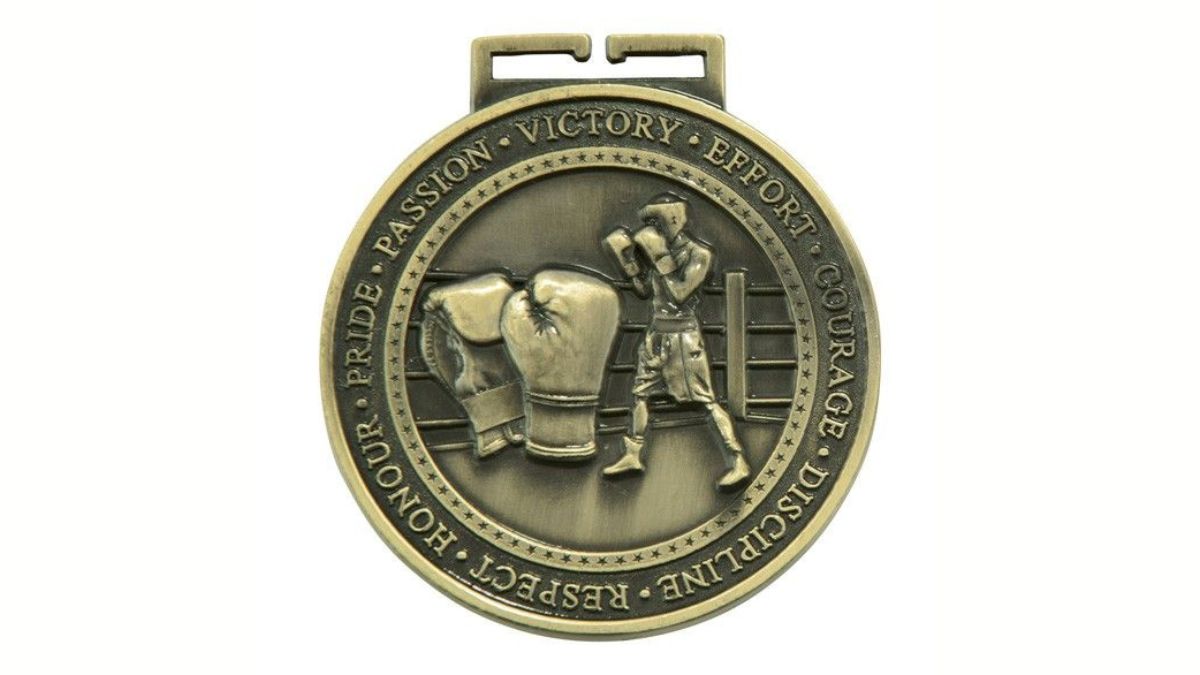
A boxing medal usually incorporates several consistent design elements: a central motif (often a boxer, gloves, or the event logo), text identifying the event and year, and a designation for the place (first, second, third). Some medals add heraldic emblems, laurel wreaths, or national symbols to communicate prestige or cultural identity. Ribbons may be color-coded to indicate place or country, and edging or relief work can add tactile depth. Materials range from basic plated metals for smaller events to higher-quality alloys and finishes for major competitions.
How boxing medals are awarded and judged
Medals are awarded based on performance within the rules for each competition. In amateur boxing, judges score bouts using standardized criteria such as clean punches landed, domination of the match, and technical skill. At many tournaments, a single-elimination bracket determines who advances and who earns medals, while some competitions feature round-robin formats or repechage systems that allow defeated competitors to continue fighting for bronze. Professional boxing rarely uses medals in the same way, favoring belts and titles instead, though commemorative medals can still be given at gala events.
Judging controversies and scoring debates are part of the sport’s history. When disputes occur, the integrity of the medal can feel contested. Nonetheless, medals generally represent consensus recognition from an authorized panel and governing organization. For athletes, what matters most is the official result: the medal becomes proof that the result stood after review and adjudication.
Practical advice for athletes: preparing to win boxing medals
Winning a medal takes intentional, structured effort. Training must cover physical conditioning, technical skill, tactical awareness, and mental preparation. Strength and conditioning build a fighter’s frame for consistent rounds; technical drilling refines punching, defense, and footwork; sparring integrates skill under simulated stress; and mental training helps athletes manage nerves and visualize success. Nutrition and recovery also play critical roles, as weight classes and short recovery windows in tournaments demand precise planning.
Competition strategy matters as well. Understanding the bracket, scouting opponents, and planning energy expenditure across multiple matches are all part of the medal-winning process. Athletes should also familiarize themselves with the governing body’s rules and scoring criteria, because small differences between organizations can affect match tactics. Finally, support networks — coaches, teammates, medical staff, and family — contribute to performance. A medal often represents a team effort, not just an individual’s effort.
Collecting, valuing, and preserving boxing medals
For collectors or athletes who want to preserve their medals, basic conservation steps extend a medal’s lifespan. First, handle medals minimally and with clean hands to avoid oils and acids transferring to the metal. For storage, soft cloth pouches, acid-free boxes, or mounted shadow boxes keep medals safe from scratches and tarnish. If the medal is made of a precious metal or has significant historical value, professional appraisal and conservation may be appropriate. Cleaning should be gentle and only done with approved methods; aggressive polishing can remove patina and damage value.
Monetary value varies widely. Most modern tournament medals have minimal resale value beyond sentimental worth, but rare historic medals, Olympic medals, or those with provenance linked to a notable athlete can command high prices among collectors. Documentation improves value: certificates, photos of the medal being awarded, and tournament programs help establish authenticity.
Table: Typical medal types and their usual contexts
| Medal Type | Common Contexts | Typical Significance |
|---|---|---|
| Local gold/silver/bronze | City or regional tournaments | Personal achievement, stepping stone |
| National championship medal | Country-level events | National recognition, potential funding |
| Continental/world championship medal | Continental or global amateur contests | High prestige, international ranking |
| Olympic medal | Summer Olympic Games | Ultimate amateur honor, global fame |
| Commemorative medal | Special events, anniversaries | Symbolic, collectible |
Closing thoughts: why boxing medals still matter
Boxing medals are much more than metal. They are touchstones of memory, markers of progress, and cultural symbols that carry stories of struggle and triumph. For athletes, a medal validates countless hours of effort and stands as a concrete expression of commitment. For fans and communities, medals represent shared pride and the opportunity to celebrate excellence. Whether you are an athlete aiming for your first regional medal, a fan building a small collection, or a curious reader trying to understand the sport’s rituals, boxing medals connect individual moments to larger narratives. Celebrate them, preserve them, and remember that behind every medal is a human story worth honoring.
Frequently asked questions about boxing medals
What is the difference between an Olympic boxing medal and other medals?
An Olympic boxing medal is awarded at the Olympic Games and carries global recognition, historical continuity, and often greater prestige and cultural impact than most national or regional medals. Olympic medals are also governed by the International Olympic Committee’s standards and are tied to the athlete’s national representation.
What is the best way to preserve a boxing medal?
The best approach is to minimize handling, store the medal in an acid-free environment or shadow box away from direct sunlight, and avoid aggressive cleaning. For high-value medals, consult a professional conservator.
How are boxing medals judged at amateur competitions?
Judges in amateur boxing score based on the number and quality of clean punches, ring generalship, defense, and technique, with specific scoring rules varying by governing body. The medal is awarded according to the official result, which may be influenced by judges’ scores or referee decisions.
What is the historical importance of boxing medals?
Historically, boxing medals document the evolution of the sport, highlight outstanding athletes, and reflect cultural and political contexts. They can serve as artifacts that preserve sporting history and personal narratives.
What is the sentimental value of a boxing medal?
Sentimental value often outweighs monetary value for most medals; they encapsulate personal sacrifice, teamwork, and memorable moments. A medal may serve as a lifelong reminder of a peak achievement or a pivotal turning point.
What is the process for authenticating a rare boxing medal?
Authentication involves provenance documentation, expert examination, and sometimes laboratory analysis. Photographs of the event, certificates, match records, and provenance from reputable institutions all strengthen claims of authenticity.